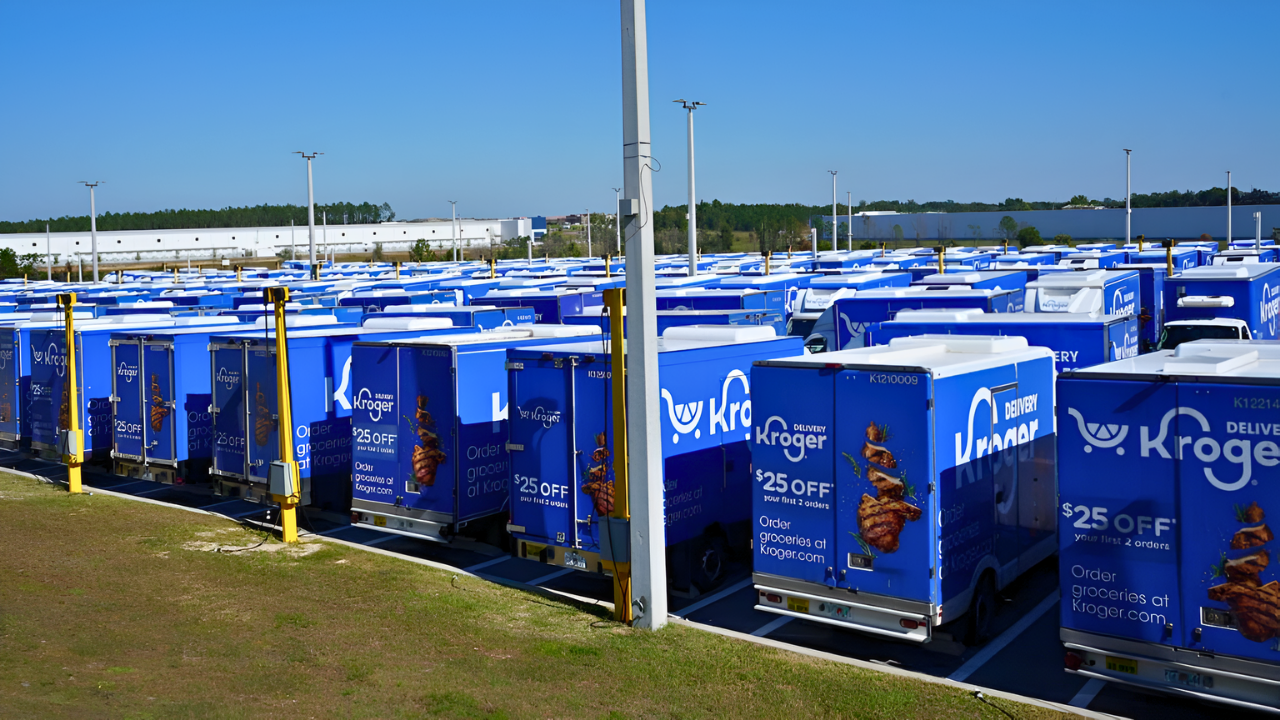
Kroger, one of America’s largest grocery chains, is abandoning its Florida operations after its automated delivery model failed to gain traction against entrenched regional competitors. The company will close its Groveland Customer Fulfillment Center and three spoke facilities in Jacksonville, Tampa, and Rockledge by February 1, 2026, marking a significant retreat from a state it once viewed as a growth opportunity.
The decision underscores a fundamental challenge facing national retailers: technology alone cannot overcome local loyalty and established market dynamics. Despite investing heavily in robotics and automated warehouses, Kroger could not convert online delivery customers into regular shoppers or compete effectively against Publix, which has dominated Florida’s grocery landscape for decades through deep community ties and consistent service.
The Technology Gamble That Didn’t Pay Off
Kroger’s Florida strategy centered on a partnership with Ocado, a British online grocery specialist, to build a network of highly automated fulfillment centers. The model promised efficiency and speed through robotics and advanced logistics. The companies initially planned to open 20 locations nationwide, but only eight Customer Fulfillment Centers have been built. In a comprehensive review of its fulfillment network, Kroger identified opportunities to optimize operations, including closing three underperforming facilities—in Groveland, Pleasant Prairie, Wisconsin, and Frederick, Maryland.
The automated fulfillment approach, while innovative, proved insufficient to overcome Publix’s entrenched position. Publix’s decades-long presence in Florida created customer loyalty that Kroger’s delivery convenience could not displace. The failure reveals a critical gap between technological capability and market reality.
Immediate Impact on Workers and Communities
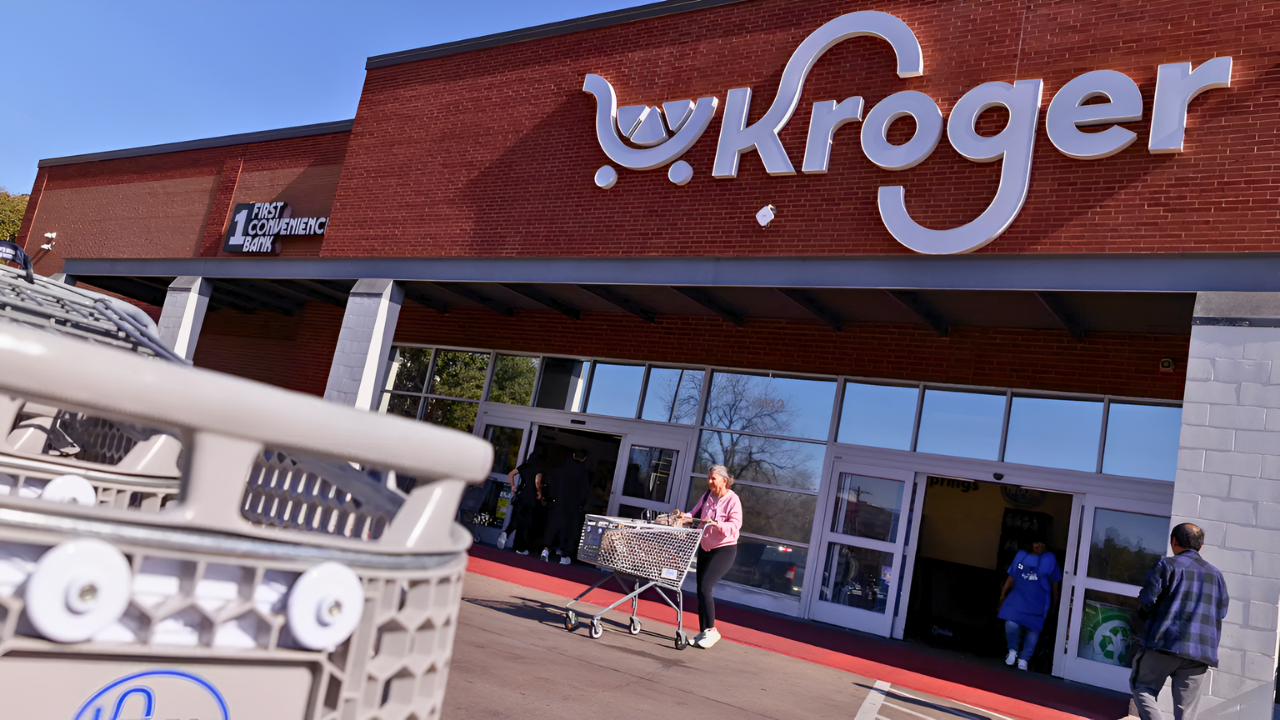
The closure will eliminate approximately 1,403 jobs across the four Florida facilities, with 935 at the Groveland center alone, 181 in Jacksonville, 234 in Tampa, and 53 at the Rockledge spoke. Local authorities are working with CareerSource Central Florida to address the economic fallout, providing retraining programs and employment support for displaced workers. The sudden loss of such a significant employer creates ripple effects throughout supply chains and local economies.
The situation has also prompted scrutiny of economic incentives provided to Kroger and Ocado. Groveland offered impact and building-permit fee waivers, job creation incentives, and tax rebates tied to employment and wage commitments. Mayor Keith Keogh noted the city collected $663,181 in property taxes over three years of operation and stated the city plans to “fight for every dollar” invested in the project.
Market Realignment and Consumer Consequences
Kroger’s exit strengthens Publix’s already dominant position in Florida’s grocery sector. Delivery platforms like Instacart, DoorDash, and Uber Eats—now Kroger’s preferred delivery partners—may capture some of the abandoned customer base, though many consumers will likely return to traditional in-store shopping or use competing services. Kroger emphasized its ability to deliver orders in under two hours from 97% of its 2,700 U.S. stores through store-based fulfillment.
Floridians accustomed to Kroger’s delivery service must now adapt their shopping habits. Some will explore alternative delivery platforms, while others will adjust to increased in-store visits or accept higher costs for convenience services. This shift represents a significant change in how households approach grocery shopping and budget management.
Broader Implications for Retail Strategy
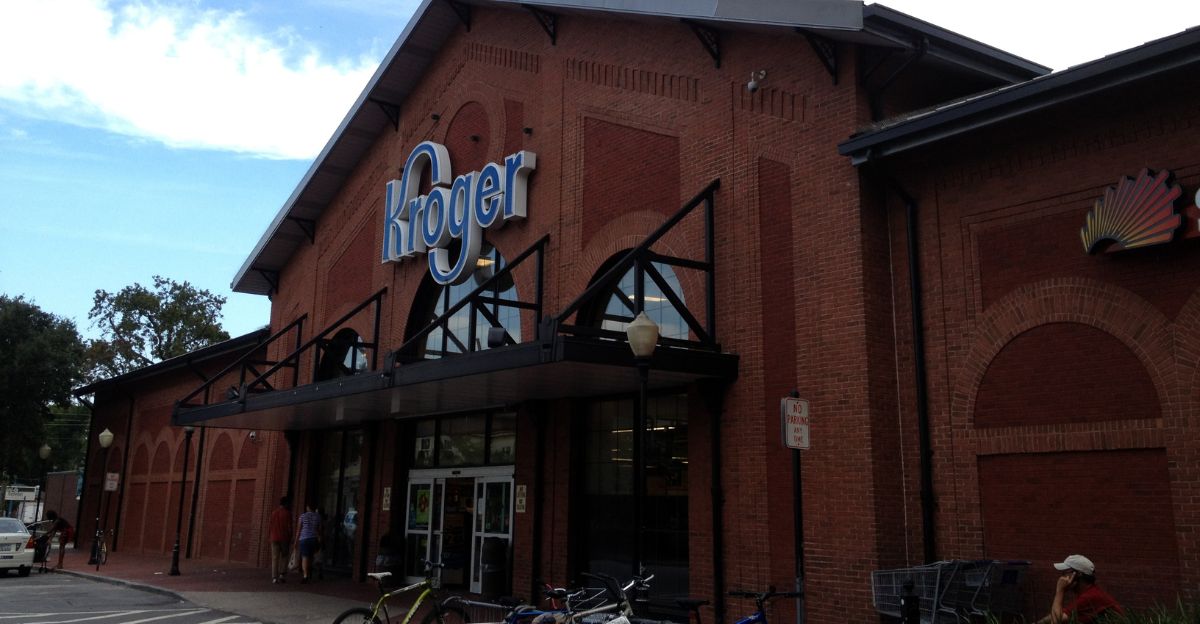
Kroger’s Florida retreat is part of a larger strategic realignment as the company focuses on store-based fulfillment in high-volume markets rather than centralized automated warehouses. The company expects these closures to improve e-commerce operating profit by approximately $400 million in 2026, though it will incur a $2.6 billion impairment charge in fiscal Q3 2025. This decision reflects a broader industry trend toward focusing on profitable operations over aggressive expansion.
The failure also raises fundamental questions about the sustainability of dedicated automated fulfillment models. While such facilities offer operational efficiency, they carry high capital costs and lack the speed and proximity that store-based fulfillment provides. Retailers considering similar ventures must now contend with Kroger’s cautionary example.
Looking Forward
Kroger’s Florida exit demonstrates that even well-funded national chains with cutting-edge technology can struggle when entering markets with established competitors and strong local preferences. Success in retail requires more than innovation—it demands understanding local dynamics, building community relationships, and recognizing the limits of technological solutions.
As the grocery industry continues evolving, this experience will likely influence how national chains approach market entry and expansion strategies. The lesson is clear: technology must complement, not replace, the fundamentals of retail success.
Sources:
Jacksonville Daily Record, November 2025; Kroger ending Florida home grocery delivery, closing Groveland hub near Orlando
Central Florida Public Media, November 2025; Kroger facility in Groveland closing; city says 1,400 workers will be impacted
Supply Chain Dive, November 2025; Kroger closing 3 automated fulfillment centers
Grocery Dive, November 2025; Kroger acknowledges that its bet on robotics went too far