
A customer walks up to a Target register with $40 in cash. The cashier’s computer system flashes red. Under current law in most states, the store can refuse the transaction. But starting March 20, 2026, that scenario becomes illegal in New York State—triggering a seismic shift in American retail.
Governor Kathy Hochul’s signature on Senate Bill S4153A mandates cash acceptance. It draws a line in the sand between corporate convenience and consumer rights. Will other states follow?
New York’s Groundbreaking Requirements

New York’s groundbreaking legislation requires all retail establishments and food stores to accept cash denominations of $20 and under for in-person transactions. Businesses cannot charge cash-paying customers higher prices or impose surcharges for using physical currency.
Violators face civil penalties of $1,000 for a first violation and $1,500 for subsequent violations, with enforcement handled by the New York Department of State’s Division of Consumer Protection.
The Actual Impact Zone

The law affects a population of approximately 20 million New Yorkers, making it one of the most significant protections against cash acceptance at the state level. Unlike the overstated “260 million” figure circulating in headlines, the actual reach is substantial but limited.
Combined with existing laws in Massachusetts, New Jersey, Rhode Island, Colorado, and Connecticut, roughly 45-50 million Americans now enjoy similar protections.
Why Financial Inclusion Matters Now

The timing connects to an ongoing national conversation about financial exclusion. Approximately 6 million Americans remain completely unbanked, meaning they are unable to access traditional banking services. Rates disproportionately affect Black households (11.3% unbanked), Hispanic households (9.3%), and low-income families (19.8%).
For vulnerable populations, cash isn’t a preference—it’s a lifeline. Senator James Sanders Jr. stated: “No New Yorker should be excluded from commerce simply because they don’t carry a credit card.”
The Coin Crisis Behind the Law

The law addresses the persistent penny shortage that has plagued retailers since 2020. With coin availability limited and handling costs rising, many businesses moved toward cashless models to avoid logistical headaches.
New York’s mandate forces a reckoning with that strategy, requiring retailers to reactivate their cash handling infrastructure, which they’d largely abandoned.
Major Retailers Face Operational Challenges

Major retailers like Walmart, Target, and Costco—which invested heavily in self-checkout systems that don’t accept cash—now face significant operational adjustments. These companies promoted cashless systems for efficiency gains and perceived loss prevention.
But New York’s law directly contradicts that business model. Retailers must retrofit point-of-sale systems, retrain employees, and manage increased cash handling expenses.
The Alternative Compliance Workaround
Businesses can comply through alternative means by providing on-premises devices that convert cash into prepaid cards. The system must charge zero fees, require deposits of $1 or less, and ensure funds never expire.
This technical workaround allows retailers to “accept” cash while minimizing actual currency handling and associated operational costs.
The Enforcement Weakness Nobody Discusses

The law has a crucial limitation weakening consumer protection: it does not provide a private right of action, meaning consumers cannot file lawsuits against non-compliant retailers. Enforcement relies entirely on regulatory complaints and Department of State investigations.
That gap could significantly limit real-world compliance, especially among smaller retailers operating below official regulatory radar.
NYC’s Pioneering Path Forward

New York City pioneered this approach with its own cash acceptance ordinance enacted in 2020—six years before the statewide law.
The city recognised that increasingly cashless retailers created a two-tiered payment system: fast service for digital payment customers, and barriers for cash users. Extending protections statewide ensures consistent access across urban centres and rural communities alike.
Fewer Loopholes Than Other States

New York’s statewide law includes fewer exemptions than other jurisdictions, closing loopholes that allow sports venues, car rental companies, and parking facilities to avoid accepting cash.
This comprehensive approach demonstrates legislative commitment to genuine inclusion rather than symbolic gestures toward vulnerable populations.
Federal Momentum Builds Slowly
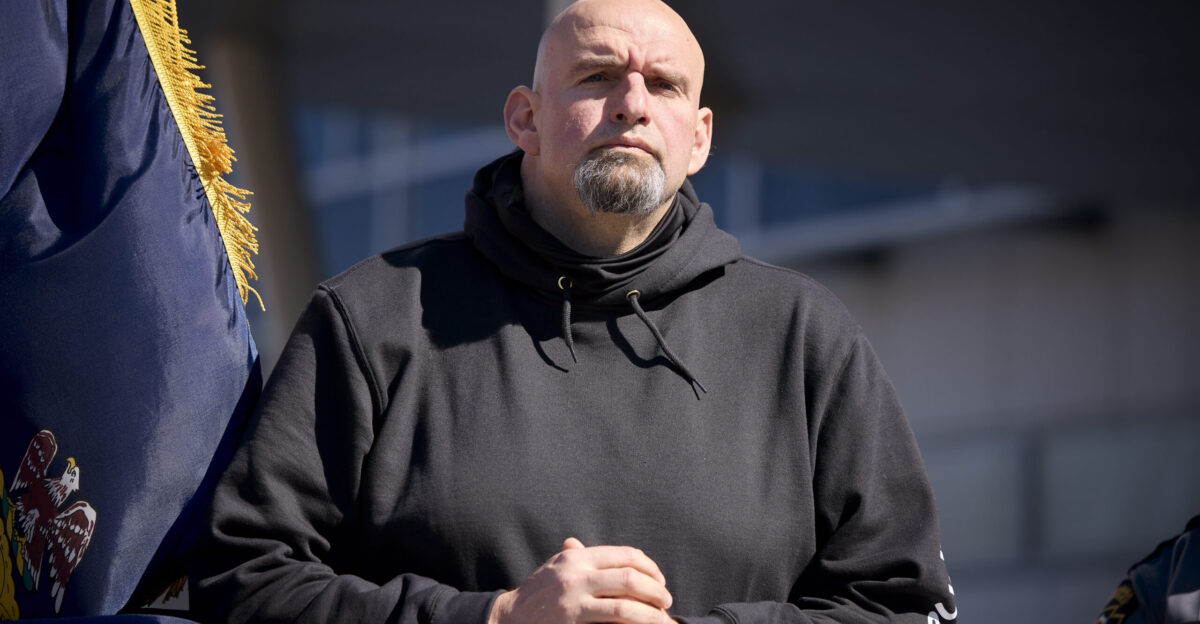
At the national level, the bipartisan Payment Choice Act of 2025 remains pending in Congress, with Senators John Fetterman (D-PA) and Kevin Cramer (R-ND) as its champions. The bill would require nationwide cash acceptance for transactions up to $500 and prohibit merchants from charging surcharges.
Previous versions have repeatedly stalled without passage, suggesting corporate lobbying opposition to federal mandates.
Bipartisan Recognition of Inclusion Issues

The fact that two senators from opposing parties introduced this bill signals that cash acceptance transcends typical partisan divides.
It’s increasingly recognised as a financial inclusion issue rather than a purely ideological one, reflecting a broader consensus about protecting vulnerable consumer populations.
Cash Usage Higher Than Assumed

Despite the rise of digital payments, cash remains far more prevalent than most assume. As of 2024, approximately 14% of all U.S. transactions are conducted with physical currency. For populations with limited access to banking infrastructure, that figure climbs substantially.
In rural areas, immigrant communities, and low-income neighbourhoods, cash accounts for 20-40% of transactions.
Retail Employment and Worker Impact

New York City alone operates approximately 32,600 retail businesses, generating 344,600 jobs. Statewide, that number expands dramatically.
The law will touch virtually every retail worker in New York, requiring training on updated cash handling protocols, register procedures, and customer service standards. Small retailers may face the steepest adjustment curve, as they often lack the necessary retrofit resources.
The Compressed Compliance Timeline

As of the law’s March 2026 effective date, retailers have no grace period—compliance is immediate and non-negotiable. Businesses have approximately four months to prepare, which is tight for retail chains with thousands of locations and complex point-of-sale systems.
This compressed timeline explains why major retailers are already engaging regulatory affairs teams to plan strategies.
Unbanked Americans Get Tangible Protection

For the approximately 4.5-6% of American households without bank accounts, New York’s law represents tangible legal protection against expanding economic exclusion.
These households spend an estimated $30-40 billion annually on check-cashing, prepaid card fees, and other financial services designed to circumvent mainstream banking. The new law eliminates friction points in major retail environments.
A Nationwide Pattern Emerges

This isn’t isolated to New York. Massachusetts has required cash acceptance since 1978, making it the pioneer. Rhode Island, Connecticut, New Jersey, and Colorado have all enacted similar protections.
Major cities, including Philadelphia, San Francisco, Washington D.C., Seattle, and Detroit, maintain cash acceptance ordinances. The pattern is unmistakable: the government is drawing a line against purely cashless businesses.
Retail Industry Accepts Inevitable Change

Retail associations have expressed concerns about compliance costs, security risks, and operational complexity. However, they’ve largely accepted the inevitable nature of cash acceptance laws spreading state by state rather than fighting through federal preemption.
This suggests that major retailers recognize both the political inevitability and the genuine needs driving these mandates.
Solving the Coin Problem They Created

The timing of New York’s law amid an ongoing coin shortage is no accident. When retailers aggressively moved toward cashless systems between 202 and -2024, they exacerbated coin availability problems by reducing demand and circulation.
Now those same retailers must reactivate cash handling infrastructure. The law forces them to become part of the solution.
A Market Too Large to Ignore

New York’s 20 million residents account for approximately 6% of the U.S. population. When combined with other states and cities already enforcing cash acceptance, the protected population exceeds 50 million Americans.
That’s a market too large for national retailers to ignore with separate regional compliance strategies. The law signals that digital-first retail must accommodate cash-dependent consumers.
Sources:
New York State Senate Bill S4153A (Legislative Text, November 2025)
New York Department of State Division of Consumer Protection (Enforcement Authority)
Federal Reserve System FDIC National Unbanked Household Survey
U.S. Census Bureau (New York State Population Data, 2025)
Congressional Payment Choice Act of 2025 (H.R.1138, 119th Congress)
National Retail Federation Industry Impact Analysis
Federal Reserve Bank of San Francisco Cash Transactions Study (2024)