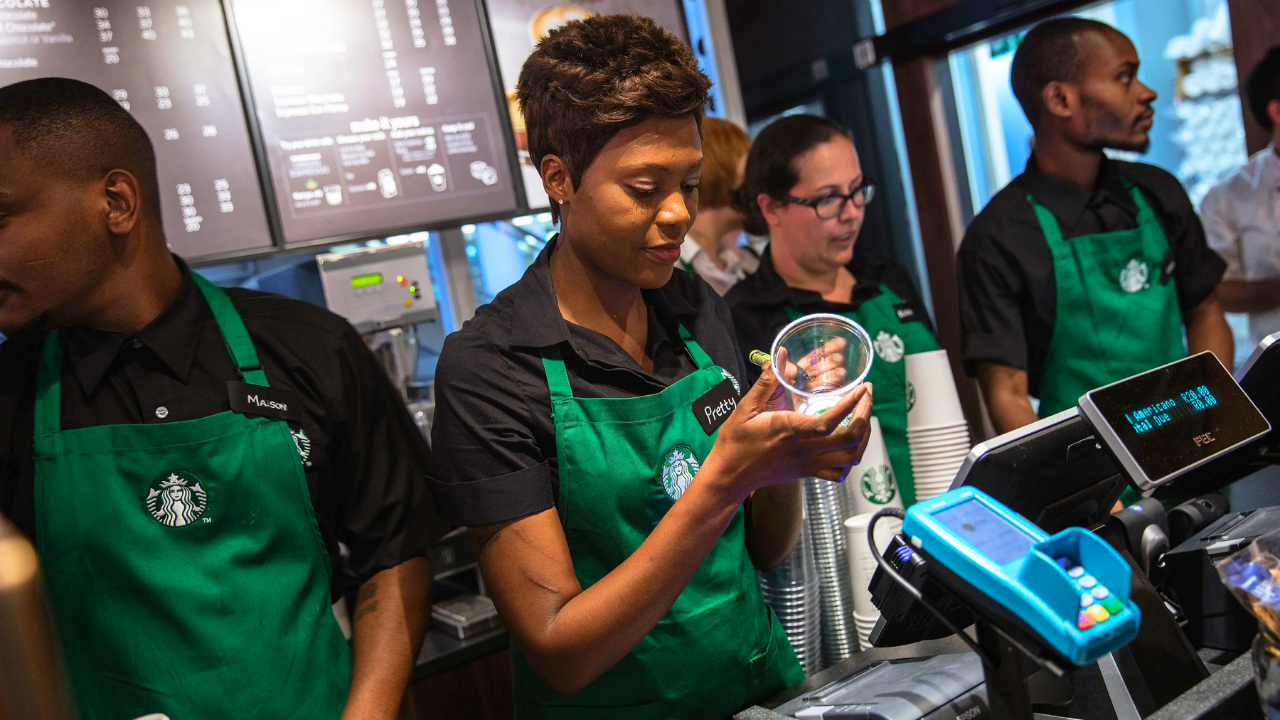
New York City has secured a $38.9 million settlement from Starbucks, marking the largest worker protection agreement in its history. The deal addresses over 500,000 violations of the Fair Workweek Law at more than 300 locations from July 2021 to July 2024, exposing patterns of scheduling instability that disrupted workers’ lives.
The Department of Consumer and Worker Protection began its investigation in 2022 following numerous employee complaints. Officials reviewed hundreds of individual reports and obtained company-wide data from Starbucks, revealing deliberate practices across stores. These violations clashed with the company’s reputation for offering healthcare, equity shares, tuition assistance, and other benefits to hourly staff.
Investigation Reveals Core Violations
Authorities identified three linked breaches. First, Starbucks failed to post schedules 14 days in advance, as mandated, leaving workers unable to plan childcare, education, or secondary employment reliably. Second, the company cut hours by more than 15 percent without valid business reasons, eroding predictable income. Third, it denied existing employees chances to claim extra shifts while hiring new staff, trapping many in part-time roles. This approach fostered ongoing financial precarity for thousands in a high-cost city, pointing to ingrained operational tactics rather than isolated errors.
Settlement Breakdown and Worker Relief
The agreement allocates $35.5 million directly to affected employees, with $3.4 million covering penalties and costs. More than 15,000 hourly workers from the period qualify for payments, set to arrive by winter 2025. An online portal allows tracking of distribution for transparency. Laid-off staff from recent closures retain reinstatement rights at other sites, with DCWP overseeing compliance and aiding job recovery efforts.
Fair Workweek Law Essentials
Enacted in 2017, the law targets fast-food and similar sectors, demanding schedules posted 14 days ahead to curb last-minute changes. Hour reductions over 15 percent require justification, and “clopening” shifts—closing late and opening early—are banned without written consent and a $100 premium. These rules aim to bolster worker well-being, mental health, and stability, recognizing the toll of erratic hours.
Official Reactions and Company View
Mayor Eric Adams stressed accountability regardless of company size, noting the funds return money to New Yorkers while upholding dignity. DCWP Commissioner Vilda Vera Mayuga highlighted the agency’s role in defending workers against large corporations. Starbucks called the law complex, citing challenges like shift swaps for appointments that trigger paperwork. It framed the issues as compliance matters, not wage theft, and pointed to competitive pay averaging $30 hourly plus benefits like paid parental leave.
Ongoing Labor Tensions and Enforcement
The settlement emerged amid strikes by unionized baristas in multiple cities since November 2025, demanding better wages and schedules. It echoes a prior $20 million Chipotle deal in 2022 for similar infractions affecting 13,000 workers. DCWP will conduct audits and probe complaints to ensure adherence, reflecting the city’s push via laws like Fair Workweek and Just Cause, which have sparked 230 probes.
This case underscores shifting dynamics, where enforcement and worker action hold corporations accountable. As monitoring continues, it signals potential for stricter compliance industry-wide, balancing business needs with employee security.
Sources:
“NYC Reaches $38M Settlement with Starbucks.” NYC Department of Consumer and Worker Protection, November 30, 2025.
“Starbucks to Pay $39 Million in Landmark N.Y.C. Labor Settlement.” The New York Times, December 1, 2025.
“Starbucks To Pay $38.9M To Thousands Of Workers After Violating NYC Fair Workweek Law.” AfroTech, December 3, 2025.
“Starbucks Agrees to Largest Worker-Protection Settlement in NYC History.” Brightmine, December 2, 2025.
“Mayor Adams, DCWP Announce $38 Million Settlement with Starbucks, Largest Worker Protection Settlement in NYC History.” NYC Department of Consumer and Worker Protection Official Statement, November 30, 2025.