
VinFast’s bold push into global electric vehicle markets is unraveling swiftly, with the Vietnam-based automaker shuttering all 15 California showrooms and half of its Canadian stores after just two years. This retreat underscores deep challenges in competing against entrenched rivals, despite billions in backing from parent Vingroup and founder Pham Nhat Vuong.
Stock Market Realities

VinFast’s shares, listed via a 2023 SPAC merger, plunged 96 percent from an August peak of $93 to about $3.46 by December 2024. Market value shrank from a peak of over $190 billion—briefly becoming the world’s third-most valuable automaker—to roughly $7.7 billion. Vuong holds 97.9 percent of shares, limiting true market pricing, while analysts set modest targets of $5.50 to $6.00.
Financial Strain Deepens
Fourth-quarter 2024 losses hit $1.26 billion, increasing 130.9 percent from the third quarter and 80.7 percent year-over-year. Full-year 2024 deficits totaled $3.18 billion, up from $2.4 billion in 2023, with cumulative losses since 2017 exceeding $5.7 billion. Gross margins stayed negative at 57.4 percent, eroding more than half the price on each sale before other costs.
Operational Shortfalls Exposed
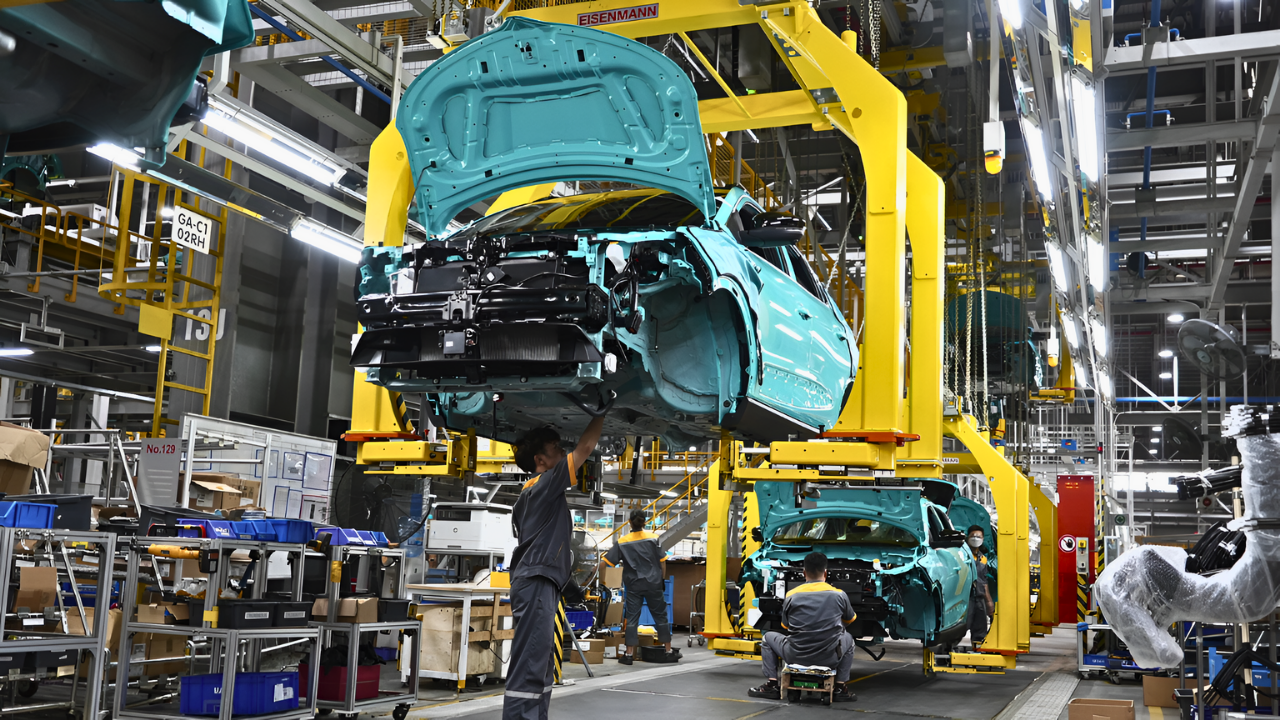
Material costs per vehicle surpass those of Tesla and BYD, per Third Bridge research, hampered by low scale and supplier hesitancy. Hai Phong plant utilization hovered below 30 percent despite 97,399 deliveries in 2024, well short of the 70 percent minimum threshold needed for manufacturing viability. U.S. and Canadian sales accounted for just 4 percent and 2 percent of global totals, with minimal U.S. registrations recorded in early 2024.
Dealer Networks Dismantle
VinFast’s U.S. dealer count dwindled from 38 signed agreements to 14-17 active sites by late 2024; Leith VinFast in North Carolina closed December 31. In Canada, five of ten stores shut, including prime spots in Toronto, Vancouver, and Laval, citing slumping EV demand and fading rebates. India mirrored the trend: 80 percent of 40 appointed dealers pulled out post-January 2025 Bharat Mobility Show, citing issues with distribution, pricing, and positioning. Dealer margins of approximately 6 percent fail to offset low volumes of 10-20 vehicles per site annually, especially without EV service revenue to bolster income.
Quality and Service Failures Mount
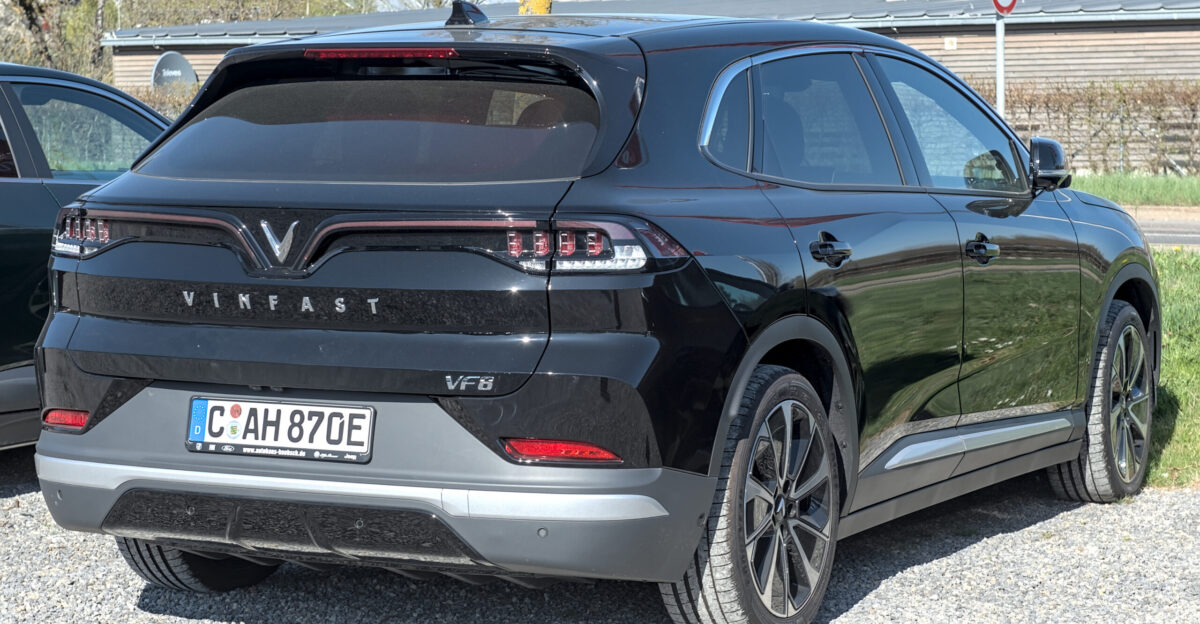
The VF8 model drew sharp criticism for engineering flaws: nonlinear steering with no feedback, motion-sickness-inducing suspension, violent parking brake shudders, and overboosted handling in Sport mode that borders on unsafe. Owners reported persistent defects like AC failures, screen glitches, speaker issues, stability control breakdowns, squeaking panels, erratic climate controls, and constant CarPlay drops; one VF8 went undriveable after six weeks and multiple service calls, another awaited repairs a month after delivery. VinFast responded with a special policy paying $160 per minor fix, $480 for inoperability, and $160 daily for repairs over three days—signaling widespread production shortcomings.
Related Transactions Inflate Figures
Reuters found 82 percent of 2023 sales went to Vingroup affiliates, including Vuong-founded GSM, which took 14,600 vehicles under a $419 million deal. Vietnam retail relied on Vinhomes promotions offering vouchers worth up to $14,000 to home buyers, comprising nearly all genuine demand. International markets contributed under 10 percent of 2024’s surge.
Expansion Plans Falter
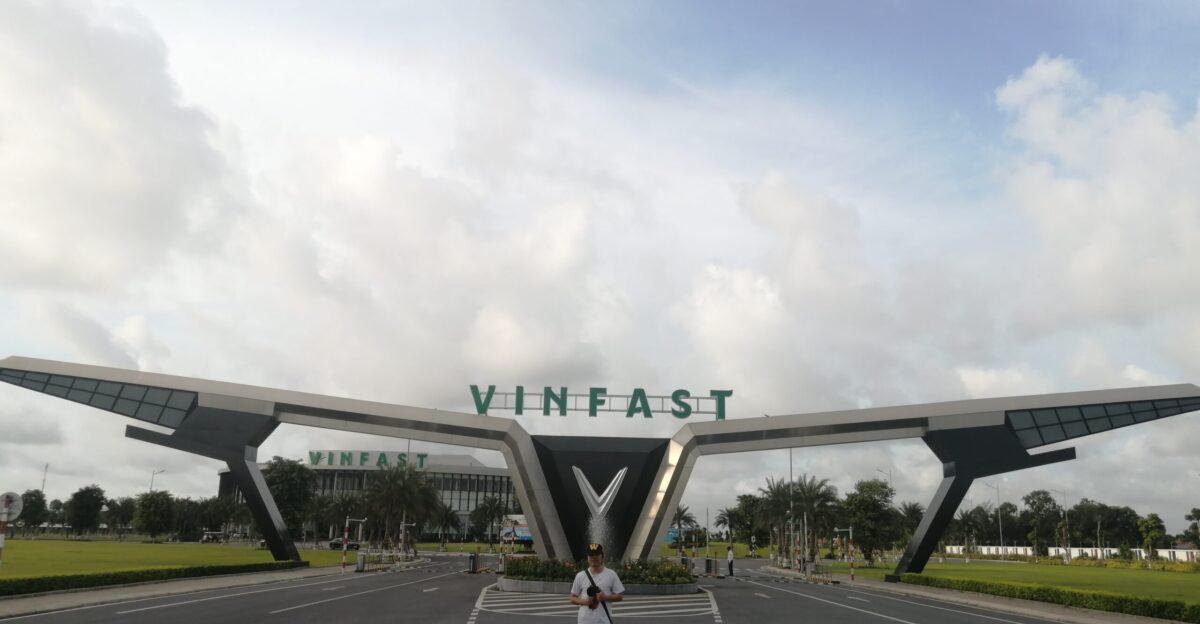
The North Carolina factory, slated for 2024 start, now eyes 2028 amid repeated delays and scaled-back designs; $1.2 billion in state aid carries clawbacks if jobs lag by 2026. The Indonesia plant was inaugurated in December 2025 and is now operational. India and Thailand expansion plans face delays, stranding billions in investments alongside Vietnam’s underused capacity.
Funding and Outlook
Vingroup’s support—$17 billion total, with $1.1 billion in recent loans, $1.4 billion more pledged through 2026, and $2 billion from Vuong—aims for break-even by late 2026. Yet negative economics, closed capital markets, and rivals like BYD (selling under $10,000 models) pose steep barriers. VinFast’s struggles echo Fisker, Lordstown, and others in the EV startup graveyard, highlighting the auto sector’s demands for scale, innovation, and endurance. The path ahead tests whether parental funding can bridge gaps to sustainability amid investor skepticism and dealer pullbacks.
Sources:
“VinFast Reports Fourth Quarter and Full Year 2024 Financial Results.” VinFast Investor Relations, April 2025.
“Vietnam EV maker VinFast’s challenges escalate risk for parent Vingroup.” Reuters, April 2024.
“Everyone Agrees the VinFast VF8 Is Very, Very Bad.” Jalopnik, May 2023.
“2025 VinFast VF 8 Consumer Reviews.” Edmunds, March 2025.
“Fisker Inc. declares bankruptcy: A case study in EV startup challenges.” ETEdge Insights, June 2024.
“Startup VinFast Starts Shrinking.” Kelley Blue Book, December 2024.