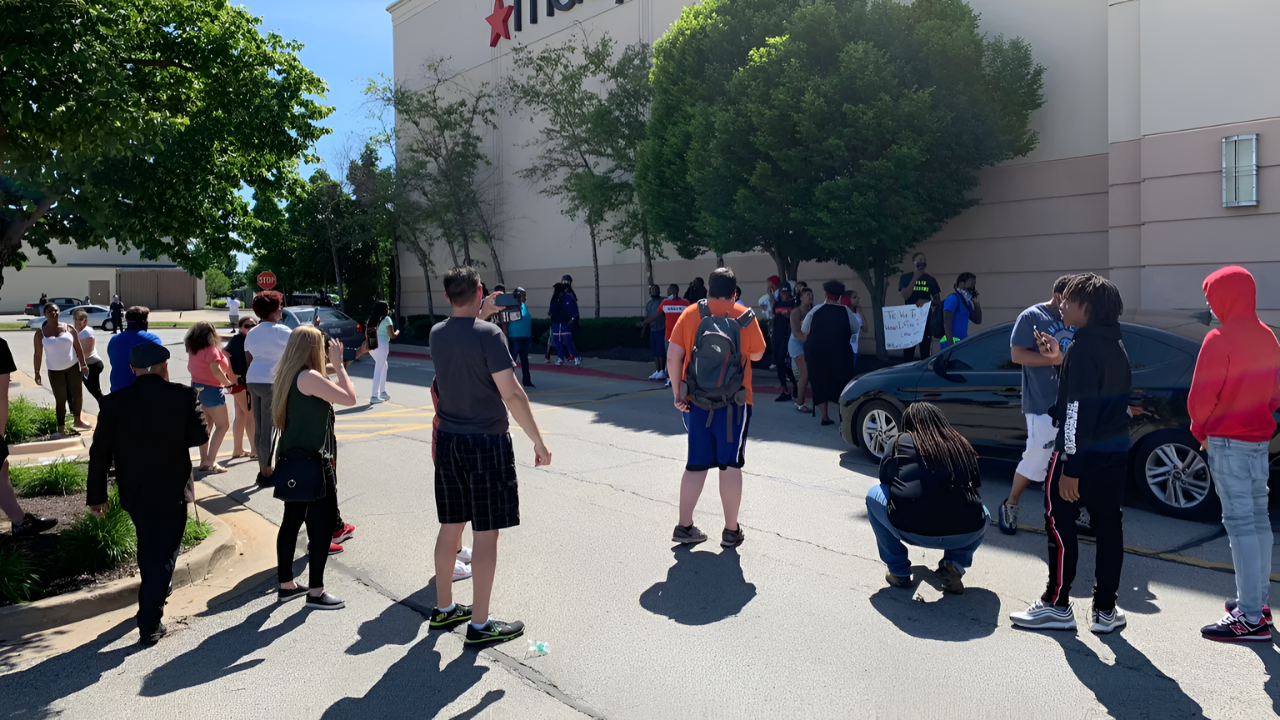
Just over a decade ago, Macy’s Owasso fulfillment center was touted as a major win for Oklahoma and a cornerstone of the region’s logistics economy. Now, the same vast building is scheduled to go dark, putting a hard stop to thousands of routines that once revolved around its shifts, schedules, and paychecks.
The facility, built at a cost of about $170 million and stretching roughly 1.3 million square feet, had been designed to handle a flood of online and in-store orders across the central United States. Its closure raises an urgent question: how did such a sizable, modern investment become expendable so quickly in corporate terms?
Massive Job Risk

The shutdown threatens the livelihoods of roughly 2,500 people who relied on the Owasso center for steady work, including about 1,500 full-time employees and hundreds of seasonal staff. Many of those jobs supported families not just in Owasso but across the greater Tulsa area, turning the warehouse into one of the region’s most important private employers.
Now, workers must weigh uncertain options: seek transfers to distant Macy’s locations, accept severance, or try to start over in a shifting job market. “We can’t control the business climate of these corporations, but we can control how we respond as a community,”
Retail Giant Struggles
Macy’s, long known for its holiday parades and flagship department stores, is now battling to stay competitive in an era when shoppers increasingly click instead of visit the mall. The company faces pressure from pure online players and big-box rivals that have invested heavily in fast, automated logistics.
As part of its “Bold New Chapter” turnaround strategy, Macy’s is closing some stores and reworking its distribution network to cut costs and speed up deliveries. Former CFO and COO Adrian Mitchell has said the company is targeting about 235 million dollars in annual supply-chain savings by 2026, calling it key to “improve inventory productivity and ultimately, better sales.” That means older or less efficient facilities, even relatively new ones like Owasso, can be deemed redundant if they do not fit the new model.
Facility Origins
When Macy’s broke ground on the Owasso fulfillment center in 2014, state and local leaders hailed it as proof Oklahoma could attract high-profile investment. The project opened the following year, backed by partnerships with state development officials, Tulsa County, the city of Owasso, and regional business groups. It quickly became one of Macy’s largest fulfillment hubs, handling both direct-to-consumer online orders and shipments destined for brick-and-mortar stores across multiple states.
At its peak, the building’s sheer scale, around 1.3 million square feet, made it a centerpiece of the company’s omnichannel strategy. Less than twelve years later, that same success story is being rewritten as a cautionary tale about how fast corporate priorities can change.
Mounting Pressures

The forces squeezing Macy’s are not unique: many traditional retailers are struggling to match the speed and low delivery costs set by Amazon and Walmart. That race has pushed companies to invest in robotics, automation, and more flexible, smaller distribution hubs closer to customers. In this environment, large single-site operations like Owasso can become costly liabilities if they are slower or more expensive to operate than newer facilities.
Macy’s leadership has tied the Owasso closure to its broader effort to streamline the supply chain and “simplify how we operate,” a phrase echoed in corporate communications. As those changes rolled out, workers noticed shifts being cut and operations quietly scaled back long before the official announcement.
Closure Confirmed

The closure became official on January 8, 2026, when Macy’s notified employees and confirmed that the Owasso fulfillment center will cease operations on March 28. In a memo to staff, CEO Tony Spring said the company is modernizing its supply chain to “better serve customers” and that the Owasso facility no longer fits into that plan.
The company has indicated that affected workers may be eligible for transfers to other locations, as well as severance and job-search support in some cases. Still, for employees rooted in Oklahoma, relocation may be unrealistic, leaving many to absorb the hit locally.
Local Economy Hit
The end of operations at the Owasso facility does not just remove a major employer; it also knocks out a backbone customer for surrounding businesses. Trucking companies, maintenance firms, food vendors, and other small businesses that relied on the steady flow of freight and workers through the site now face steep revenue drops.
The closure will suddenly place a 1.3 million-square-foot industrial property back on the Tulsa-area market, raising questions about how quickly such a large space can be filled. Local chambers of commerce worry that the ripple effects could reach far beyond warehouse jobs, touching everything from retail spending to housing demand.
Worker Voices
Inside the warehouse, workers say they saw signs of change long before any official letter arrived. “We all saw it coming. We just didn’t know when,” one employee told a local TV station, asking to remain anonymous out of fear of retaliation. Shifts had been reduced, overtime dried up, and talk on the floor increasingly turned to rumors of a shutdown or consolidation.
Some employees tried to prepare by gaining new skills, learning forklift operation, safety protocols, or inventory systems, in hopes of transferring to another Macy’s facility or landing a job elsewhere in logistics.
Competitor Shifts
While Macy’s pulls back in Owasso, competitors are following a different playbook in some parts of the country. Amazon has continued to build highly automated distribution and fulfillment centers, including in states like Oklahoma, where it has signaled interest in expanding its network. Walmart, meanwhile, has leaned on its vast store base and a revamped logistics operation to maintain its dominance in big-box retail.
For Macy’s, the future lies in a smaller number of more advanced facilities, such as its site in China Grove, North Carolina, which is expected to handle a significant share of digital orders. Some industry reports suggest that new e-commerce hubs can process more orders with fewer workers, further reducing the need for mega-warehouses like Owasso.
Broader Trends
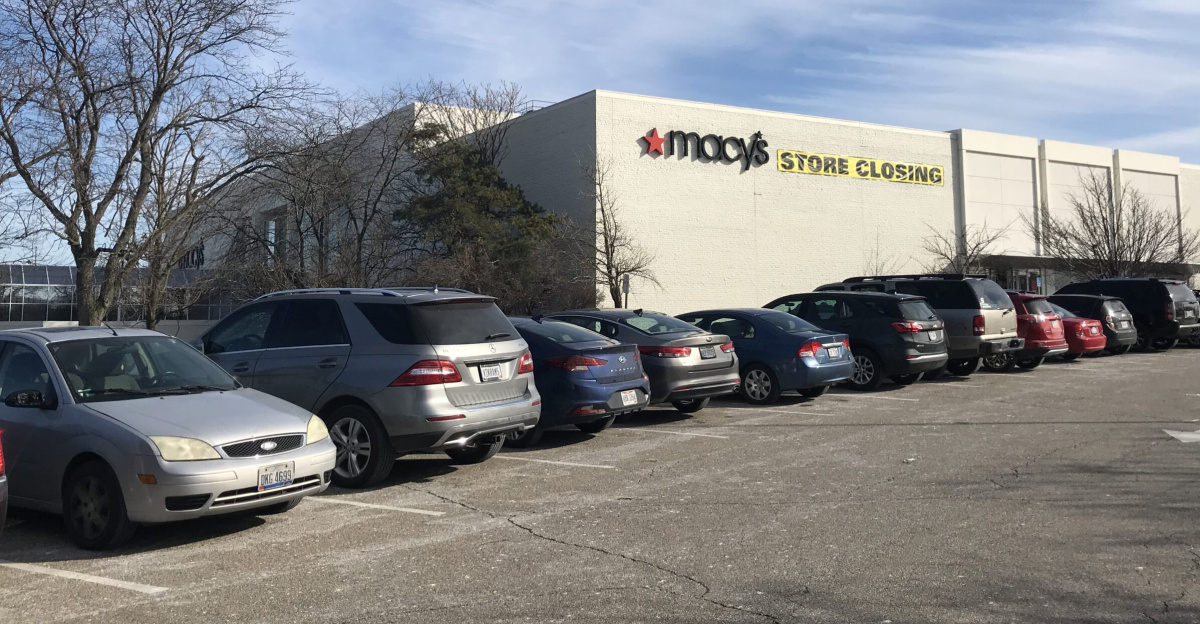
The Owasso closure fits into a wider pattern of consolidation and cost-cutting across the retail sector. Macy’s has already announced plans to close 14 additional underperforming stores, as it nears its goal of shutting about 150 locations under the “Bold New Chapter” plan. Other chains are following similar paths, closing legacy sites while investing heavily in technology and automation behind the scenes.
Industry analysts point out that digital orders demand speed, precision, and flexible capacity, features that are often easier to achieve with networks of smaller, tech-heavy warehouses rather than sprawling, older sites.
Hidden Vacancy Woe
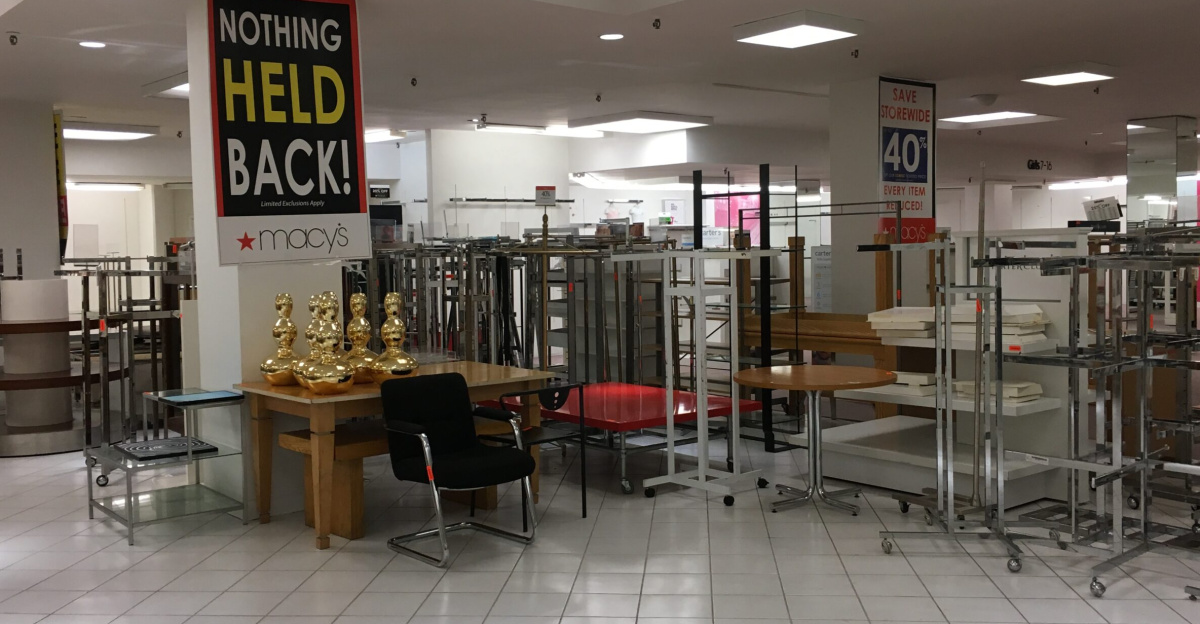
Finding a new use for a building as large as the Owasso center may prove just as difficult as keeping it open. Industrial demand in Oklahoma has been strong, but most potential tenants are looking for smaller, more flexible spaces rather than a single 1.3 million-square-foot box.
Some local economic officials have floated ideas ranging from advanced manufacturing to data centers, but those uses come with their own hurdles, including heavy power and water requirements. In the meantime, every month the facility sits empty is a month without the trucking traffic, service calls, and related spending that once radiated out from the site.
Leader Frustrations
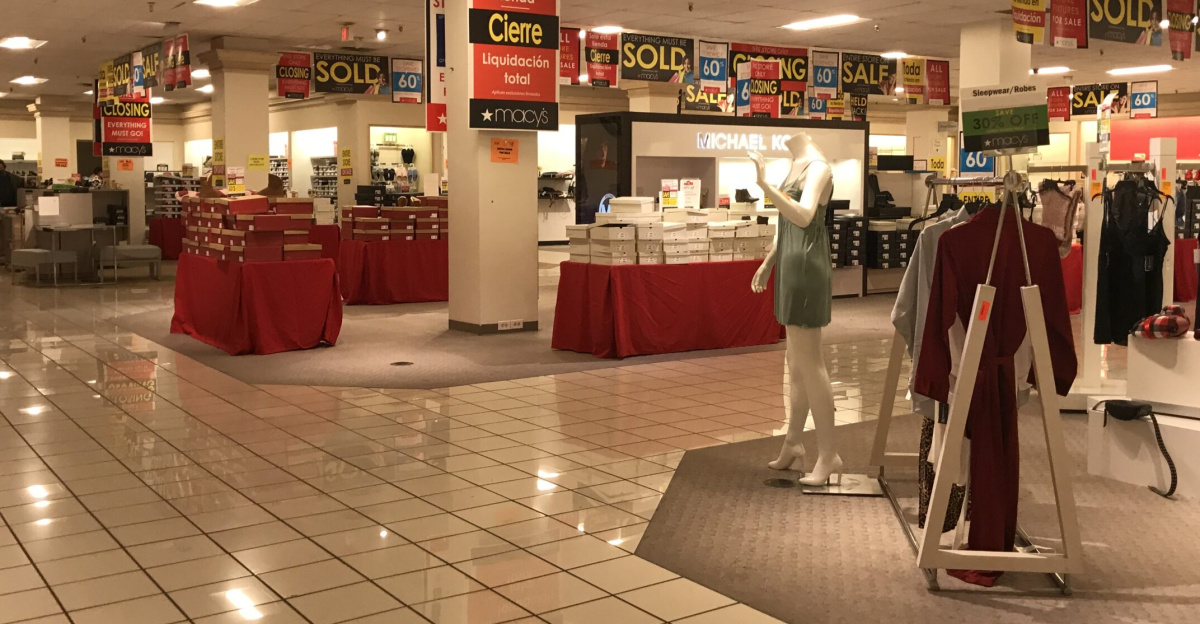
As news of the closure spread, local leaders voiced both frustration and determination. Owasso Chamber of Commerce President and CEO Chelsea Levo Feary said, “While we are disheartened to hear operations are closing, we’re actively communicating with Macy’s, the city, and our local partners to provide workforce re-engagement as quickly as possible.”
County and city officials have been working to connect laid-off employees with job placement services, training programs, and emergency assistance. Yet many acknowledge that, in the early days, the full economic and social impact is hard to quantify. Chambers of commerce are also pushing aggressively to market the building to potential new tenants, hoping to shorten any vacancy period.
Strategic Pivot

At the center of these decisions is Macy’s leadership, which is betting that a leaner, more tech-driven footprint will secure the company’s future. Under CEO Tony Spring, the retailer has rolled out its “Bold New Chapter” strategy, which blends store closures, asset sales, and supply chain upgrades.
That process includes closing certain distribution centers and redeploying capital into higher-performing sites and digital capabilities. Spring has argued that modernization efforts are already yielding “faster and more reliable operations,” a claim echoed in a January memo to employees.
Recovery Efforts

In the wake of the announcement, regional business groups and public agencies have begun mapping out a recovery strategy. The Owasso and Tulsa chambers, along with workforce boards and training providers, are organizing job fairs, resume workshops, and retraining programs for affected employees.
Macy’s has signaled it will provide some support for transitions, including job placement assistance and severance packages in certain cases. “We’ll do our best to lessen the impact,” Sallee pledged in comments to local media, stressing that the community has navigated industrial shocks before.
Skepticism Lingers

Despite these efforts, not everyone is convinced that a quick turnaround is likely. Some analysts point to national studies suggesting that large distribution centers often raise local incomes while operating, but deliver fewer long-term benefits once jobs disappear.
Experts also stress that the structural shift toward e-commerce and automation is unlikely to reverse, meaning that any new jobs may look very different from the ones being lost. For former Macy’s workers, that skepticism translates into a tough reality: even with retraining, replicating past pay and benefits may take time.
Future Uncertain

As the March 28 closure date approaches, Owasso stands at a crossroads. One scenario imagines a new marquee employer, perhaps a tech company, a data center operator, or another logistics giant, moving in and restoring some of the lost momentum. Another sees the building lingering as an underused shell, a reminder of a time when a single corporate name seemed to guarantee security.
For the roughly 2,500 people whose workdays have revolved around the facility, the future now means weighing relocations, severance, retraining, or entirely new industries. Whether Owasso’s next chapter is defined by reinvention or vacancy will depend on decisions made in boardrooms, city halls, and kitchen tables over the months ahead.
Sources:
Supply Chain Dive, Macy’s to close Oklahoma fulfillment center, January 11, 2026
KJRH 2 News Oklahoma, Macy’s Owasso distribution center closing in March, January 8, 2026
KTUL, MACY’S INC. issues statement regarding closure of location in Owasso, January 8, 2026
KRMG, Macy’s Fulfillment Center to close in Owasso, January 7, 2026
DBBNWA, Macy’s to Shut Tulsa/Owasso Fulfillment Center in Spring 2026, January 12, 2026