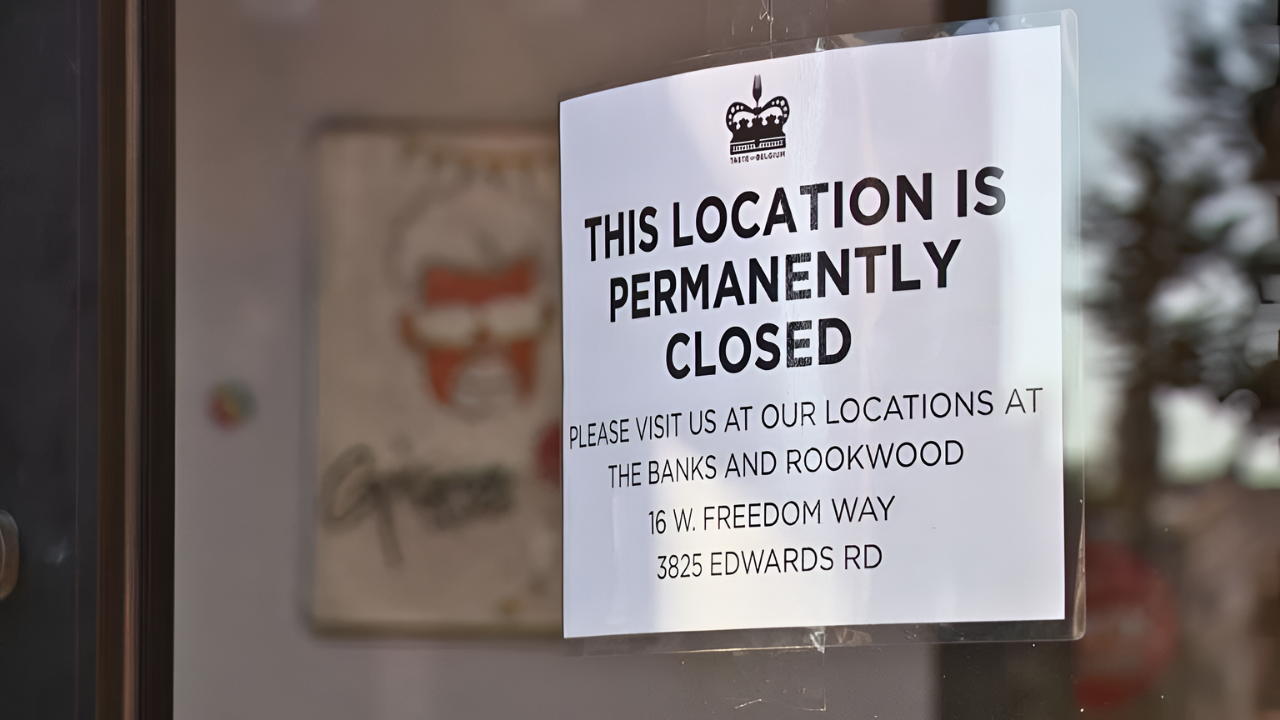
Once called Cincinnati’s gold standard for brunch, Taste of Belgium dominated the region’s breakfast culture for nearly two decades.
The Belgian waffle-focused chain earned spots on Food Network’s Diners, Drive-Ins, and Dives and racked up “Best Brunch” awards from CityBeat, Metromix, and local media. Yet by late 2025, something had shifted dramatically, and few saw it coming.
The Unraveling

What began as quiet closures in May 2024 turned into a freefall. Within eighteen months, eight of the chain’s eleven locations shuttered across Ohio and Kentucky.
By January 2026, Taste of Belgium had contracted to just three surviving restaurants, all in Cincinnati. The speed shocked industry observers and devastated workers, who were left with no notice.
A 19-Year Legacy

Founder Jean-François Flechet launched Taste of Belgium in 2007, betting on a Belgian waffle concept that was uncommon in the American Midwest at the time.
The chain thrived through the 2008 recession and survived the COVID-19 pandemic shutdowns. What it couldn’t survive, it turned out, was the era after.
The Perfect Storm

Inflation surged post-COVID, pushing food and labor costs skyward. Downtown foot traffic, especially in Cincinnati’s once-bustling Over-the-Rhine neighborhood, never recovered to pre-pandemic levels.
Third-party delivery apps like DoorDash and Uber Eats, which the chain relied on during lockdowns, now charged commissions that ate into already-thin margins.
The Bankruptcy Bombshell

On January 6, 2026, Taste of Belgium filed for Chapter 11 bankruptcy protection in the U.S. Bankruptcy Court for the Southern District of Ohio, listing liabilities up to $10 million.
The filing revealed $5.62 million in secured claims and over $428,000 in priority tax obligations. The company was fighting for survival.
The Closure Timeline

Taste of Belgium’s eight closures unfolded in waves: three in May 2024 (Clifton Heights, Liberty Township, Montgomery Road in Cincinnati), two in September 2024 (Crestview Hills, KY, Mason Montgomery Road), one in December 2024 (Miamisburg), one in January 2025 (Beavercreek), and the flagship Over-the-Rhine location in September 2025. Each closure meant immediate job losses.
Workers Left Behind

Employees reported receiving no warning before closures. Some were told to show up and found the doors locked; others were offered just $10 per hour to help clean out the shuttered restaurants.
LinkedIn and third-party databases listed the company as employing 201–500 workers, indicating that roughly 120–200 jobs vanished in less than 2 years.
The Leverage Game

Taste of Belgium faced more than just market pressures. Landlords pursued eviction, and the company was sued for back rent, including $61,000-plus claims from at least one closed location.
These legal battles forced the chain to close additional sites to stay afloat, further eroding its revenue base.
The Broader Collapse

Taste of Belgium wasn’t alone. The casual-dining sector faced unprecedented pressure in 2024–2026. Competitor restaurant chains filed for bankruptcy, reduced menus, and slashed locations nationwide.
Rising ingredient costs, labor shortages, and shifting consumer preferences away from sit-down breakfast dining accelerated the trend across the industry.
The Downtown Death Spiral

Over-the-Rhine, once Cincinnati’s bohemian Renaissance hub, had lost its foot traffic. Flechet’s flagship Taste of Belgium location, a 14-year anchor in the neighborhood, closed in September 2025 because downtown diners stopped coming.
The closure raised a painful question: Was it the restaurant that failed, or the neighborhood itself?
Founder’s Resolve

Despite the closures, Jean-François Flechet didn’t give up. In his bankruptcy statement, the founder insisted the Chapter 11 filing was “not about closing restaurants” but “about keeping them open.
Filing for Chapter 11 gives us the protection we need to adapt, stay in business, and continue serving our guests.”
The Strategic Pivot

Taste of Belgium shifted from rapid expansion to survival mode. The company streamlined operations, focusing solely on three remaining locations: Rookwood (a high-traffic shopping district), The Banks (downtown riverfront), and Findlay Market (historic marketplace). These three anchors would either stabilize the brand or mark the final chapter.
The Menu Reset
Under bankruptcy protection, Taste of Belgium simplified its menu and operational complexity. The company launched a “new menu featuring Belgian cuisine with a modern twist,” aimed at differentiating from fast-casual competitors and capturing customers willing to pay premium prices for authentic Belgian fare.
Expert Skepticism

Restaurant industry analysts remained cautious. While Chapter 11 provided breathing room, the three surviving locations still faced the same headwinds: delivery app fees, inflation, and changing consumer dining habits.
Bankruptcy experts noted that without significant operational changes or capital infusion, the chain’s long-term outlook remained uncertain.
The Restructuring Question

As Taste of Belgium navigated bankruptcy proceedings, a critical question loomed: Could founder Flechet secure new investment or partnerships to accelerate the turnaround? Would private equity see opportunity in the remaining three locations and their brand heritage? The following 12 months would determine survival.
Policy & Supply Chain Angles

The Taste of Belgium collapse reflected broader economic shifts. Rising minimum wages in Ohio and Kentucky had squeezed labor costs; supply-chain disruptions made imported Belgian chocolate and specialty ingredients expensive.
Policy debates over third-party delivery commissions, which some states had moved to cap, came too late for this chain.
Cincinnati’s Restaurant Ecosystem Under Stress

Taste of Belgium’s implosion didn’t occur in isolation. Multiple Cincinnati restaurants faced closures or financial stress in 2024–2026, raising concerns about the city’s ability to retain and grow its dining reputation.
Some industry observers warned that without policy intervention, more beloved local brands could vanish.
The Employment Law Dimension

Workers’ sudden terminations without notice or severance pay raised questions about compliance with labor laws. While the chain notified some employees (Beavercreek), others reported no warning.
As bankruptcy proceedings unfolded, employment law firms began fielding calls from affected workers about unpaid wages or claiming priority in the bankruptcy estate.
The Cultural Reckoning
For Cincinnati diners, Taste of Belgium represented more than breakfast; it was a symbol of local entrepreneurship and the city’s transformation into a food destination.
Its collapse raised a generational question: Could small, independent restaurant brands survive the age of delivery apps, corporate consolidation, and post-COVID economics? Or was this the new normal?
What Taste of Belgium Signals

The Taste of Belgium story isn’t just about one restaurant chain. It’s a warning signal about the fragility of beloved local brands in an era of rising costs, thin margins, and digital disruption.
For Cincinnati and mid-sized cities nationwide, the question is urgent: How do communities preserve the restaurants and gathering spaces that define their identity while navigating economic realities that have shifted irreversibly?
Sources:
The Street – “Favorite casual restaurant chain files Chapter 11 bankruptcy”
Cincinnati.com – “Buzz built the brand, but it couldn’t save Taste of Belgium”
WCPO – “Taste of Belgium files for bankruptcy, remaining restaurants to stay open”
Cincinnati Business Courier – “Taste of Belgium faces lawsuits amid restaurant closures”
Cincinnati.com – “Taste of Belgium closes seventh location since May”
WHIO – “Taste of Belgium closes another location”