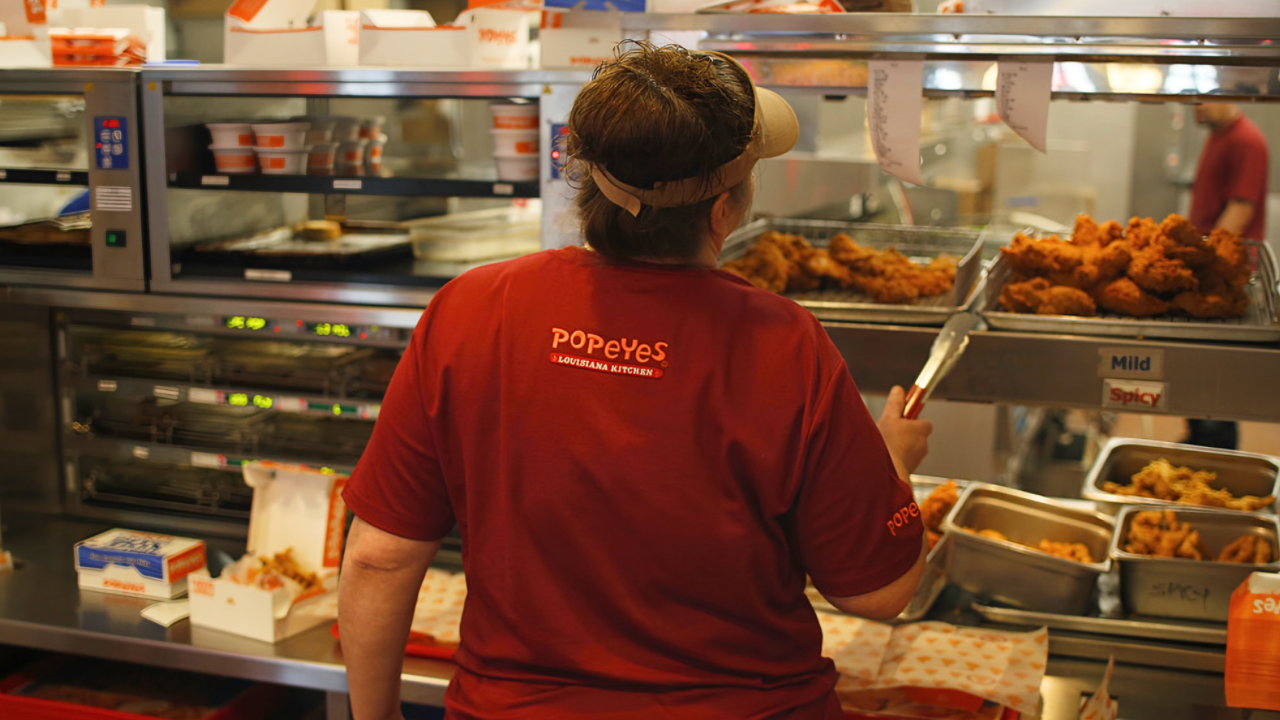
One of the largest Popeyes operators in the United States has entered Chapter 11, sending shockwaves through the fast-food industry. Sailormen Inc., a Miami-based franchisee operating more than 136 Popeyes restaurants across Florida and Georgia, filed for bankruptcy on January 15, 2026.
Despite generating $233.5 million in annual sales, the company collapsed under mounting losses, defaulted debt, and rising costs—placing nearly 2,900 workers and dozens of communities into sudden uncertainty.
The Filing That Stopped the Clock
Sailormen’s Chapter 11 filing landed in the U.S. Bankruptcy Court for the Southern District of Florida just days before lenders could seize control.
Assets and liabilities were each listed between $100 million and $500 million, underscoring the scale of the collapse. The filing halted an imminent receivership sought by its primary lender and gave management temporary breathing room to stabilize operations while exploring restructuring or asset sales.
A $130 Million Credit Default
At the center of the bankruptcy is a default on roughly $130 million in credit facilities held by BMO Bank N.A. The lender warned that Sailormen was in “immediate danger of running out of cash” as margins deteriorated.
Higher interest rates amplified debt servicing costs, turning what once looked like manageable leverage into an existential threat almost overnight.
Strong Sales, Weak Survival
The collapse is especially jarring because revenue wasn’t the problem. Sailormen reported $233.5 million in sales, averaging roughly $1.7 million per store.
Yet those topline numbers masked an $18.8 million net operating loss. Labor inflation, higher food input costs, and fixed lease obligations steadily eroded profitability, proving that strong customer demand alone cannot compensate for structural cost pressures.
Nearly 2,900 Jobs on the Line
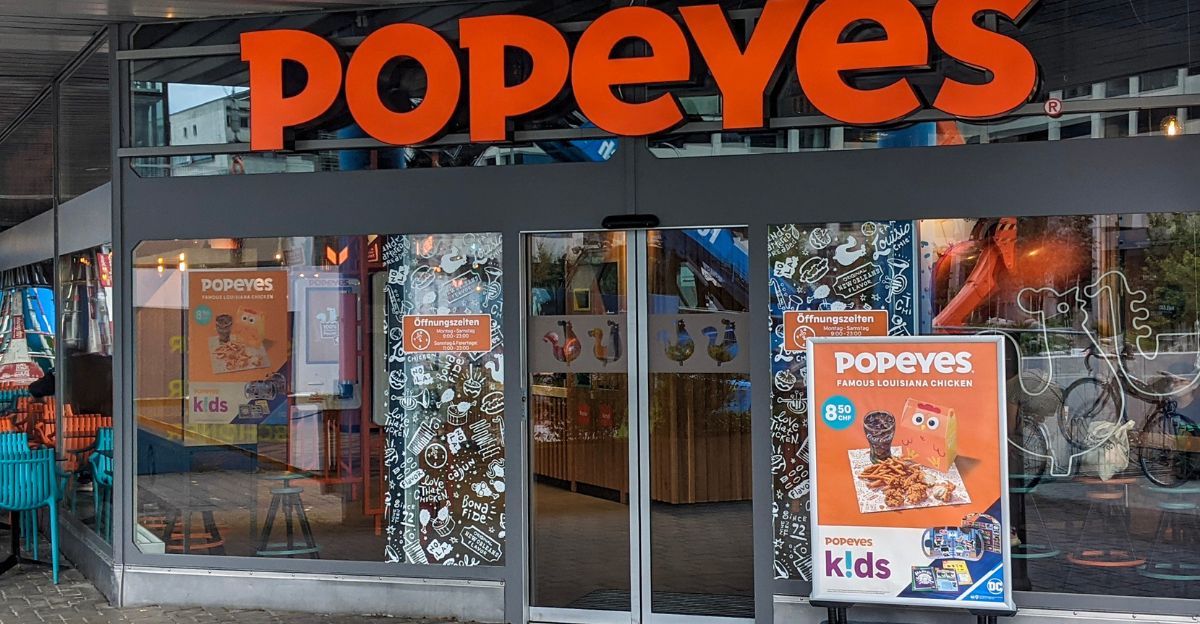
About 2,900 employees across Florida and Georgia now face an uncertain future. For many workers, these Popeyes locations provided steady income and long-term employment.
Bankruptcy introduces risks of store closures, reduced hours, or ownership changes. Even if restaurants remain open during restructuring, job security has been fundamentally shaken across the entire Southeast footprint.
A Failed Sale That Changed Everything
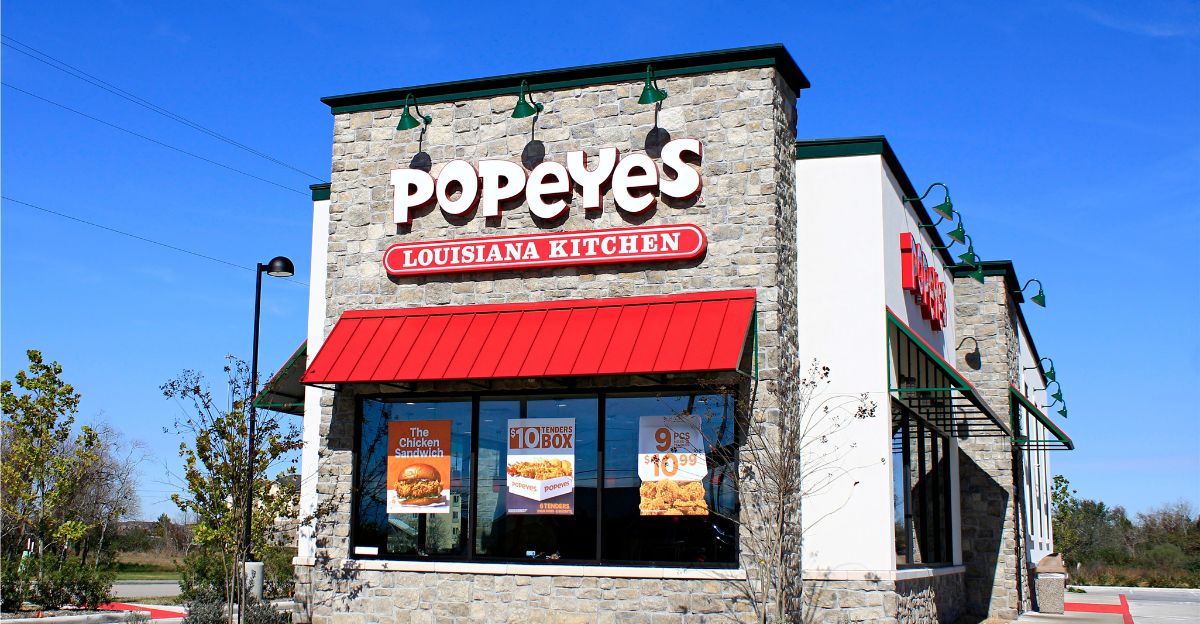
Sailormen attempted to raise liquidity through a $1 million sale of 16 Georgia locations, but the deal collapsed before closing. That failure eliminated a critical cash lifeline at a moment when costs were accelerating.
Without proceeds from the divestiture, the company was forced to continue operating highly leveraged locations while losses mounted quarter after quarter.
Suppliers Caught in the Middle
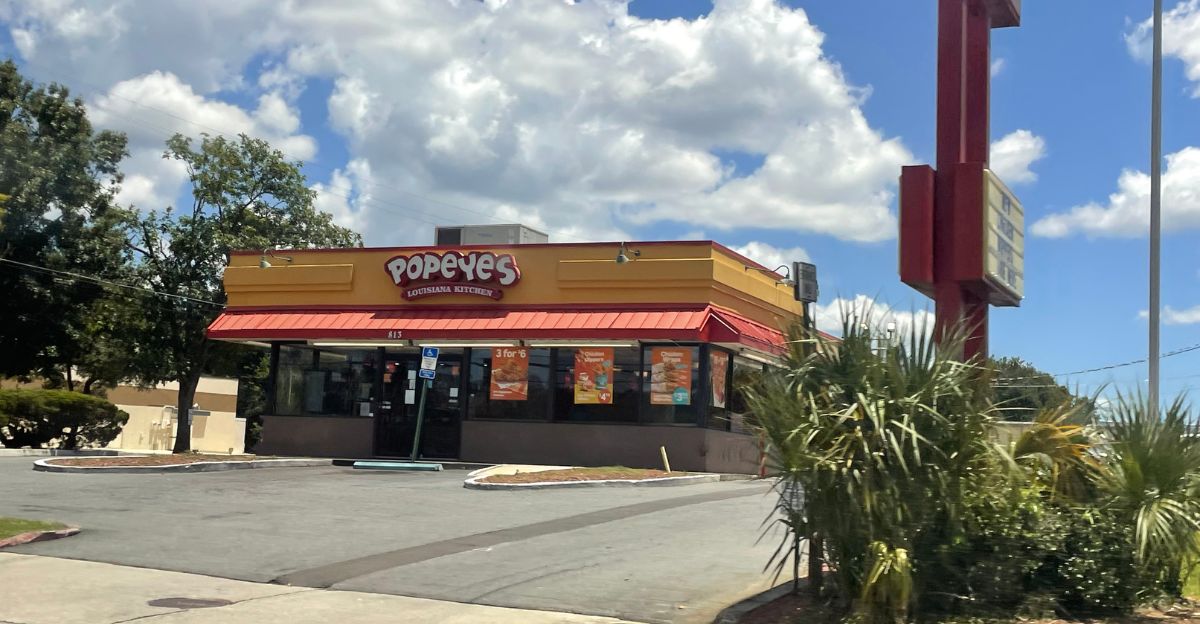
The bankruptcy has immediate consequences for vendors. Cheney Brothers Inc., the largest unsecured creditor, is owed more than $623,000.
Other food distributors and service providers also face potential losses. For smaller regional suppliers, delayed or reduced payments could trigger their own cash-flow crises, spreading the financial strain beyond the restaurants themselves.
Landlords and Real Estate Exposure
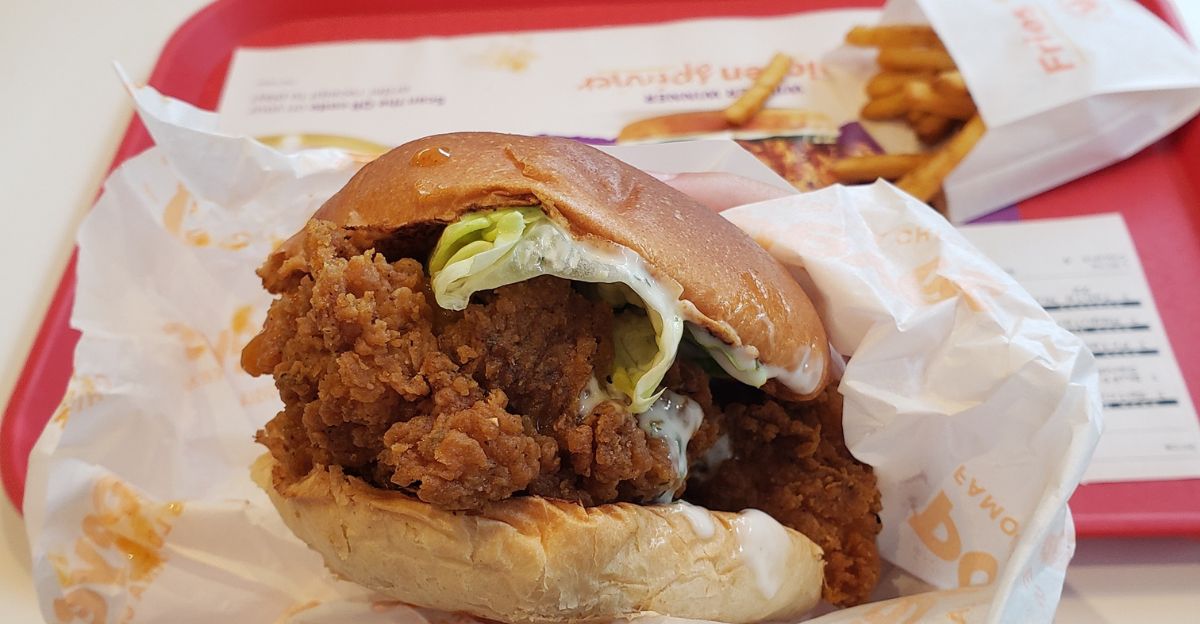
Hundreds of commercial leases are now under scrutiny. Landlords risk unpaid rent or early terminations if locations close. Shopping centers anchored by Popeyes units could see declining foot traffic and falling property values.
Re-tenanting quick-service restaurant spaces is often costly and time-consuming, extending the ripple effects into local real estate markets.
A 37-Year Franchise Story Ends
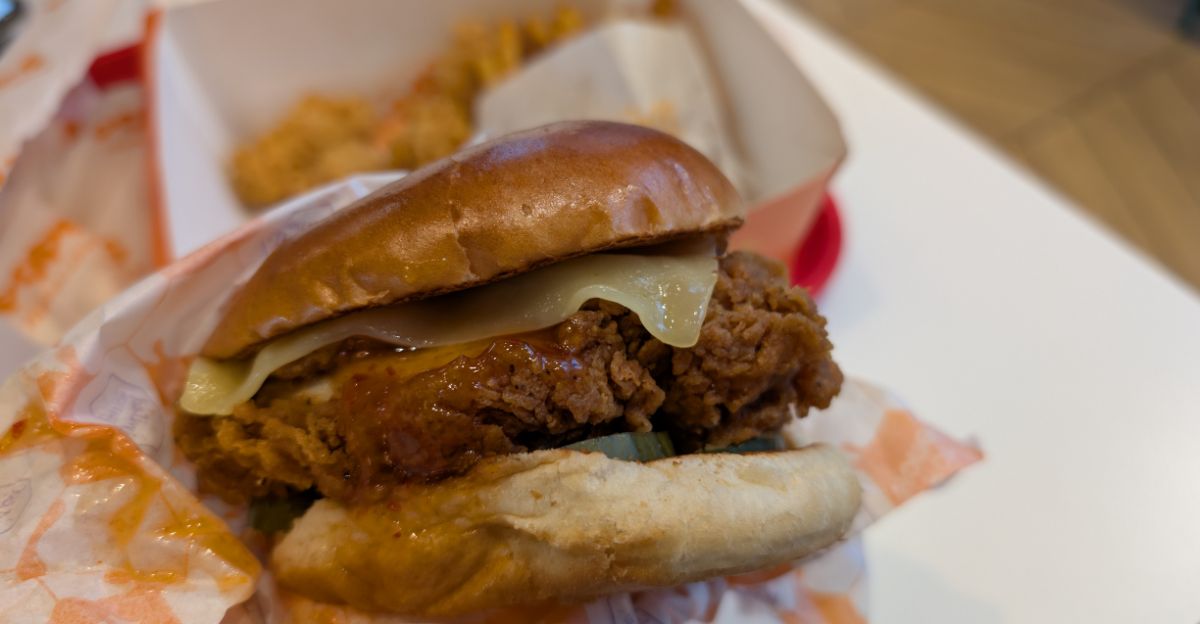
Founded in 1987, Sailormen grew from just 10 locations into one of the largest Popeyes franchise groups in the country.
Nearly four decades of expansion, reinvestment, and regional dominance unraveled in a single filing. For longtime operators and employees, the bankruptcy marks the abrupt end of a multigenerational business legacy.
Chicken Was Supposed to Be Safe
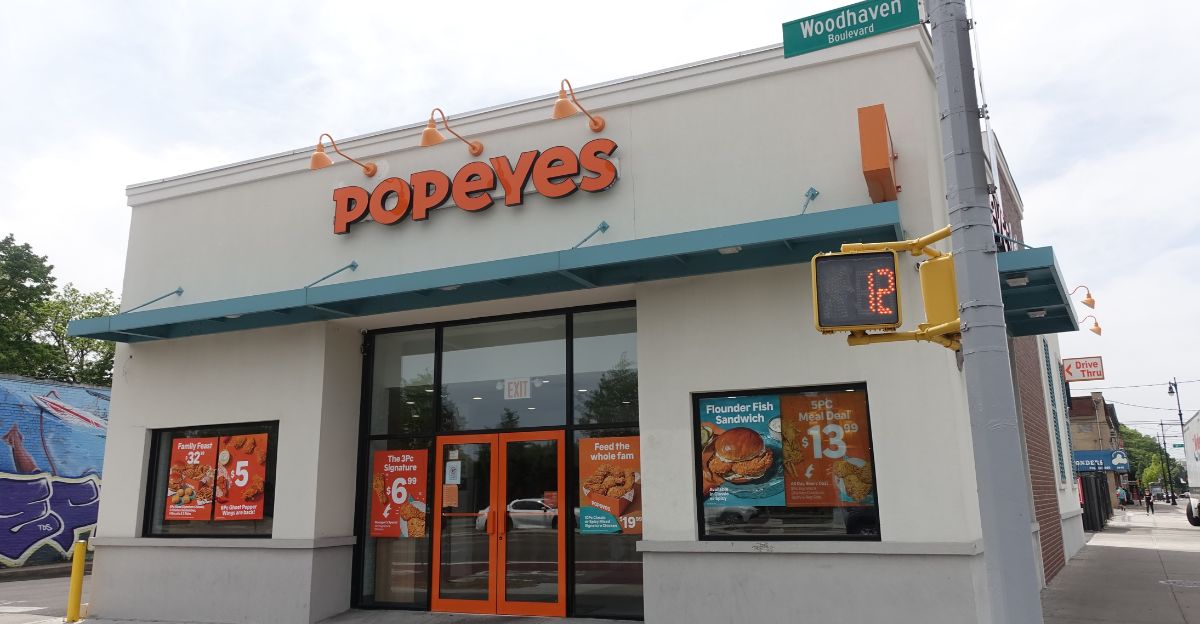
The timing adds to the shock. Chicken chains outperformed the broader fast-food sector, with traffic rising about 3% in the year ending September 2025 while overall fast-food traffic declined.
Sailormen’s failure challenges the belief that chicken concepts are recession-proof and highlights how cost structures matter more than category momentum.
Inflation’s Slow Grind
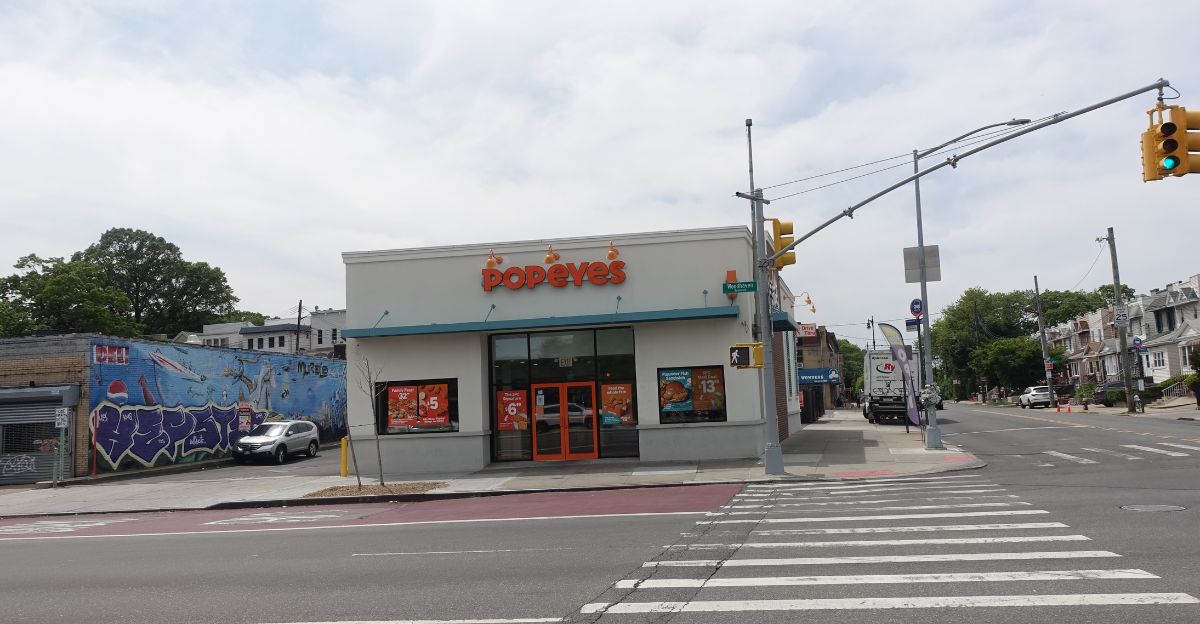
Labor and food costs steadily climbed, compressing margins across every location. Wage competition tightened amid staffing shortages, while poultry, oil, and packaging costs remained elevated.
These pressures didn’t arrive suddenly; they accumulated over years, eventually overwhelming even a large, established operator with strong sales volume.
Scale Didn’t Provide Protection
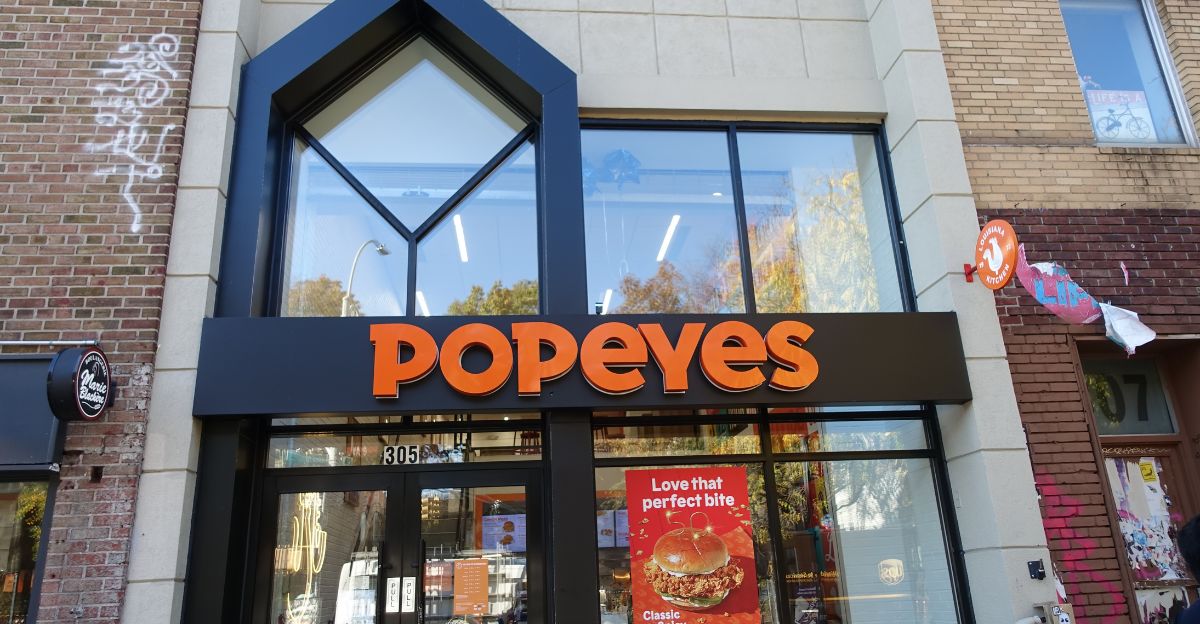
With more than 136 restaurants, Sailormen had size—but not immunity. Large footprints bring higher fixed costs, complex logistics, and heavier debt loads. When conditions shift, scale can magnify losses instead of absorbing them.
The bankruptcy demonstrates that being “one of the largest” offers no guaranteed shield in a high-cost environment.
Brand Impact Without Brand Failure
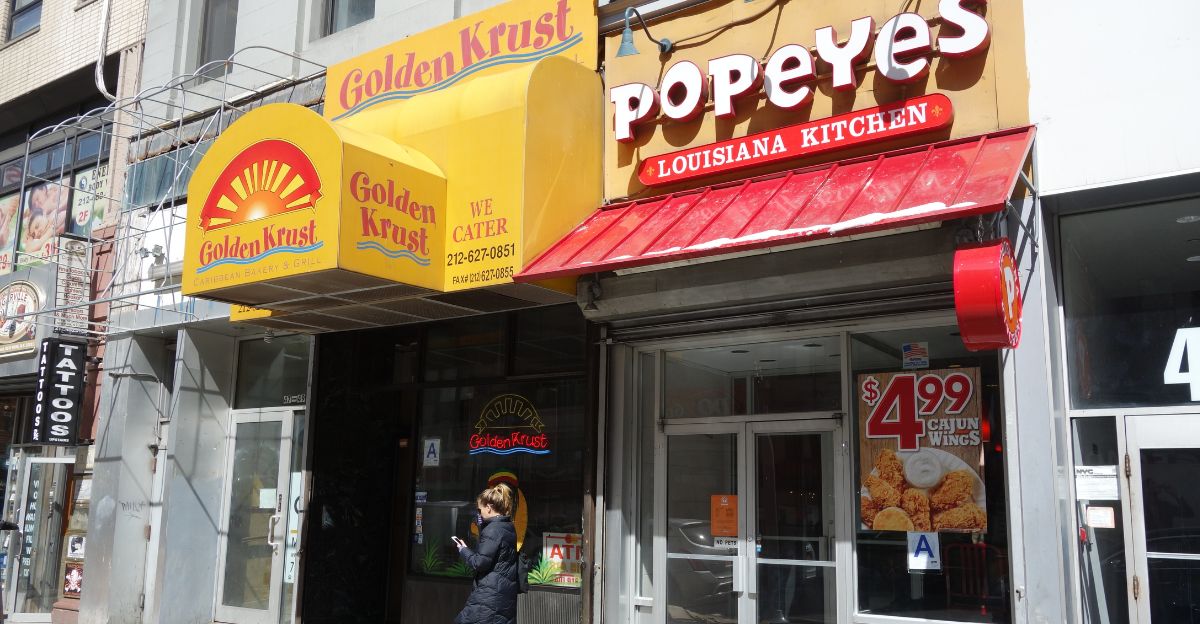
The Popeyes brand itself remains solvent, but franchisee distress creates reputational risk. Customers may worry about closures or service disruptions, while corporate leadership must reassure the public that the system remains stable.
The situation highlights the delicate balance between franchisors and franchisees in maintaining brand trust.
Communities Feel the Shock
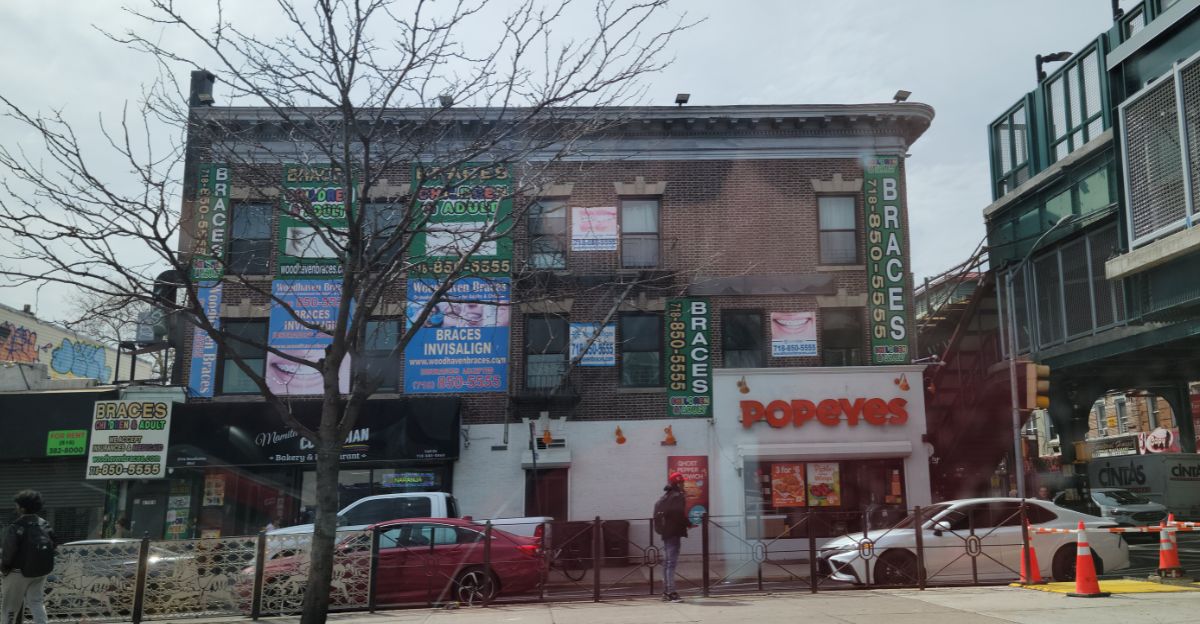
Beyond employees, entire communities are affected. Local governments risk losing sales tax revenue. Nearby businesses depend on restaurant traffic.
Families tied to these jobs now face tough financial decisions. The fallout illustrates how a single corporate bankruptcy can ripple through local economies with surprising force.
Lenders Tighten the Screws
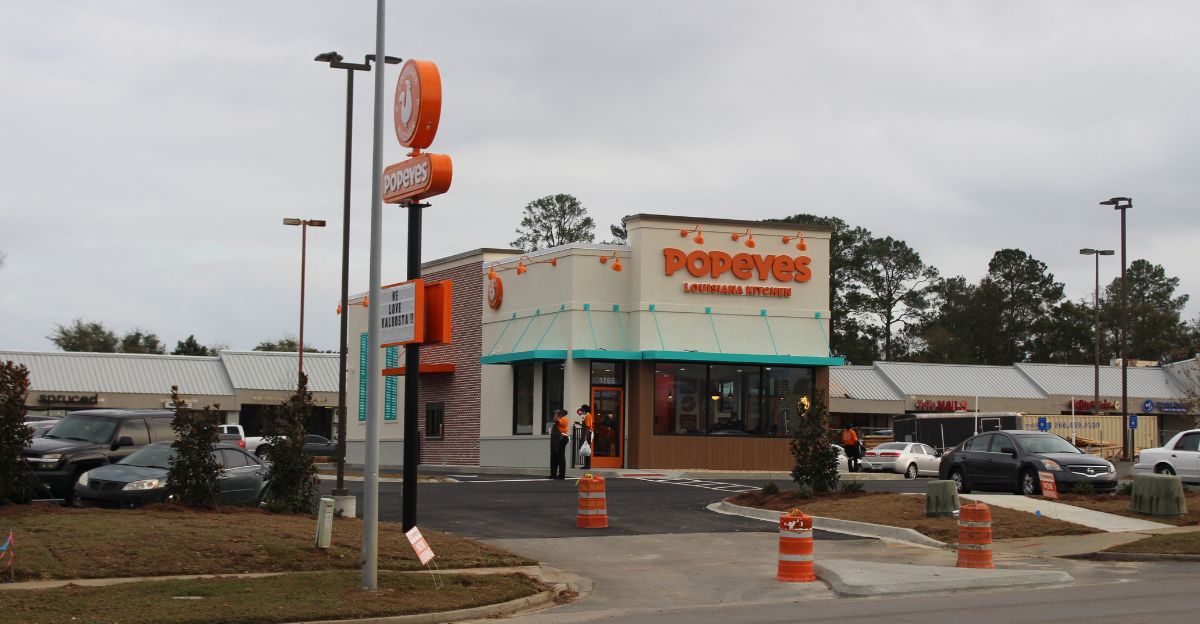
The case is likely to influence future restaurant financing. Banks may demand stricter covenants, higher interest rates, or more conservative expansion plans from franchise operators.
Access to cheap capital—once a growth engine for fast food—appears increasingly limited for highly leveraged operators.
Consolidation on the Horizon
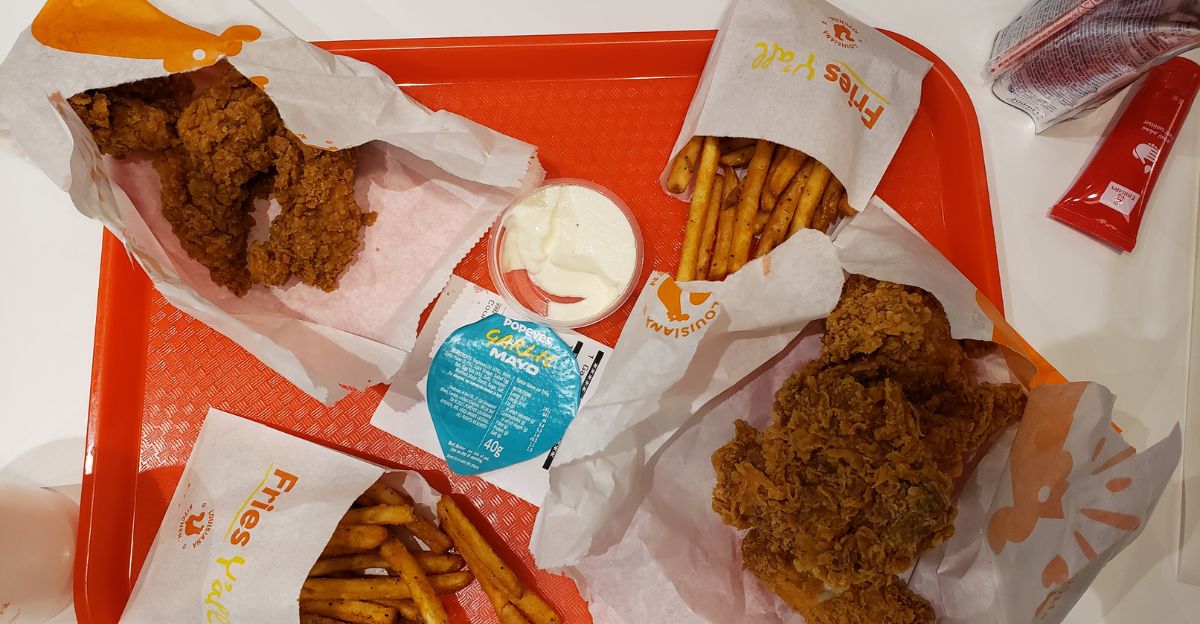
Distressed locations often attract private equity and larger operators seeking discounted assets. Some Sailormen stores may survive under new ownership, while others close permanently.
Either outcome accelerates consolidation, concentrating power among fewer, larger players in the quick-service landscape.
Workers Reconsider the Industry
For employees, the bankruptcy reinforces concerns about stability in food service. Some may move to competing chains, while others exit the industry entirely.
Labor shortages could deepen, pushing wages higher and intensifying the very pressures that contributed to Sailormen’s collapse.
A Warning to Other Franchisees
Sailormen is not alone. Other chicken and casual-dining franchisees have entered Chapter 11 in recent months.
Together, these cases signal that the traditional multi-unit franchise model is under stress, especially when built on aggressive debt and thin margins.
What Comes Next in Chapter 11
During bankruptcy, Sailormen will attempt to restructure debt, renegotiate leases, and possibly sell locations. Some restaurants may continue operating, while others are shuttered.
The outcome will determine how many jobs are saved—and how much value creditors ultimately recover.
The Bigger Lesson
Sailormen’s downfall wasn’t caused by weak demand, but by a collision of inflation, labor scarcity, and leverage.
A 37-year franchise empire collapsed even as chicken remained one of fast food’s strongest categories. The case delivers a stark message: in today’s environment, no restaurant concept is truly recession-proof, and survival depends less on popularity than on financial resilience.
Sources:
“Popeyes franchisee with 130 locations in GA, FL files for bankruptcy.” USA Today, 16 Jan 2026.
“Popeyes franchisee with 130-plus locations files for bankruptcy.” Nation’s Restaurant News, 16 Jan 2026.
“A big Popeyes franchisee files for bankruptcy.” Restaurant Business, 14 Jan 2026.
“Major fast-food chicken franchisee files Chapter 11 bankruptcy.” The Street, 15 Jan 2026.