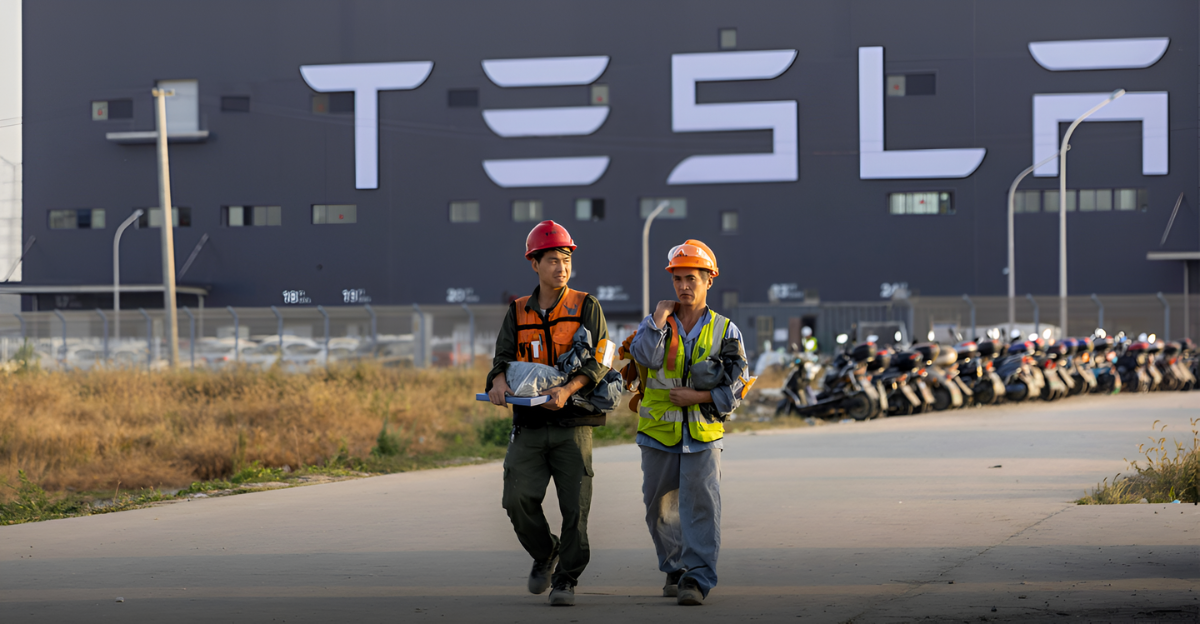
In recent months, U.S. tech companies have seen growing clashes over labor and immigration. The latest flashpoint involves Tesla: a September 12 federal class-action suit alleges the automaker systematically favored H‑1B visa holders over American workers.
According to Reuters, in 2024, Tesla hired 1,355 H‑1B workers while laying off more than 6,000 domestic employees (the vast majority U.S. citizens).
The lawsuit, filed in Northern California, accuses Tesla of using the visa program to cut costs and skirt domestic hiring commitments. Labor tensions now stalk the EV giant, raising questions about tech giants’ hiring strategies.
Workplace Bias
The complaint goes beyond headline figures. It describes a hiring process that allegedly screens out U.S. citizens as soon as their visa status is known. Software engineer Scott Taub, one of the plaintiffs, says he was explicitly “dissuaded from seeking one job after being told it was for ‘H1B only’,” and he never even got an interview for another role.
Similarly, human-resources specialist Sofia Brander, a two-time Tesla contract employee, says she was denied interviews for permanent openings despite her experience.
U.S. citizens may have been excluded from consideration simply because they didn’t need visa sponsorship. Plaintiffs argue this amounts to illegal discrimination.
Visa History
The H‑1B program long served as a talent pipeline for Silicon Valley. By law, companies can hire foreign STEM specialists if no qualified U.S. citizen is available. In practice, major tech firms often use it aggressively.
In 2024 Tesla filed roughly 3,215 Labor Condition Applications for H‑1B positions, placing it among the top tech employers of visa workers. (By comparison, Amazon and Cognizant filled tens of thousands).
Many industry observers note Tesla’s rapid H‑1B hiring accelerated after Musk took over; the company’s approved petitions jumped from 328 in 2023 to 742 in 2024. Tesla now ranks among the nation’s largest H‑1B employers, reflecting how embedded visas have become in the tech workforce.
Industry Pressures
The backdrop to all this is a brutally competitive tech market. Companies are slashing costs and racing to innovate on thin margins. Tesla itself cut over 10% of its global staff by late 2024, trimming the workforce to about 125,000–140,000after peak hiring. (Earlier in 2024, Tesla announced plans to cut 3,332 jobs in California alone.)
At the same time, Tesla poured $4.5+ billion into R&D, driving AI and new vehicle projects. Faced with shrinking demand and fierce rivals in China and Europe, Tesla and others have zeroed in on labor costs.
Cheap visa labor can seem attractive when every dollar counts, even as firms publicly tout bolstering American employment.
Legal Bombshell
Here, the story takes a sharp turn. In Taub v. Tesla (N.D. Cal. No. 3:25-cv-07785), the plaintiffs allege federal civil-rights laws were broken. The complaint claims Tesla engaged in a “systematic preference” for foreign visa workers that amounts to “citizenship discrimination.”
It accuses the company of paying H‑1B employees less than U.S. counterparts to save money – what the suit bluntly calls “wage theft.” According to the filing, “Tesla prefers to hire [visa] candidates over U.S. citizens, as it can pay visa-dependent employees less than American employees performing the same work, a practice… known as ‘wage theft’”.
The plaintiffs seek damages on behalf of all U.S. citizens disadvantaged by this pattern. Legal experts say the case turns on proving that individual rejections fit a broad company-wide bias, a high bar for any massive employer.
Regional Impact
Most of the action has played out in Tesla’s California and Texas facilities. WARN notices reveal roughly 6,020 planned layoffs in 2024 across both states. California’s cuts (3,332 jobs) hit Fremont, Palo Alto, and other engineering centers.
Texas operations (2,688 jobs) were eliminated starting mid-June. In many of those cases, the departing employees were U.S. citizens. Official filings do not mention visas, but the pattern stands out: while thousands of Americans lost jobs, Tesla simultaneously recruited hundreds of H‑1B specialists for U.S. roles.
One ex-Tesla engineer told reporters that in cities like Fremont, “American workers wonder if they’re really next” to be replaced by visa hires.
Human Stories
Plaintiffs Taub and Brander personify the lawsuit’s human dimension. Both are qualified Americans who allege they were shut out solely due to their nationality. Taub recalls being dismissed from a recruiter’s call with the blunt line: “This position is for H‑1B visa holders only.” Brander says she was flatly refused interviews for two openings, despite having twice performed the work on contract.
As the complaint notes, visa workers make up only a small slice of the U.S. labor force, yet “Tesla prefers to hire [these] candidates over U.S. citizens… a practice… known as ‘wage theft,’” because it can pay the visa holders less.
Their words and those of other affected workers have quickly gone viral on social media, fueling public outrage. “I was born here, raised in America, and I’ve never been treated worse by an employer,” Taub told a tech news podcast.
Industry Response
Tesla isn’t alone under scrutiny. In 2023, the Justice Department filed a civil-rights suit against SpaceX (another Musk company), charging it illegally blocked refugees and asylum-seekers from jobs.
That case drew national attention to tech hiring practices, though DOJ abruptly dropped it in early 2025. Still, SpaceX’s experience shows the issue spans the tech industry, not just Tesla.
After the SpaceX case became public, dozens of news articles and critics began examining visa use at Facebook, Microsoft, and other giants. Silicon Valley is now bracing for a wave of debates over how tech harnesses global talent.
Economic Context

Underlying the legal fight are basic economic incentives. Industry analysts note that visa-dependent workers often save large firms millions of dollars in labor costs. One study found an H‑1B staffing plan by an outsourcer had underpaid U.S. workers by roughly $95 million per year – an amount the authors called “really a conservative estimate”.
If Tesla paid even a portion below market wages, the savings add up. Critics say lower-paid visa labor also weakens worker bargaining power, potentially driving down salaries across an entire field.
Supporters counter that foreign STEM hires help fill genuine skill gaps and spur innovation. Yet this case brings the cost argument to the fore: Is preferential hiring for cheap visas a savvy efficiency or an illegal undercutting of American labor?
Musk’s Defense
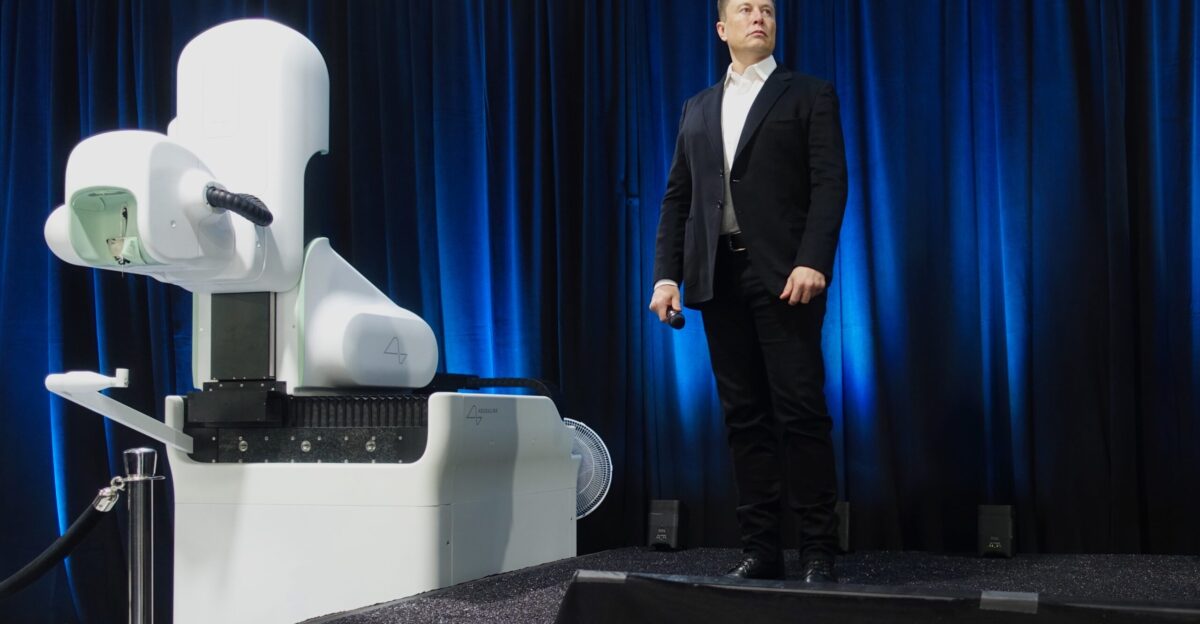
In public, Elon Musk has defended the H‑1B program as vital to U.S. innovation. A naturalized U.S. citizen who himself once worked on an H‑1B visa, Musk took to X (formerly Twitter) to push back against critics.
He wrote that the “reason I’m in America, along with so many critical people who built SpaceX, Tesla, and hundreds of other companies,” is the H‑1B program. He added that he would “go to war on this issue” to protect the visa system.
Musk and other executives argue that in fields like rocket science and AI, America simply needs all the talent it can get. Tesla’s statement noted that, without formal comment, its hiring is driven by business needs and compliance with the law. But to many on the receiving end of cuts, Musk’s praise for H‑1Bs rings hollow when job ads say “U.S. citizens only”.
Internal Tensions
Proving company-wide bias is no easy task. Legal analysts say the Tesla suit may hinge on the discovery phase. If plaintiffs can obtain internal emails, recruiter notes, and hiring data, they might trace a pattern.
The complaint seeks access to applicant tracking records and compensation information to show American candidates were systematically passed over. Experts say the case is akin to other “pattern-or-practice” suits: anecdotal anecdotes must be backed by statistics (for example, comparing hiring rates and salaries of citizens vs. visa holders).
As one labor-law commentator put it, “it’s unclear how [the] plaintiffs plan to show Tesla’s alleged systemic discrimination” without such evidence.
Tesla’s HR and compensation logs – normally hidden – could become critical proof points.
Legal Strategy
The class action is led by plaintiffs’ attorneys experienced in civil rights and employment cases. Washington’s Kotchen & Low LLP joined the Los Angeles firm Yadegar, Minoofar & Soleymani, LLP to sue Tesla. They’re seeking damages not just for Taub and Brander but for every U.S. citizen nationwide who applied and was rejected, or was laid off, during the period in question.
The lawyers are framing it as a Section 1324b claim (the INA’s anti-discrimination provision) – a strategy similar to past suits against tech recruiters. The firms stress that this is a classwide demand: if the courts allow, any American who can show they were replaced by or lost a job to a visa worker could join the case.
The approach is sweeping, and perhaps deliberate: class certification would increase pressure on Tesla to settle and could inspire similar filings at other tech giants.
Corporate Response
Tesla has remained characteristically tight-lipped. Unlike most Fortune 500s, the company has no public relations department and rarely issues press releases. When Bloomberg reporters inquired, a Tesla spokesperson “didn’t immediately respond” to requests for comment on the suit.
In recent years, Tesla’s legal posture in discrimination matters has often been to contest technicalities (such as standing or jurisdiction) rather than concede any wrongdoing. For example, in unrelated harassment cases, the company fought to have cases heard by arbitration or to dismiss claims on procedural grounds.
In this case, however, plaintiff attorneys have indicated the stakes are high enough that Tesla may have to engage substantively if the case proceeds.
Regulatory Outlook
Many observers see the Tesla case as a bellwether. Employment-law experts predict that, if the case survives, federal regulators will take notice. The Justice Department’s Immigrant and Employee Rights (IER) Section enforces laws against citizenship bias, and it has been quietly ramping up enforcement (recently settling cases over visa-related ads).
Other agencies like the EEOC could also be prompted to scrutinize tech hiring. At a minimum, companies will likely tighten documentation of why they hire on visas.
The law requires not just paying H‑1B workers fairly, but also demonstrating that American workers were truly unavailable. Failure to make that case can invite new enforcement actions. In short, whatever happens with Tesla, other tech firms will be watching closely.
Precedent Setting
A Tesla verdict could reverberate across Silicon Valley. H‑1B holders already make up large portions of workforces at companies like Google and Meta. If Taub and Brander prevail, it could encourage “copycat” lawsuits by U.S. workers elsewhere. T
ech executives privately fear a domino effect: once one company is branded discriminatory, rival employers will revisit their hiring policies. Legal analysts say the case could redefine how firms document visa hiring decisions.
A finding against Tesla might compel organizations to justify hiring foreign nationals with detailed scarcity analyses, lest they face similar suits. In that way, the case could force a fundamental rethinking of the balance between global talent sourcing and domestic opportunity – setting a new legal and corporate standard.
Political Ramifications
The lawsuit arrives as immigration is a hot political issue. President-elect Donald Trump has offered mixed signals: on one hand, he famously said, “I’ve always been a believer in H-1B. I have used it many times. It’s a great program”, echoing Musk’s pro-H‑1B stance.
On the other hand, many on the right argue for stricter limits to protect American jobs. High-profile cases like Tesla’s feed into this debate.
Conservative voices seized on the lawsuit as evidence that even tech titans may skirt immigration laws, fueling calls from some policymakers to tighten visa rules. Meanwhile, tech industry groups worry that public backlash could lead to new legislative caps or requirements. In Congress, discussions of H‑1B reforms (reintroduced in bills by Senators Durbin and Grassley) have gained urgency.
International Implications
Tesla’s business is global, which complicates matters. The company’s factories in Germany, China, and elsewhere employ hundreds of thousands of workers. None of those international operations is directly governed by U.S. visa law, but they shape the broader picture. For example, Tesla recently lured engineers from abroad with non-H‑1B visas or local hires, which could muddy perceptions of “outsourcing” vs. “offshoring.”
Some labor advocates point out that if American jobs go to foreign nationals at home, companies might simply shift more roles overseas instead.
The suit raises questions about whether a multinational like Tesla is implicitly favoring labor abroad over citizens at home. How U.S. courts view that global context – if at all – could influence the case.
Compliance Challenges
On a technical level, the case highlights the difficulty of wage compliance. Federal law explicitly requires each H‑1B position to pay at least the higher of the prevailing wage or the actual wage for similar U.S. workers.
Tesla cannot legally pay a visa holder less than what it pays comparable American employees. Proving this in court will require combing through salary records and job titles. Plaintiffs will aim to show that H‑1B recruits were paid below the going rate for U.S. engineers.
The defense is likely to argue that all visa holders were paid above the legal minimum (as the company has asserted), so no wage violation occurred.
Sorting this out means a forensic analysis of pay scales, job functions, and performance reviews across dozens of teams. It is a massive data challenge – but a necessary one if the court is to determine who, legally, was underpaid.
Cultural Shifts
Broader social attitudes toward skilled immigration are also shifting. Many younger Americans who graduated in STEM fields question whether there truly is a labor shortage, given high unemployment and underemployment in some regions.
Polls suggest a majority now support tightening rules to ensure visas don’t undercut homegrown talent. At the same time, tech leaders warn that innovation depends on global expertise. The fallout from the Tesla case will likely influence public opinion. For example, sociologist John Skrentny notes that “H-1B visas… attract the best and brightest” but also are “used for cheap labor”. That two-sided reality fuels skepticism.
The visibility of the suit – with stories of American engineers losing jobs – may harden views among some Americans.
Future Framework
In the end, the Tesla litigation underscores a fundamental tension: should companies prioritize the cheapest possible labor or the legal rights of domestic workers? The outcome could redefine that calculus. If plaintiffs prevail, employers might have to overhaul hiring policies, documenting more rigorously that U.S. applicants were indeed unqualified for each visa hire.
Legal experts expect new guidelines to emerge on justifying visa use. More broadly, this case may prompt Congress and regulators to clarify rules.
Already, there are calls for tougher enforcement of the H‑1B wage requirements. Tesla’s trial, therefore, isn’t just about one automaker: it may establish precedents for how American firms nationwide justify hiring foreign talent.