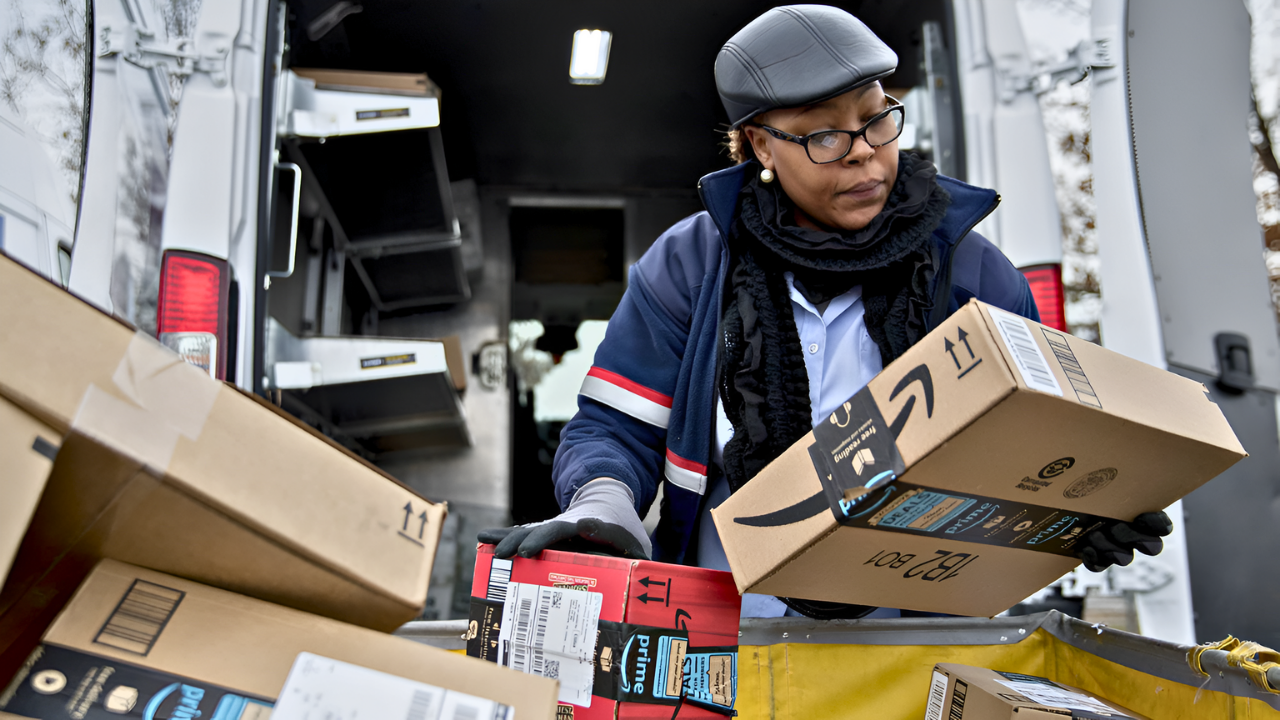
A decades-long partnership central to American parcel delivery is showing cracks. Amazon and the United States Postal Service, partners since the early days of online shopping, are locked in high-stakes negotiations that could reshape how millions—particularly in small towns—receive packages.
Postmaster General David Steiner has proposed a reverse auction, requiring Amazon to compete with UPS and FedEx for postal space, a move the company called “surprising.” Amazon emphasized that “plans are not final and could change,” signaling it may no longer rely on USPS to move its parcels. Here’s what’s happening…
What’s at Stake in the Amazon–USPS Talks
Negotiations over a new delivery contract have grown contentious. Instead of renewing under traditional terms, Steiner suggested a reverse auction, which would remove fixed rates and guaranteed capacity for Amazon. The Washington Post reported that Amazon has warned it could remove “billions of packages” from the postal network by year-end if no agreement is reached.
A November 14 meeting between Amazon CEO Andy Jassy and Steiner failed to bridge the gap. The current contract runs until October 2026, leaving roughly 10 months to reach a deal. While Amazon’s cautious public language emphasized continuity, it also highlighted a significant shift: the company is no longer fully dependent on USPS, forcing the postal service to rethink its leverage and strategy.
Steiner’s Gamble Amid Postal Financial Strain
David Steiner, a former FedEx board member, took office as Postmaster General in July 2025, promising to make USPS more competitive while fulfilling its universal service obligation. He entered the role amid a deep financial crisis: USPS reported a $9.5 billion net loss in fiscal 2024, with $7.7 billion tied to pensions and compensation, leaving roughly $1.8 billion in operational losses.
Amazon generates approximately $6 billion annually for the USPS, accounting for roughly 7.5% of the USPS’s total revenue. Steiner’s reverse auction aimed to extract better pricing and flexibility, but it also exposed a shift in power. The move highlights the challenge of striking a balance between financial innovation and a mandate to serve every address in the country, even as traditional mail volumes continue to decline.
Amazon’s Expanding Delivery Network
While USPS struggles to stabilize, Amazon has quietly built a logistics empire. Amazon Logistics handled an estimated 6.3 billion parcels in 2024, nearly matching USPS’s 6.9 billion. In April 2025, Amazon invested $4 billion to expand its rural delivery service into regions traditionally served only by the USPS.
Analysts cited by Supply Chain Dive note that Amazon’s network now operates with reduced reliance on external carriers. If Amazon reduces USPS volume, its own infrastructure is increasingly capable of handling the shift, particularly in cities and suburbs.
Industry projections suggest Amazon could surpass USPS as the largest U.S. parcel carrier by 2026 or 2027, instead of the earlier forecast of 2028, marking the first time a private company could outpace the national postal system in parcel volume.
USPS Faces a Financial and Structural Trap
The USPS continues to grapple with a steep decline in first-class mail, which has decreased by roughly 80% since 1997, as digital alternatives have taken its place. Parcels remain the only growth area, but the universal service obligation prevents scaling back infrastructure even as revenues fall. Losing 2–3 billion Amazon parcels could result in a $6 billion revenue reduction, increasing controllable losses from $1.8 billion to $7–9 billion.
Postal experts warn that stranded costs could force rate increases, reduced service frequency, or new taxpayer support. Steiner faces the dual challenge of financial solvency and legal obligations to serve every community, a tension heightened by decades of structural shifts and a shrinking traditional mail base.
The Ripple Effects on Rural America and Small Businesses
A potential reduction in Amazon parcels would hit rural areas hardest. While Amazon’s $4 billion expansion covers many towns, the smallest and most remote communities may see slower delivery, fewer options, and higher costs. Small businesses using USPS for affordable shipping, including those on Shopify and eBay, may face rising rates, which could lead to service reductions or price increases.
USPS employs roughly 650,000 nationwide. A significant revenue loss could pressure local post offices and many major employers in small towns, ultimately impacting local economies. Political scrutiny adds to the strain. In February 2025, President Donald Trump referred to the USPS as “a tremendous loser for this country” and floated the idea of merging it with the Commerce Department. Steiner’s challenge is to operate efficiently while maintaining public service obligations amid mounting pressures.
An Uncertain Future for U.S. Parcel Delivery
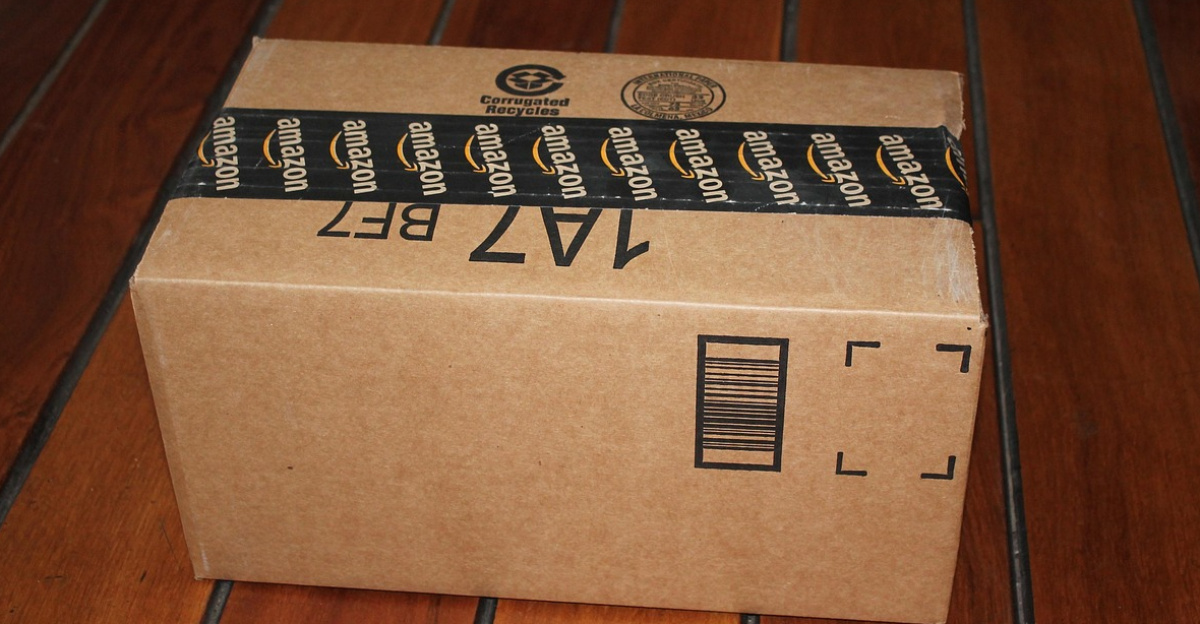
The Amazon–USPS relationship began over three decades ago, when Amazon relied heavily on external carriers. Over time, Amazon’s delivery capabilities grew, while USPS became increasingly reliant on the company’s revenue. The next negotiation phase will determine if the partnership continues under revised terms or sees a significant volume reduction.
Possible outcomes range from a contract compromise to a gradual withdrawal of Amazon parcels from USPS. Whatever occurs, the standoff raises questions about the future of nationwide delivery in an era where private logistics giants can rival or surpass public institutions designed for universal service. Small towns, rural communities, and businesses alike could feel the consequences for years to come.
Sources:
U.S. Postal Service Official Reports – Fiscal Year 2024 Results (November 13, 2024)
U.S. Postal Service Board of Governors – David Steiner Appointment (May 9, 2025)
Reuters – Amazon-USPS contract negotiations (December 4, 2025)
The Washington Post – Amazon delivery network expansion and USPS talks (December 2025)
Politico – David Steiner USPS appointment (May 9, 2025)
Supply Chain Dive – Amazon parcel volume projections (June 29, 2025)