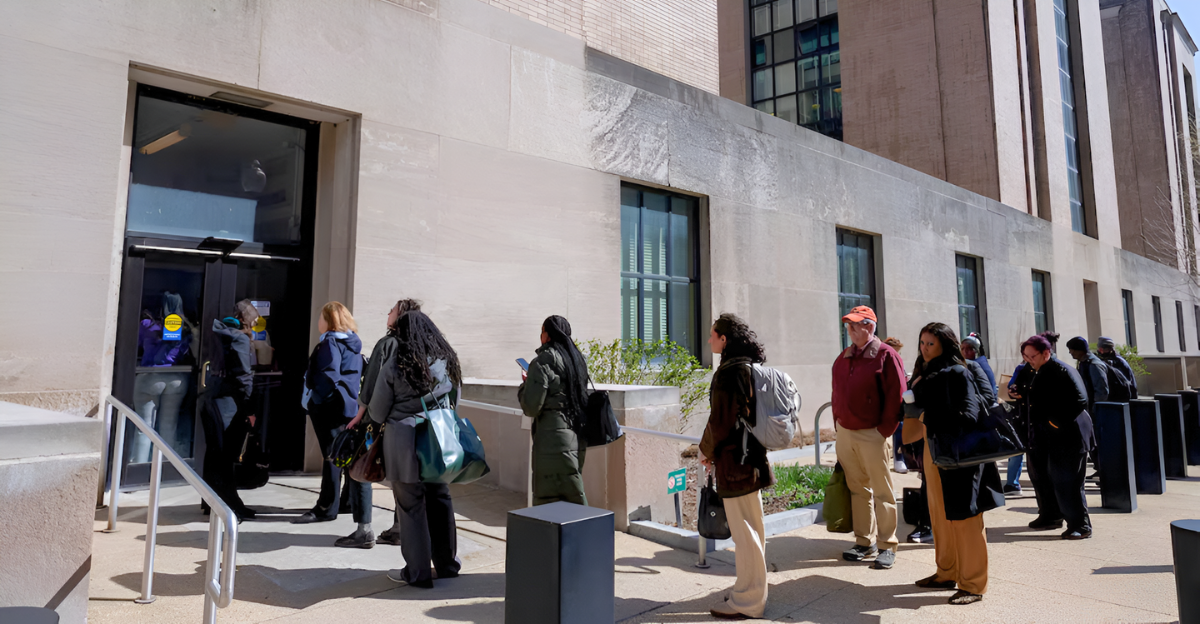
America’s largest employers are driving an historic wave of layoffs, reshaping both local job markets and national economic forecasts.
According to Challenger, Gray & Christmas, US job cuts have already surpassed 806,000 in 2025—a 75% jump over last year, and the highest since the COVID pandemic.
“We are witnessing a fundamental restructuring across sectors,” said Andrew Challenger, labor economist, “driven by technology, cost-cutting, and new policies.”
Acceleration Across Sectors

This layoff surge is unprecedented and widespread. Government downsizing under the Department of Government Efficiency (DOGE) has led to nearly 300,000 federal job losses, while retail and tech sectors have together announced over 160,000 cuts so far in 2025.
“Tariffs and automation converge to amplify reductions,” explains Challenger. Firms note that 38% of job losses are directly due to AI and automation, marking a steep escalation.
Roots in the Pandemic Boom

The story traces back to the pandemic years when major employers such as Amazon, Microsoft, and Meta bulked up staff to meet surging demand.
By 2023, overexpansion and economic cooling set the stage for cuts, with firms now reversing hiring gains from the post-pandemic rebound.
Inflation, Tariffs, and Tech Pressure

Rising inflation and trade tensions—alongside relentless tech innovation—have heightened cost pressures.
Many firms cite “structural overcapacity” and the push for digital transformation as forces driving layoffs. “Companies are spending less, slowing hiring, and sending layoff notices,” says Challenger.
Record-Setting Cuts

Microsoft (15,000), Amazon (14,100), Meta (3,600), and Intel (10,000) have led record-setting layoffs in tech.
Federal government alone accounts for 292,000 job cuts in 2025—by far the largest sector hit. Every major private-sector employer is restructuring, from retail giants to consultancies.
Regional Fallout

Layoffs stretch coast to coast. East Coast states saw federal job losses spike 219%, while California lost 114,000 positions—a 50% jump over last year.
Midwest cities contend with major manufacturer exits, and the South faces further uncertainty with planned government cuts.
Stories Behind the Numbers

Laid-off workers describe disrupted lives and shattered communities. “It’s devastating—you feel like just a number,” says a former Microsoft engineer.
Mass layoffs reverberate at home, leading to increased financial insecurity, reduced earnings, and lasting economic impact for affected regions.
Industrywide Disruption

Sector-wide, companies like Klarna trimmed 40% of staff, Ford announced plans to cut half its white-collar workforce, and consultancies like PwC and Deloitte have shed thousands of jobs to streamline operations. “AI is changing how we work and whom we hire,” says Sebastian Siemiatkowski, Klarna CEO.
AI Drives Realignment

Analysts agree: 2025 isn’t just another layoff cycle—it’s a pivot point. More than 89,000 tech jobs have been cut, with AI cited for over 10,000 direct eliminations, and another 20,000 linked to automation upgrades. Companies shift budgets from labor to technology, accelerating the move toward leaner teams.
Entry-Level Jobs Vanish

Entry-level and junior positions are especially vulnerable. Dario Amodei of Anthropic projects “half of all entry-level white-collar jobs could disappear in five years.”
IBM replaced hundreds of HR staffers with AI. Klarna and Duolingo have also retooled hiring to reduce manual roles.
Internal Turmoil

Inside firms, anxiety and confusion grow. Remaining employees face heavier workloads and uncertainty about future cuts.
Advocacy groups and internal forums have emerged as workers push back against sudden changes and question management strategy.
Leadership Shakeups

Major layoffs often coincide with executive turnover and new boards. Tech giants, consultancies, and manufacturers report leadership changes as boards chase fresh strategies for survival and adaptation.
Attempts at Recovery

Some companies try to reboot post-layoff. Klarna resumed hiring in customer service after quality complaints soared.
Manufacturers like Tesla and Intel pivot production and rehire select technical staff, signaling some recovery amid turmoil.
Expert Insight: Cautious Outlook

“Companies are slow to hire and limiting plans as they wait and see,” says Andrew Challenger. Experts caution that layoffs represent deeper late-cycle cost management, not mere recession panic, and stress that adaptability is key for future hiring.
Looking Ahead: Skills Shift

The labor market is changing: AI, cloud, and automation skills are essential as traditional jobs become less secure. Analysts expect more companies to prioritize digital talent and cut overstaffed units through year-end.
Policy Debates Heat Up

Lawmakers debate stronger employment protections and expanded retraining efforts. With mass layoffs, the adequacy of the WARN Act and unemployment benefits faces scrutiny in Congress, and calls for policy innovation intensify.
International Ripple Effect

Heavy layoffs extend globally: European firms in auto, logistics, and consumer goods are downsizing, with ZF, Volkswagen, and Tata cutting thousands abroad. Asia’s tech sector also saw widespread reductions as global forces converge.
Legal and Environmental Dimension

With layoffs come lawsuits over severance, discrimination, and labor rights. Environmental shifts are visible as factories close, altering local landscapes and green transition plans. Legal cases mount, pressing firms to clarify policies.
Generational and Cultural Shifts

Culture shifts as younger workers adapt to remote, tech-driven employment while older generations face disruption. “Ethics in AI deployment are now at the forefront of workplace discussions,” notes Oxford’s Fabian Stephany.
New Era for American Work

The end of mega-employment signals a major turning point. “Efficiency now outranks scale—those who adapt will lead the next era,” reflects Stephany.
Nationwide, companies anticipate continued transformation, requiring both resilience and innovation to thrive.