
Rite Aid was once a Main Street fixture, not a company anyone expected to vanish. Its shutdown after more than 60 years now looks less like a fluke and more like a warning of what is coming next. Researchers estimate that roughly one‑third of America’s pharmacies have closed since 2010, and the pace is speeding up, not slowing down. In many communities, people who used to choose between several nearby drugstores now drive many miles just to pick up blood pressure pills, get an antibiotic, or receive a flu shot.
Almost 50 million people now live in so‑called “pharmacy deserts,” where getting a prescription filled means a long trip that many older or low‑income patients struggle to make.
The Numbers Keep Climbing
National data show the wave of closures is not a short‑term bump but a long‑term shift. One major study found that about one‑third of all U.S. pharmacies closed between 2010 and 2021. Newer numbers are even more sobering. Preliminary research shared in 2025 suggests more than 7,000 pharmacies shut down from 2022 through 2024, with roughly 2,800 closures in 2024 alone.
Nearly half of U.S. counties now contain at least one pharmacy desert, where residents must travel 10 miles or more to find a retail pharmacy. “Nearly 50 million people, one in seven Americans, now live in areas with limited pharmacy access,” said Dr. Murphy.
When Big Chains Pull Back
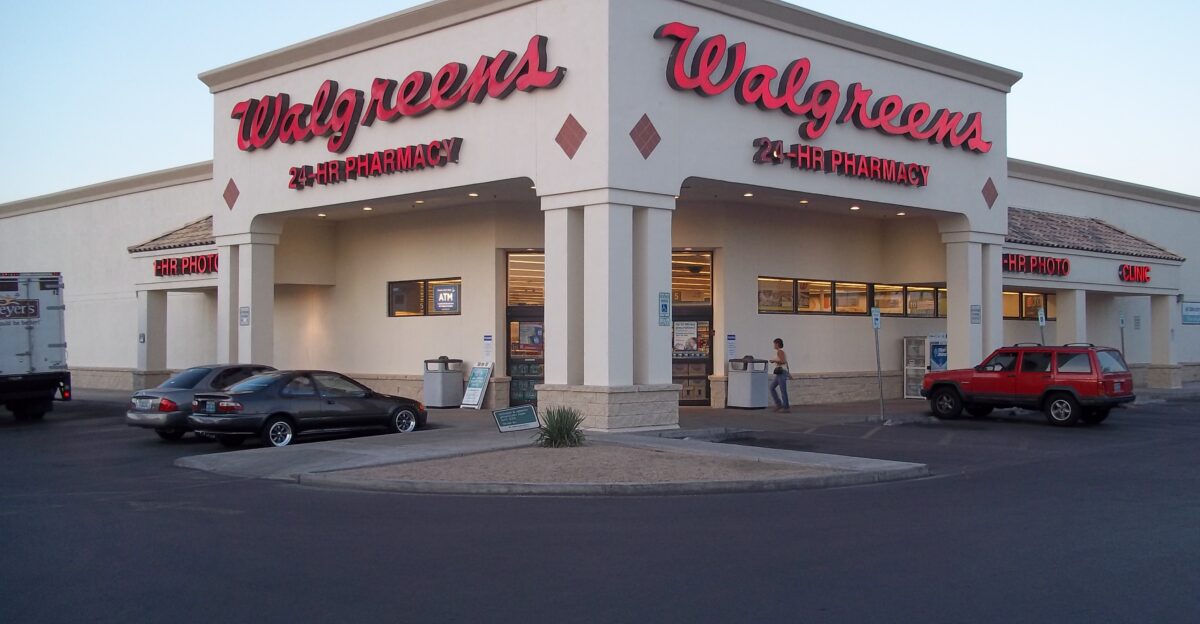
The pharmacy landscape has been reshaped by big chains that once raced to open new stores and are now rapidly closing them. CVS, the nation’s largest chain, shut about 900 locations between 2022 and 2024 and plans hundreds more closures as it “realigns” its retail footprint. Walgreens is also shrinking, on track to close about 500 stores in 2025 alone.
At the same time, bankruptcies have become more common, with distressed chains and independents using Chapter 11 to shed debt, renegotiate leases, or walk away entirely.
Why Pharmacies Say They’re Being Squeezed

Behind the counter, many pharmacies describe a business model that no longer adds up. Pharmacy benefit managers, or PBMs, sit between drugmakers, insurers, and pharmacies and control much of how prescriptions are priced and reimbursed. Pharmacies say PBMs use complex contracts, low reimbursement rates, and after‑the‑fact “clawbacks” that can turn what looked like a small profit into a sudden loss. Patients are often steered into “preferred” networks or mail‑order services that exclude local independents.
After Congress backed away from major PBM reforms at the end of 2024, one watchdog group tallied 326 pharmacy storefront closures in less than 10 weeks, most of them independents. “Without Congressional intervention, the Big Three PBMs have continued to abuse their market power, squeezing at least 326 pharmacies out of business,” said Emma Freer, a policy analyst with the American Economic Liberties Project.
A Small Town Pharmacy in Bankruptcy

In December 2025, the financial pressures hit home in rural Arizona. Uptown Pharmacy of Kingman, Inc., an independent store serving Golden Valley and nearby parts of Mohave County, filed for Chapter 11 bankruptcy protection in federal court. Court records show the case landed on December 5 amid a dispute with a wholesaler over unpaid inventory, a sign that basic restocking had become a struggle.
Unlike Rite Aid, whose high‑profile bankruptcy scattered closures across dozens of states, this case centers on one small pharmacy that locals rely on for daily needs.
Miles Between Patients and Medicine

For years, Uptown Pharmacy has been a lifeline for residents spread across the wide open spaces of Mohave County. People have depended on it for insulin, blood pressure pills, inhalers, and routine vaccines, along with walkers, test strips, and other medical supplies that are hard to find elsewhere. If the business cannot emerge from bankruptcy and is forced to close, patients could face 20‑ or 30‑mile drives to refill essential prescriptions.
In communities where many residents are older, live on fixed incomes, or lack reliable transportation, that distance is not just an inconvenience; it can be dangerous. National research shows rural areas are hit hardest by pharmacy deserts, with states like Alaska, North Dakota, and Montana seeing more than two‑thirds of their counties classified as low‑access.
When Closures Become Life‑Threatening

Researchers warn that the human toll of pharmacy closures lands hardest on people with the fewest options. Nearly half of U.S. counties now have at least one pharmacy desert, where residents must travel long distances to the nearest drugstore. A GoodRx analysis estimated that 48.4 million people, about one in seven Americans, live in areas where filling a prescription can require a lengthy drive.
Those barriers matter. Studies tie pharmacy deserts to higher risks of heart attacks and hospital readmissions linked to poor medication adherence. “If you live in a pharmacy desert, you are more likely to have a heart attack or be readmitted to the hospital, and it can all be traced back to adherence,” said Dr. Colin Banas, chief medical officer at DrFirst.
When Giants Fall, Gaps Grow

Rite Aid’s collapse has become a symbol of how fragile the sector has become. The company first entered Chapter 11 bankruptcy in 2023, closing hundreds of stores as it tried to restructure debt and fight lawsuits. Hopes of a turnaround faded when Rite Aid filed for a second Chapter 11 in May 2025. By that fall, the chain had shuttered all of its remaining U.S. locations, roughly 1,200 to 1,288 stores, ending a 63‑year run.
“The days of having a convenient pharmacy in every neighborhood are becoming a thing of the past,” Banas said, noting that closures affect both chain and independent stores nationwide. In many downtowns, chain pharmacies had doubled as informal health hubs.
A Nationwide Map of Pharmacy Deserts

Researchers at the USC Schaeffer Center describe an “unprecedented decline” in community pharmacies, especially since 2018. Their national mapping work, combined with data from GoodRx and Ohio State, shows that about one in eight neighborhoods now lacks convenient access to a nearby pharmacy.
Closures have been driven by consolidation among large chains like CVS, Rite Aid, and Walgreens, along with financial strain on smaller independents. Independent pharmacies are more than twice as likely to close as chain stores, particularly in minority and medically underserved communities.
Crisis in Nursing Homes and Long‑Term Care

The disruption does not stop at neighborhood drugstores. Omnicare LLC, the long‑term care pharmacy arm of CVS Health and the largest LTC pharmacy in the United States, filed for Chapter 11 bankruptcy in September 2025 after facing a fraud judgment approaching $949 million. Industry groups warn this could trigger an “imminent long‑term care crisis,” since Omnicare and similar providers supply medications to nursing homes, assisted‑living centers, and other facilities where residents are often frail and highly dependent on timely drugs.
Surveys cited by advocacy groups suggest as many as 80% of nursing home residents could face disruptions in prescription access if long‑term care pharmacies reduce staff, cut services, or pull out of entire regions.
Frontline Pharmacists Under Pressure

At the counter, community pharmacists say they are trying to act as frontline health workers while their financial footing erodes. Many provide vaccines, blood pressure checks, medication reviews, and informal counselling, often seeing patients “five or six times a year,” far more often than primary‑care doctors. Yet survey data from pharmacy groups show local pharmacies are struggling to stay profitable and are at risk of closure.
“Right now, the current pharmacy model is not sustainable, and that’s why we are seeing more and more pharmacies close,” said Ohio State professor Michael Murphy. Pharmacists describe fighting with PBMs over low reimbursements and delayed payments even as their workload grows. Some owners respond by cutting hours, reducing services, or selling to larger chains.
What Bankruptcy Really Changes
Bankruptcy filings, whether by big chains or specialized players, often trigger rapid shifts in who owns pharmacies and where they stay open. CVS has explored selling Omnicare in the past and is again weighing a sale as part of the current Chapter 11 process. Legal analysts note that bankruptcy can let companies walk away from unprofitable leases and keep only the most lucrative locations, a pattern seen in retail and now visible in pharmacy.
During Rite Aid’s restructuring efforts, for example, unwanted leases were rejected in bankruptcy court while prime properties attracted interest from grocers and other retailers. Similar strategies may play out as Omnicare restructures and as other chains reassess their footprints.
How Some Pharmacies Fight to Survive

Not every pharmacy is waiting for the next closure notice. Some independents are racing to reinvent themselves in hopes of staying alive. Common strategies include doubling down on clinical services like immunizations, point‑of‑care testing, medication synchronization, and specialized packaging for seniors who manage multiple prescriptions.
National surveys show many local pharmacies are “on the brink,” but also highlight that those with diversified services can be more resilient. For Uptown Pharmacy in Arizona, Chapter 11 could be a lifeline if it allows the business to restructure debt or find a buyer who will keep a pharmacy operating in Golden Valley.
Experts Warn Incremental Fixes May Fail

Health‑policy experts are increasingly blunt about what they believe is at stake. USC researchers describe an “unprecedented decline” in community pharmacies and argue that small‑scale fixes may not be enough without deeper structural changes in how drugs are paid for. The Federal Trade Commission’s recent reports on PBMs found practices that can raise drug costs and disadvantage smaller pharmacies, confirming many complaints long voiced by critics.
Academic analyses show that closures cluster in medically underserved and minority communities, where pharmacies are sometimes the only nearby health provider. “Local pharmacies are a critical part of the primary care infrastructure in many neighborhoods,” one Health Affairs study concluded.
A Crossroads for Medication Access

With roughly one‑third of U.S. pharmacies already gone and thousands more closures in just a few recent years, the system now stands at a crossroads. The bankruptcies of giants like Rite Aid and long‑term care providers such as Omnicare overlap with the quiet struggles of independents like Uptown Pharmacy in Arizona, creating a patchwork of gaps on the map.
National research suggests that nearly 50 million Americans already live in pharmacy deserts, and the number is rising as chains retrench and small shops shut their doors. “We’re seeing closures increasing in prevalence,” Murphy said, calling the trend “dramatic and frightening.” Policymakers now face a stark choice.
Sources:
USC Schaeffer Center, Nearly 1 in 3 Retail Pharmacies Have Closed Since 2010, Widening Gaps in Access, 19 March 2025
USC Schaeffer Center/USC News, USC researchers reboot national pharmacy desert map amid wave of drugstore closures, 3 November 2025
Spotlight on America/The National Desk, Alarming number of pharmacies closing nationwide leaving more pharmacy deserts, 5 November 2025
GoodRx Research, 48.4 Million Americans Lack Adequate Access to a Pharmacy, 19 March 2025
GoodRx/HitConsultant, 1 in 7 Americans Now Live in a Pharmacy Desert, 20 March 2025
Drug Topics/American Economic Liberties Project, Over 300 Pharmacy Closures Reported in the Last 3 Months, 13 March 2025