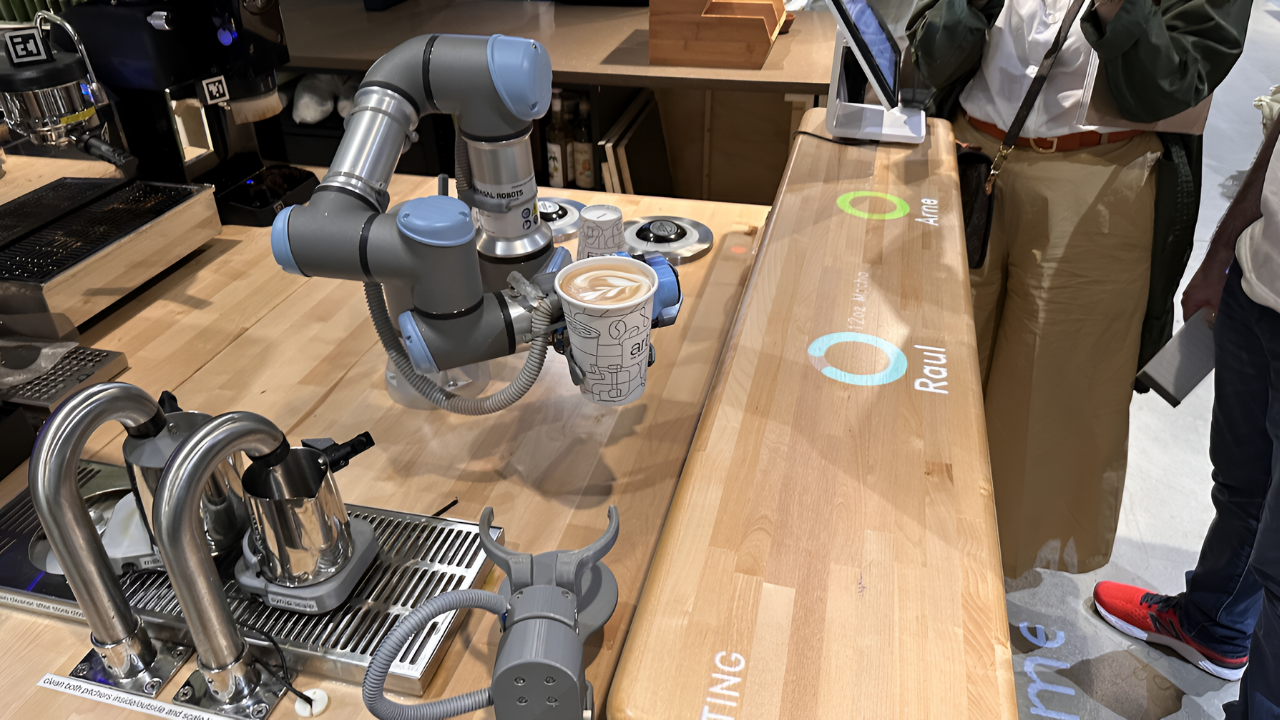
Forklifts sat motionless inside Kroger’s vast Ocado-powered warehouse in Pleasant Prairie, their steel arms suspended mid-air as crews shut down the Customer Fulfillment Centers in Pleasant Prairie and two other locations, representing a $2.6-billion automation project that had once been promoted as the future of grocery fulfillment.
Conveyor belts hummed to a stop, and workers who had been told they would soon be replaced stood watching as the facility they helped open barely eighteen months earlier went dark. What happened next would reshape the entire retail and fast-food industry.
The failure rate behind these shutdowns is even more staggering than the closures themselves.
The Big Picture: 95% of AI Pilots Failed
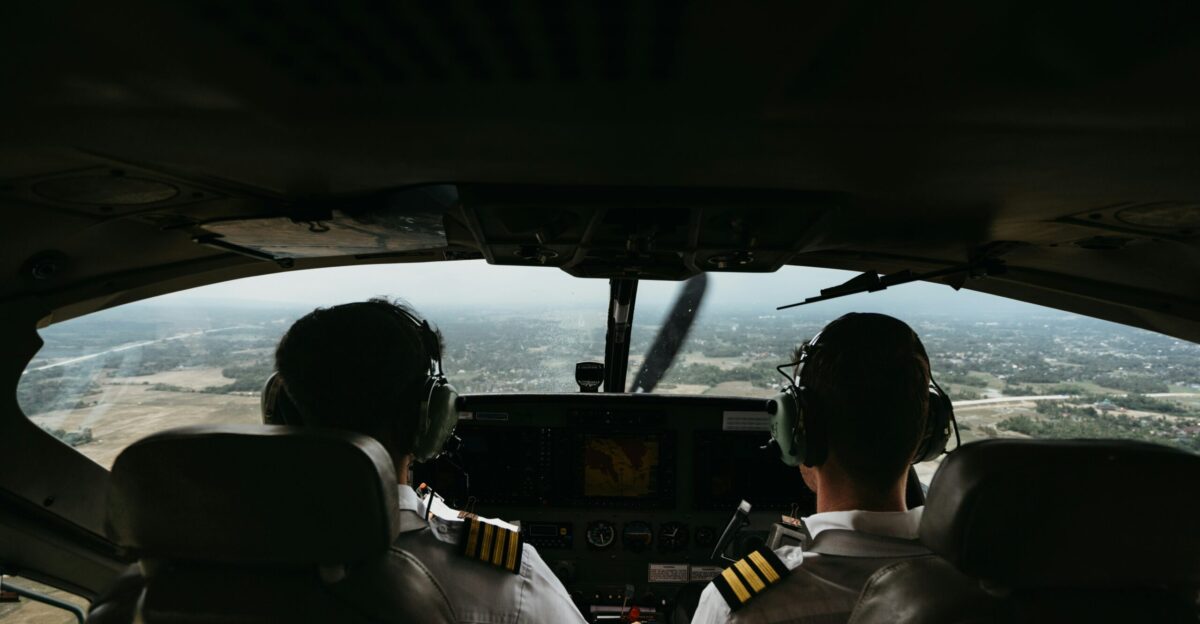
MIT’s 2025 Project NANDA revealed a stunning number: 95% of enterprise AI and automation pilots in retail and foodservice failed to produce measurable ROI. This happened despite $30–$40 billion spent in just 18 months.
The problem wasn’t the algorithms—it was the inability of systems to adapt to live workflows, inconsistent environments, and human-driven edge cases. Only 5% of pilots succeeded, usually when paired with heavy manual customization and hybrid staffing.
The Mystery: Why “Learning AI” Can’t Learn Retail
A core finding from MIT: enterprise AI cannot generalize across locations. Models that performed flawlessly in polished demo environments collapsed at scale—unable to retain context, understand local variability, or learn from mistakes.
Tasks considered “solved” in lab robotics—item recognition, order accuracy, warehouse routing—broke down when exposed to real-world noise. Chains discovered that automation wasn’t plug-and-play; it needed constant human babysitting that erased the promised savings.
Kroger’s Catastrophe: The $2.6 Billion Warehouse Implosion
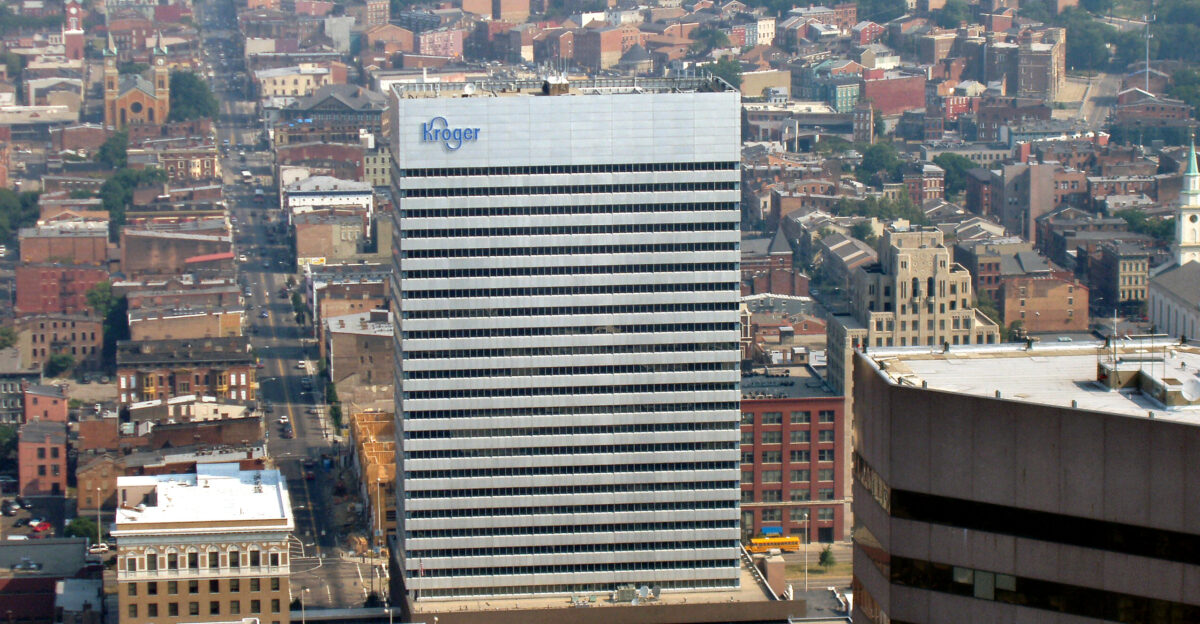
Kroger’s Ocado-powered Customer Fulfillment Centers were the crown jewel of grocery automation. By November 2025, three of eight U.S. megasites—the Frederick, Pleasant Prairie, and Groveland locations built between 2023 and 2024—were shut down.
Five CFCs continue operating in Monroe, Dallas, Atlanta, Denver, and Detroit. Kroger recorded a $2.6 billion impairment, paid $350 million to Ocado in one-time cash compensation (which includes the $250 million previously announced), and abandoned much of its automated warehouse fleet at those specific locations.
The project delivered so little volume that a retail analyst warned the CFCs would fail “between 2026 and 2028, if not sooner.” Three of the sites failed sooner.
How Kroger’s Collapse Rippled to Ocado
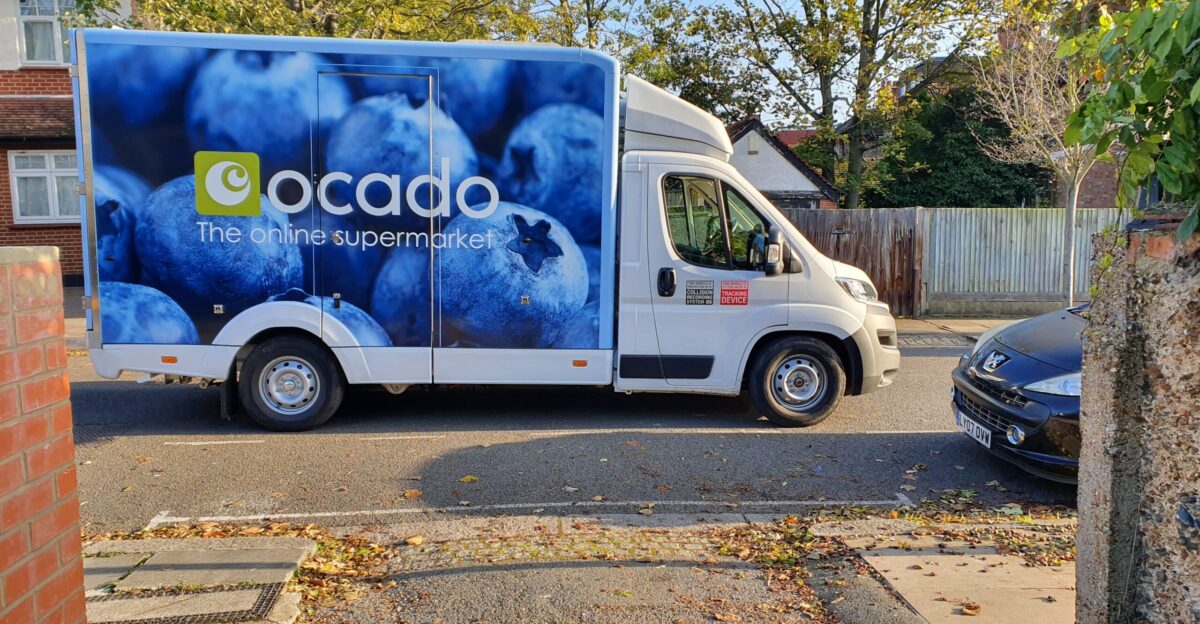
Ocado lost $50 million in expected annual revenue and suffered a severe reputational hit. Its U.S. expansion blueprint—20 promised sites—evaporated, leaving investors reassessing centralized grocery automation entirely.
The model simply couldn’t match the economics of hybrid micro-fulfillment. By late 2025, Ocado pivoted toward smaller modular systems, tacitly conceding that the mega-warehouse era was a billion-dollar mirage.
Starbucks: When AI Promises Meet Store Reality
Starbucks’ “Green Dot” AI system, deployed as an augmentation tool for baristas, improved order accuracy and cut training time—but it couldn’t compensate for structural issues: collapsing North American sales and consumer pushback.
In 2025, Starbucks executed approximately 2,000 layoffs (900 corporate in September 2025 plus earlier 2024 reductions), closed 500 stores, and paused major automation expansions. Customer complaints rose in pilot locations, where AI-driven workflows disrupted barista rhythm. Despite $1B poured into restructuring, the company reversed course toward more human-centric service.
McDonald’s & Taco Bell: The Drive-Thru Meltdowns
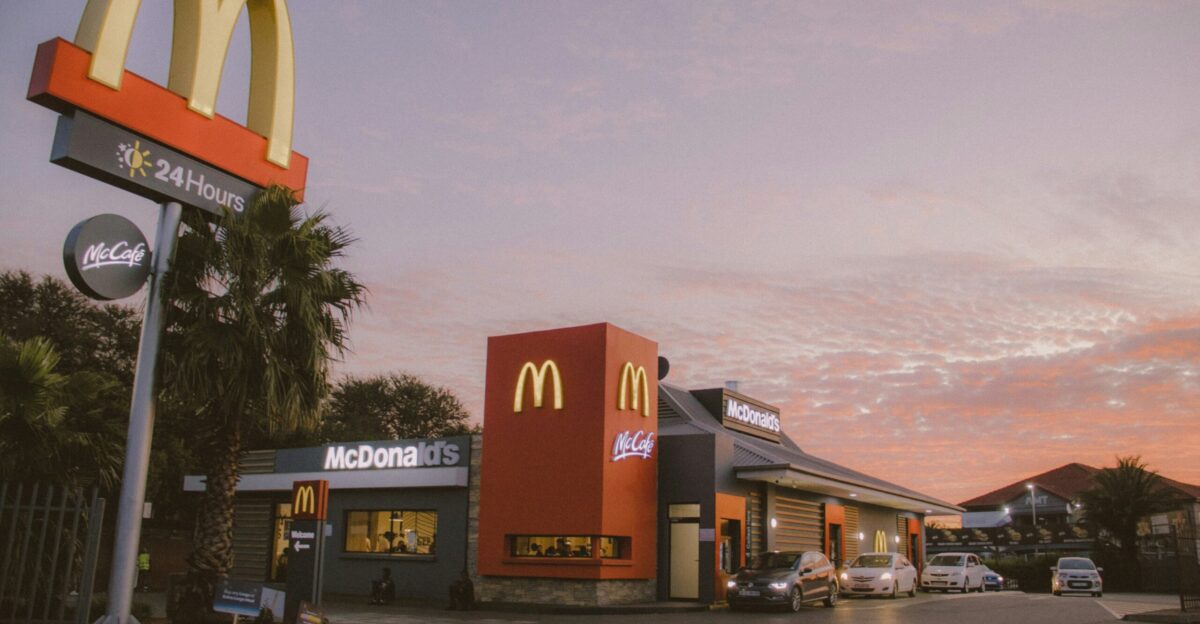
Voice AI and robotics pilots at McDonald’s and Taco Bell became viral spectacles for all the wrong reasons. McDonald’s customers received bacon-topped sundaes, $166 duplicate orders, and mountains of unwanted condiments.
Taco Bell customers experienced even more extreme chaos, including a 18,000-drink “cup of water” request. Both chains quietly ended flagship automation programs after they cost more in lost sales, franchise frustration, and brand damage than they saved. The promised “robotic future of fast food” crumbled in under 18 months.
The Consumer Backlash Begins
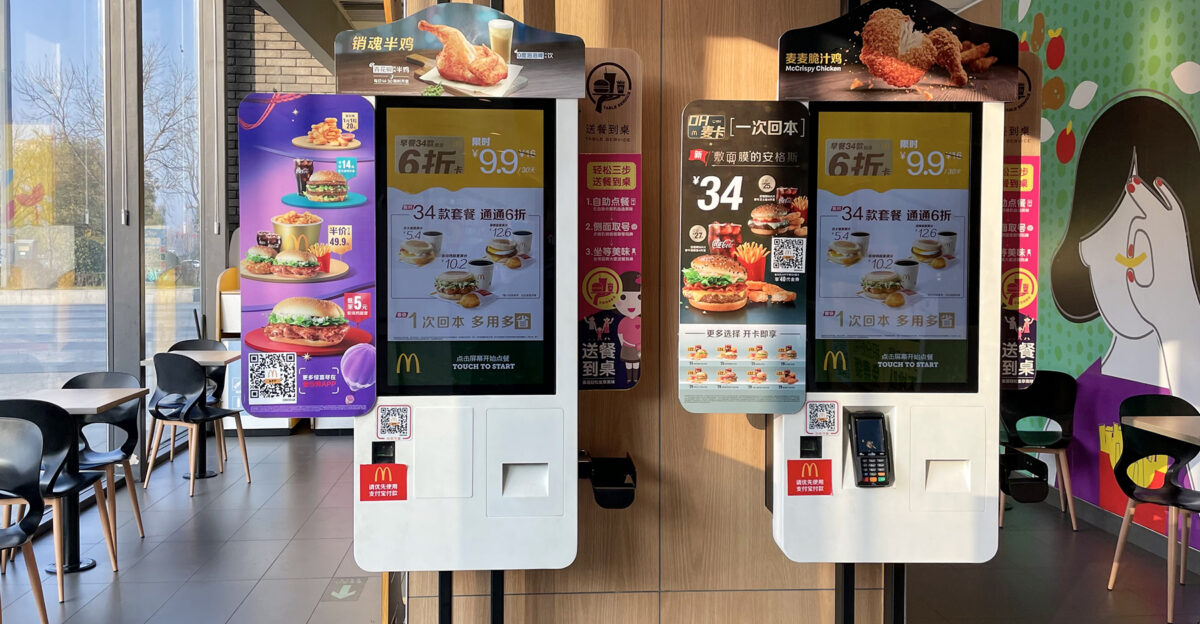
Customers tolerated human errors—but not robotic chaos. AI-driven order systems led to longer waits, inaccurate meals, and new fees to “cover tech investments.” Social media amplified every mistake, accelerating brand distrust.
Starbucks found Gen Z preferred “warmth and human connection,” contradicting years of automation messaging. By fall 2025, chains reversed their marketing from “AI boosts efficiency” to “We’re bringing back hospitality.”
The Human Workforce Returns
After firing thousands in anticipation of automation, companies found themselves scrambling to hire again. Kroger needed manual pickers. Starbucks reinvested $500M into barista-first initiatives. McDonald’s reversed cuts and expanded customer-facing staffing.
The irony: analysts once predicted 2 million fast-food jobs would be gone by 2027. Instead, the automation collapse and worker shortages forced chains to rebuild the very labor force they tried to eliminate.
The Economic Fallout: A Historic Misallocation
If 95% of the $30–40B in AI spend created no value, then $28.5–$38B evaporated—one of the largest technology misallocations in U.S. retail history.
Kroger, Starbucks, Ocado, and related players collectively lost $7–12B in market cap per automation collapse cycle. Analysts compared the hype to the dot-com bubble: vast investment supported by optimistic demos and consultant-heavy forecasting, not sustainable economics.
Why 30% of Gen-AI Projects Were Abandoned

Accenture, McKinsey, and Gartner found that up to 30% of generative-AI pilots never survived the proof-of-concept stage. The deeper failure wasn’t the tech—it was the mismatch between model behavior and the messy, high-variability reality of retail.
Systems couldn’t adapt to shifting menus, seasonal inventories, supply interruptions, or customer improvisation. Human judgment remained unreplaceable, and companies learned this only after sinking millions into automation.
The Regulatory & Policy Shift

As layoffs mounted and failed AI rollouts became public, lawmakers demanded stricter oversight. Boards began requiring transparent ROI gates before any automation spend.
Executive compensation came under scrutiny—especially at Starbucks, where the CEO earned 6,666× the typical barista salary. Worker-protection proposals emerged in several states. The era of “move fast and break things” ended; breaking things now risked billions.
Cultural Turning Point: The 95% Meme

MIT’s “95% failure rate” went viral. It symbolized everything critics had warned about—overconfidence, opaque systems, and the illusion that AI could replace context-rich human labor.
Commentators compared the moment to earlier economic bubbles fueled by belief rather than evidence. For employees, it was validation: the lived experience of workers proved more reliable than AI projections developed far from the field.
Global Retail Rethinks Automation
The U.S. collapse shocked global retailers. European and Asian chains, long interested in Ocado-scale automation, paused mega-investments.
Instead, they adopted hybrid, store-based microsystems staffed with humans. Japanese and Korean retailers emphasized robot-assisted workflows, not full autonomy. Globally, the narrative shifted: automation works best when it complements human labor—not when it replaces it.
Surprise Winners: Human-Augmentation Platforms
The biggest winners were not robotics companies but hybrid AI vendors. Starbucks’ own Green Dot Assist—when used as an augmentation tool—cut training time from 30 to 12 hours and achieved 99.2% order accuracy.
Knowledge-assist systems, human-in-the-loop support tools, and decision-support engines soared in adoption. Investors pivoted toward augmentation, not replacement. Full-autonomy vendors, including warehouse robotics firms, saw rapid declines.
Lessons for Boards & Investors

The biggest miscalculation was assuming that early pilot wins could survive real-world scale. Kroger, Starbucks, and McDonald’s all expanded automation programs long before proving they could deliver consistent ROI outside controlled test environments.
The reversal has forced boards to rethink how they evaluate emerging technology, emphasizing smaller pilots, strict performance thresholds, and human-centric hybrid models. Profitability now matters more than ambition, and the past two years function as an expensive lesson in disciplined decision-making.
Lessons for Workers

Automation didn’t kill service jobs—but it changed the skill map. Workers who thrive in hybrid environments—customer service, digital literacy, training, troubleshooting—became more valuable.
The collapse reaffirmed that tasks rooted in context, emotion, and improvisation resist automation. The next job wave isn’t “learn to code”—it’s “learn to lead hybrid teams where AI supports your strengths.”
What Chains Do Next: Pragmatic Hybridization

The future won’t be fully human or fully automated. It will be a hybrid retail ecosystem shaped by ROI discipline, micro-fulfillment hubs, augmentation tools, and human-first service experiences.
Automation continues—but slower, smaller, and smarter. The chains that win will be those that know where humans outperform machines, and where machines can amplify human capability without replacing it.
The Big Reframe: Automation Wasn’t Inevitable
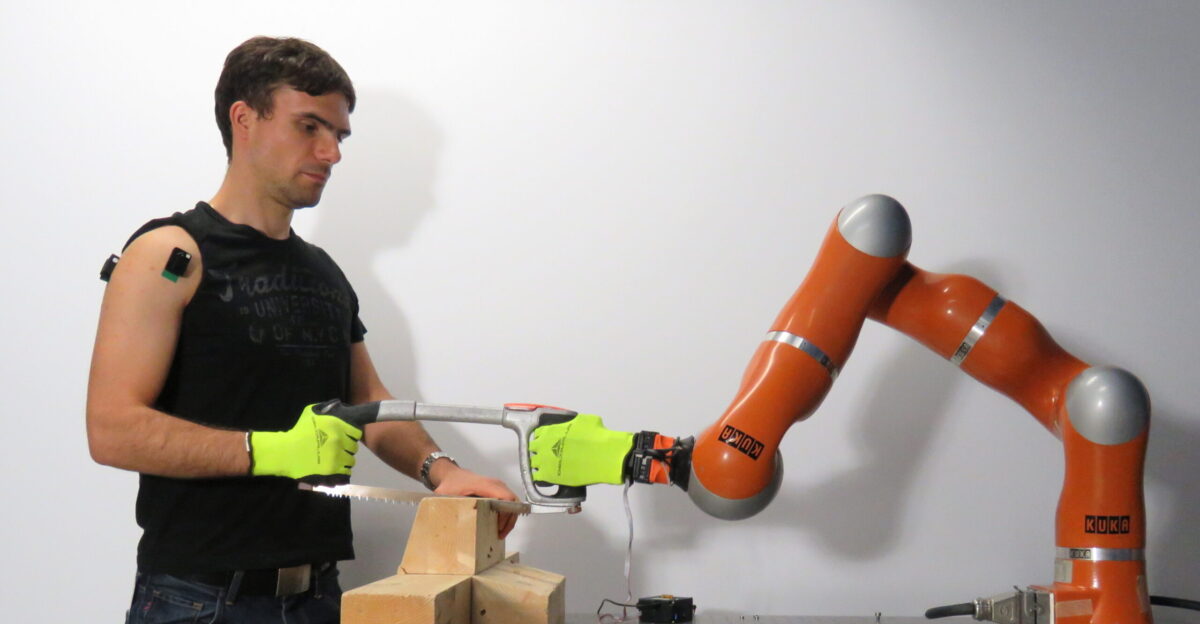
The 2023–2024 belief that “robots will take all the jobs” collapsed in real time. McDonald’s, Starbucks, and Taco Bell proved that even basic foodservice roles contain layers of context machines still can’t learn.
The failure wasn’t technology—it was the assumption that scale, not human judgment, would solve the hardest problems. The next decade of retail will be built around limits—not fantasies—of automation.
The New Reality: A Negotiated Future
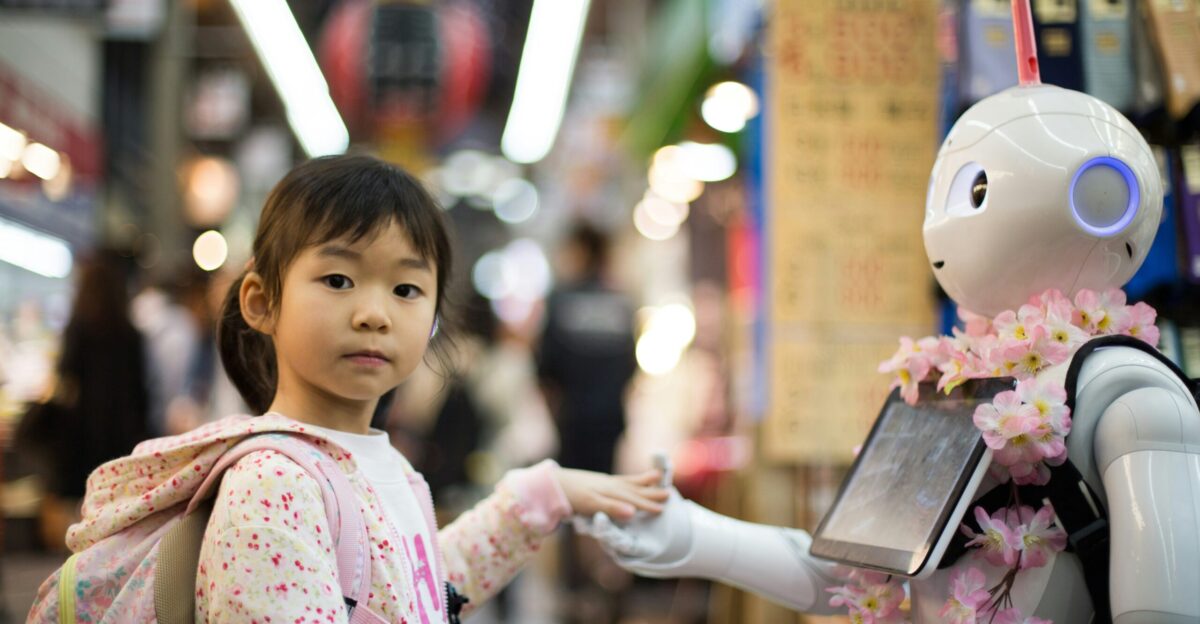
The automation implosion of 2025 doesn’t mark the end of AI—but a recalibration. Technology’s role is now negotiated between economics, culture, and worker resilience.
Automation will grow more like infrastructure—slowly, cautiously, grounded in evidence. Hybrid models will dominate, and the industry finally acknowledges that “robots everywhere” was never destiny. It was a hypothesis—one tested at scale, and disproven by reality.
Sources
MIT Project NANDA Report. “95% of Enterprise AI and Automation Pilots in Retail and Foodservice Failed to Produce Measurable ROI.” Published August 2025.
Kroger Co. “Kroger Announces Closure of Three Customer Fulfillment Centers and $350 Million Payment to Ocado.” Press release. November 2025.
Bloomberg. “Ocado Gets $350 Million Payment From Kroger for Warehouse Closures.” Published December 5, 2025.
Starbucks Corp. “Starbucks Announces 900 Corporate Layoffs and 500+ Store Closures as Part of Restructuring Plan.” Press release. September 25, 2025.
CBS News. “McDonald’s Ends AI Drive-Thru Orders — For Now.” Published June 16, 2024.
BBC News. “Taco Bell Rethinks AI Drive-Through After Man Orders 18,000 Water Cups.” Published August 29, 2025.