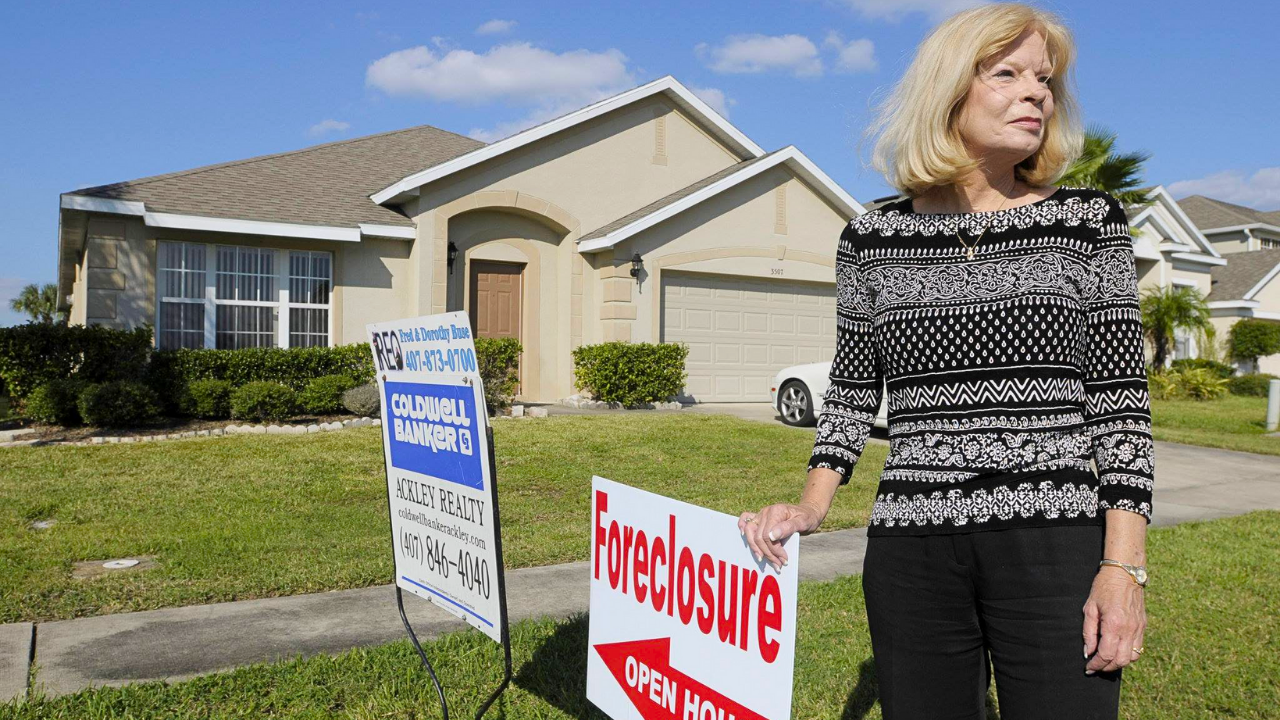
In 2025, banks initiated foreclosure proceedings on 367,460 properties, marking a 14% increase from the previous year.
Job growth in the U.S. also slowed to 584,000—its weakest since 2003—further highlighting the challenges homeowners face in today’s economic climate. Despite some stabilization, experts warn that this surge in foreclosures signals deeper economic issues ahead.
Why Foreclosures Surged in 2025
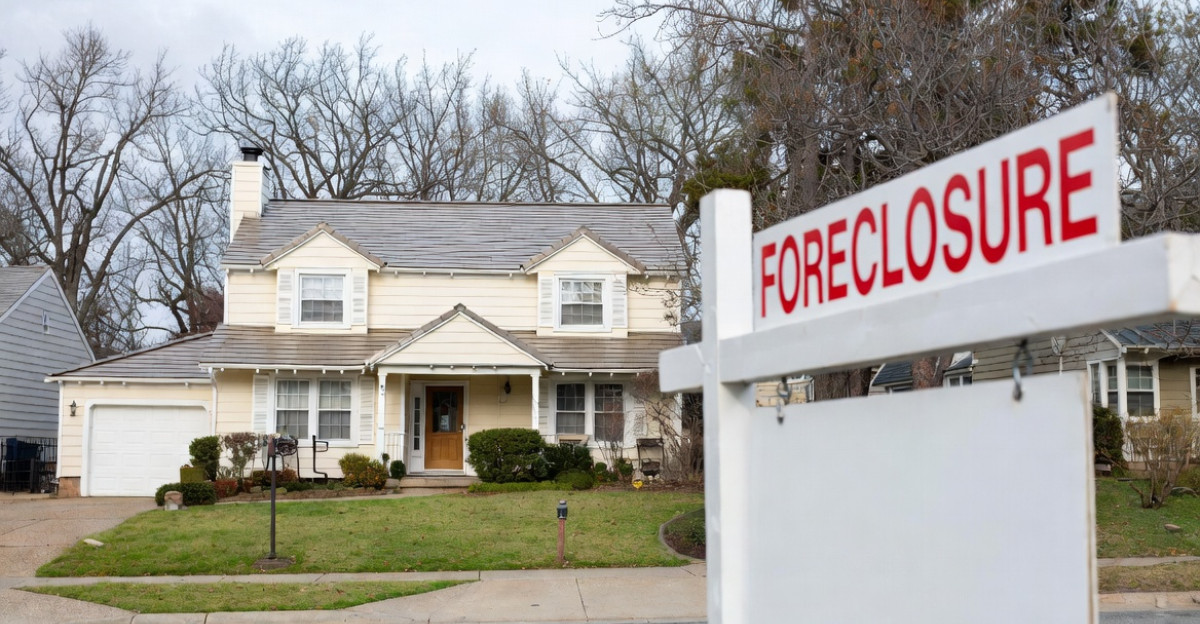
Foreclosures surged as the housing market normalized post-pandemic, ending forbearance programs and exposing weaknesses in the economy.
Rising property insurance, especially in Florida, and increasing taxes pushed many homeowners to default. Economists like Michael Szanto attribute part of the crisis to weak job growth, further exacerbating financial distress for families across the U.S.
Foreclosure Filings Surge in Hotspot States

States like Florida, Delaware, and Nevada saw the highest foreclosure rates. In Florida, 1 in 230 homes faced foreclosure filings. Lakeland, FL, topped the list with 1 in every 145 homes at risk, driving up local pressures.
Other states like Illinois and South Carolina followed suit, with families grappling against rising costs and economic instability.
Lenders Ramp Up Foreclosure Actions

Mortgage servicers have escalated foreclosure actions, with 35,651 foreclosure filings recorded in November 2025, a 21% increase from the prior year. In places like Illinois, where 1 in 248 homes face foreclosure proceedings, banks are increasing foreclosure activity, sending shockwaves through the housing market.
These figures, while concerning, indicate the return to normal foreclosure levels after pandemic-related forbearance ends.
Rental Market Pressures Mount

As homeowners lose their properties, many are being forced into the rental market. Cities like Columbia, SC (1 in 165 homes) and Jacksonville, FL (1 in 200 homes) are seeing increased demand for rental properties.
This surge in displaced homeowners is contributing to tight rental markets, as people scramble to find new housing amid the ongoing economic strains.
Realtors Adapt to Shifting Market

Realtors are adjusting to the new dynamics of the market, where foreclosures and higher insurance premiums are reshaping the real estate landscape.
In areas like Cleveland, Ohio (1 in 187 homes), real estate agents are seeing an increase in distressed property listings, with the job market softness further limiting buyer demand across many regions.
Labor Market Weakness Compounds Pressures

In cities like Cape Coral, FL (1 in 189 homes), job market weaknesses are compounding the housing crisis. The 584,000 jobs added in 2025 were the fewest since 2003, signaling cooling labor market conditions.
This, combined with rising housing costs, has left many homeowners unable to keep up with mortgage payments, further feeding the foreclosure surge.
States Push for Policy Responses

States like Florida and Delaware, facing high foreclosure rates, are debating policy interventions to protect homeowners.
In Florida, where foreclosure rates hit 0.44%, lawmakers are considering relief measures. As the national foreclosure rate rises by 14%, federal policymakers are also closely monitoring economic trends, considering how to mitigate the impact on struggling families.
Economic Implications of Labor Weakness

The 584,000 jobs added in 2025 represent a significant slowdown, with economists concerned about the broader economic implications.
This weak job growth, combined with rising foreclosure rates, is straining household finances and consumer spending power. While unemployment remains at 4.4%, the stagnation in job creation raises red flags for the overall economy in 2026.
Housing Market Adapts to Uncertainty

Builders in metros like Orlando (1 in 217 homes) are adapting to slower housing market conditions due to cautious buyers and weak job growth.
The shift toward moderation in construction activity signals uncertainty in future housing demand, as both buyers and sellers reevaluate their positions in a market fraught with rising costs and financial instability.
Economic Ripples Across Sectors

The ripple effects of the foreclosure crisis and job growth stagnation may be felt across several sectors. Retail, hospitality, and other discretionary sectors could face headwinds as the financial strain on consumers grows.
Elevated foreclosure filings in cities like Jacksonville and others suggest that these economic challenges are likely to persist in 2026.
Real Estate Market Dynamics Shift

Florida’s skyrocketing insurance premiums and rising property taxes are reshaping the state’s real estate market.
Builders are facing shifting demand, with fewer people able to afford new homes. Across the nation, the combination of economic pressures and weaker job growth is reconfiguring the fundamentals of the real estate market, leaving many homeowners vulnerable.
Investment Community Watches Closely

Investors are closely monitoring the U.S. housing market as weak job growth and rising foreclosure rates continue to signal potential risks.
While foreclosure activity remains below the peaks seen in 2008-2010, some analysts express concern that the market could be on the brink of another downturn. Real estate investors are showing heightened caution in response to these trends.
Households Under Financial Pressure

With rising insurance costs, property taxes, and mortgage pressures, many American households are under significant financial strain.
The weakening job market further exacerbates the problem, leaving families struggling to make ends meet. As the number of foreclosures rises, so does the stress for homeowners who face mounting economic challenges.
Normalization vs. Crisis Debate

Experts are divided on whether the 2025 housing market is simply normalizing after the pandemic or whether it signals deeper economic distress.
Rob Barber of ATTOM sees the rise in foreclosures as part of a post-pandemic adjustment, while others believe the combination of rising filings and weak job growth could be early warning signs of a broader crisis.
Market Winners and Losers

As foreclosure rates rise, the rental market is seeing increased demand, potentially benefiting rental companies and disciplined lenders.
However, those with weak equity positions in areas with high foreclosure rates are facing significant losses. This divide highlights the uneven impacts of the foreclosure surge across different segments of the real estate market.
Capital Markets Track Housing Signals

Market participants are tracking housing data as weak job growth and rising foreclosure rates indicate potential broader economic challenges.
As investors monitor employment revisions and housing signals, foreclosure activity serves as a key indicator of household financial health and the overall state of the economy.
Homeowners: Assess Your Position Now

Homeowners should review their mortgage status and assess their financial situation amid rising foreclosure rates.
With unemployment at 4.4% and mortgage pressures mounting, it is crucial for homeowners to explore refinancing options or seek guidance from HUD-approved counselors to prevent foreclosure. Early intervention can help mitigate the financial strain.
2026 Outlook: Continued Monitoring

As foreclosure filings continue to rise, experts warn that the situation could worsen in 2026. The 21% increase in filings from November 2025 suggests a potential acceleration in the foreclosure trend.
Policymakers and homeowners alike must remain vigilant as economic pressures build, with potential risks to both the housing market and the broader economy.
Housing and Jobs Remain Linked

The interplay between job growth and foreclosure filings will be crucial in determining the trajectory of the housing market in 2026.
With foreclosure rates rising and job growth stagnant, the outlook for homeowners remains uncertain. Whether this signals normal post-pandemic adjustments or deeper economic distress remains to be seen as the year unfolds.
Sources:
“U.S. Foreclosure Activity Increases in 2025.” ATTOM Year-End U.S. Foreclosure Market Report (via PR Newswire), 15 Jan 2026.
“U.S. Foreclosure Activity Increases in 2025.” ATTOM Year-End U.S. Foreclosure Market Report (syndicated on Yahoo Finance), mid Jan 2026.
“US job growth stuck at stall speed in December.” Reuters, 9 Jan 2026 (covering 584,000 jobs added in 2025 and weakest growth since 2003).
“US job growth slows in December, unemployment drops.” The Atlanta Voice, 11 Jan 2026 (summarizing BLS data on 2025 job gains and 4.4% unemployment).