
An 80-year-old Queens stroke victim has won a historic legal battle against one of America’s largest banks. Citibank was ordered to pay Leileth Faye Graham nearly $3.5 million after failing to stop over $772,000 in fraudulent withdrawals and wire transfers from her accounts.
Legally blind and bedridden since February 2020, Graham watched her life savings disappear while the bank ignored obvious red flags for years. This December 19 ruling sets a precedent, but she still hasn’t received a dime, and the details explain why.
A Stroke Changed Everything

In February 2020, Leileth Faye Graham suffered a devastating stroke. The Queens resident, who once worked as a legal secretary for prestigious firm Shearman & Sterling, was left legally blind and bedridden. Her niece Ingrid Gayle discovered dire conditions in 2023, alerting Adult Protective Services.
Graham now survives on Medicaid, waiting for justice. Yet behind the scenes, someone else was already accessing her money, and the timeline gets worse.
What Is Going On?

Between 2020 and 2023, over $772,000 vanished from Graham’s bank accounts. Joan Hope Bowden, Graham’s niece, allegedly made 211 ATM withdrawals in Massachusetts, a state where Graham had never traveled. Another $638,000 disappeared through 15 wire transfers.
The stolen funds paid for Jamaica vacations, a Washington D.C. property for Bowden’s daughter, and gifts to relatives. Why did none of it trigger a stop?
Red Flags Were Everywhere
Citibank’s own security protocols should have triggered alerts immediately. Withdrawals of roughly $3,660 each, far exceeding daily ATM limits, happened repeatedly from Massachusetts. Wire transfers averaging $42,500 moved funds without verification.
A customer who couldn’t speak, walk, or see was somehow authorizing massive transactions across state lines. Court papers said: “Had Citibank properly followed its own security procedures… the account would have been flagged,” yet it never was.
The Concealment Begins

Court documents show that on February 15, 2024, Citibank claimed it had “no knowledge or information” of the unauthorized transfers. Then on May 8, 2025, over 14 months later, Citibank introduced audio recordings that captured purported wire authorizations.
Those recordings were “the most critical evidence” on whether transfers were authorized or fraudulently initiated. What would a judge do with that delay?
Judge Siegal’s Landmark Ruling
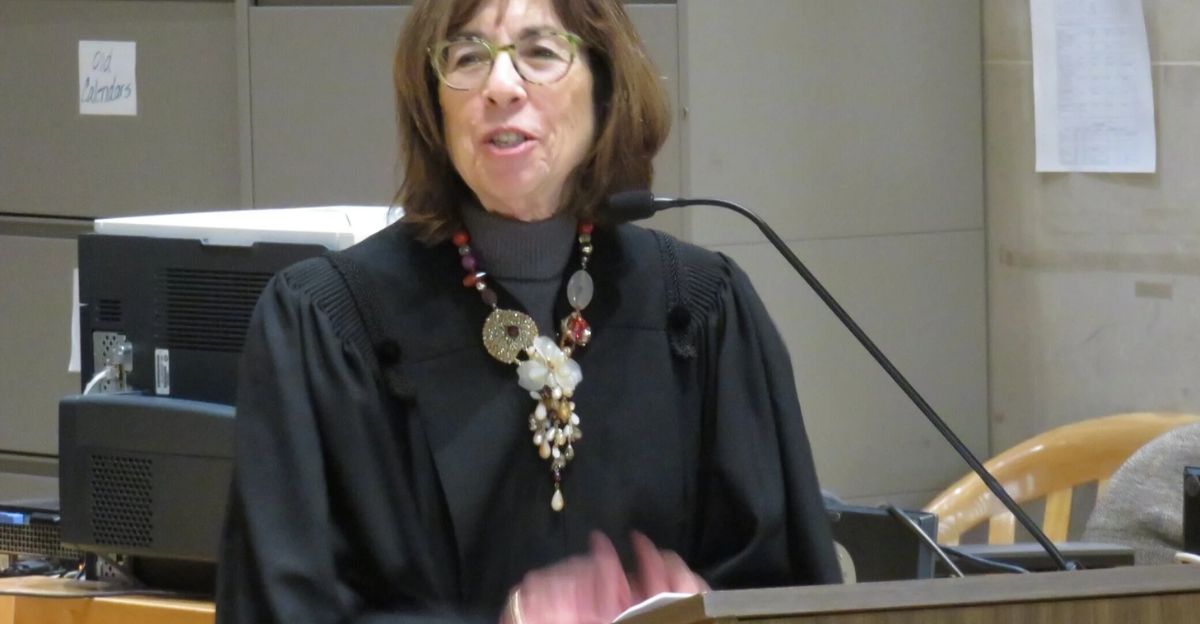
On December 19, 2025, Queens Supreme Court Justice Bernice Siegal found Citibank liable for far more than negligence. The court ordered nearly $3.5 million, including treble damages on the $772,000 stolen, $242,828 in interest, and $150,000 in damages.
Citibank was also sanctioned $10,000 for “concealing critical evidence for over 14 months in violation of court orders.” The bank responded fast, and not with payment.
The Bank Fights Back
Citibank denied wrongdoing and appealed the court order, saying it complied with applicable laws and procedures. Attorney Raymond Dowd, representing Graham’s estate, told the Queens Eagle: “Not one nickel” has been received from Citibank.
The family sought dismissal of Citibank’s appeal in the Appellate Division, Second Department, and now awaits a decision. Meanwhile, Graham remains in bed, and her caregiver is blunt about the stakes.
What The Money Could Have Meant

“My hope is that something will come through, so that she gets to enjoy something out of it before she passes away,” said Ingrid Gayle, who cares for her aunt daily. Gayle added: “Because that would really be sad… and that she doesn’t even get to enjoy a thousand of it”.
She wanted apartment renovations, lifts, bathroom changes, and a specialized vehicle. Instead, Graham waits, and her case mirrors something much bigger.
A National Crisis In Elder Fraud

Graham is not alone. The Federal Trade Commission’s 2024-2025 report found older adults reported losing about $2.4 billion to scams in 2024, up from $600 million in 2020. Overall fraud costs are estimated between $10.1 billion and $81.5 billion.
Investment scams lead, followed by romance and government impersonation scams. Reports of losses of $100,000 or more rose more than 7-fold from 2020 to 2024, and banks are central to what happens next.
Financial Institutions Failed To Act
The Consumer Financial Protection Bureau defines elder financial exploitation as “the illegal use of an older adult’s funds or other resources for the benefit of an unauthorized recipient”. Federal banking agencies urged “risk-based policies” and stronger “internal controls” to protect account holders.
Citibank’s failure to follow its own security procedures shows how institutional negligence can amplify elder vulnerability. The legal aftershocks widen further once wire transfers enter the picture.
Wire Transfers Enter Legal Gray Zone

This case feeds a wider fight over who is liable for unauthorized wire transfers. The New York Attorney General sued Citibank in 2024 under the Electronic Fund Transfer Act, arguing banks must investigate and reimburse. Citibank says wires fall outside EFTA and are governed by UCC Article 4A.
In January 2025, Federal Judge Paul Oetken rejected Citibank’s motion to dismiss. The Second Circuit is poised to decide this question of first impression, and the industry is nervous.
Banks Fear Massive Operational Changes

On November 10, Citibank filed an opening brief urging reversal, warning that extending EFTA protections to wire transfers would force banks to “upend their wire transfer programs or risk additional legal liability”. Six industry groups backed Citibank in an amicus brief, citing “considerable uncertainty”.
Some credit unions warned they might stop offering wire transfers if the EFTA standard applies. Yet Graham’s case underscores why consumer protections are being demanded, and the hidden evidence shows why.
The Smoking Gun: Hidden Audio Recordings

The court found: “Despite possessing audio recordings of the purported wire transfer authorizations at issue in this litigation, Citibank concealed these recordings for over fourteen months”. The recordings were central to proving whether Graham authorized transfers or someone impersonated her.
“Citi’s concealment caused substantial and irreparable prejudice to [Graham],” the court said, supporting sanctions and sharpening claims of obstruction. But Graham’s own life story adds a striking layer to the failure.
An Educated Woman Meets Corporate Negligence

Graham emigrated from Jamaica in the 1970s to pursue education. She earned a business administration degree from Manhattan College in 1984 and a bachelor’s degree from Pace University in 1992. She worked as a legal secretary for Shearman & Sterling, a firm that represented Citibank for years.
Her background suggests she understood financial protocols, but the stroke removed her ability to advocate for herself. That loss is exactly what banks are supposed to recognize, and warning signs are well known.
Red Flags Banks Should Never Ignore

Federal guidance highlights warning signs: frequent large withdrawals, daily maximum ATM withdrawals, sudden pattern changes, and inability to reach the account holder. In Graham’s case, all appeared. FinCEN advisories also flag a new caretaker or family member suddenly conducting transactions without documentation.
Citibank had decades of Graham’s banking history, so comparisons should have shown anomalies quickly. But the impact of exploitation is not only financial, and research shows why it can be devastating.
The Cascading Impact Of Financial Exploitation

Research on elder financial abuse links losses to severe psychological and health consequences. Stress and anxiety can worsen existing conditions and contribute to depression and isolation. For Graham, already legally blind and bedridden, losing financial independence deepened reliance on public assistance.
She now depends on Medicaid. Money that could have paid for bathroom modifications, mobility aids, and transportation instead vanished, shrinking her quality of life. Her legal fight also depended on a court-appointed property guardian with a specific mission.
The Legal Guardian’s Battle For Accountability

After Gayle reported the fraud to Adult Protective Services, courts appointed her Temporary Guardian and Abraham S. Mazloumi as sole temporary property guardian. Mazloumi sued multiple parties, including Citibank, aiming to prove systemic failures beyond simple negligence.
Attorney Raymond Dowd said: “This case has now become a game changer… the bank is liable for unauthorized transactions. The bank bears the burden of proof, not the consumer. This is huge”. That claim raises a broader question about oversight and regulation.
Regulatory Failures And The Road Ahead
In December 2024, the CFPB issued guidance urging institutions to create “policies and procedures” enabling account holders to designate trusted contacts when exploitation may be occurring. Yet many protections remain voluntary. The 2018 Senior Safe Act has been criticized for optional training and limited federal oversight.
Naomi Karp, after 8 years at the CFPB’s Office for Older Americans, said: “Change is very, very slow”. With Graham’s case in appeals, its real force depends on whether courts uphold it, and that uncertainty is already shaping bank behavior.
A Precedent That Could Reshape Banking

Legal experts see the Graham ruling as potentially precedent-setting, especially on burden of proof for unauthorized transactions. If upheld, it could push banks to invest more heavily in fraud detection and stronger internal controls, particularly for older and disabled customers.
The case also strengthens arguments for applying EFTA protections to wire transfers, a question now before the Second Circuit. As of January 2026, appeals continue, and the stakes are personal, because Graham is running out of time.
The Waiting Game

At 80, legally blind, bed-bound, and dependent on Medicaid, Graham may not live to see her money. Ingrid Gayle said: “My hope is that something will come through, so that she gets to enjoy something out of it before she passes away”.
Citibank has not paid the nearly $3.5 million judgment and continues its appeal. Dowd told the Queens Eagle the bank is “blocking everything” and is “clearly in contempt of court”. Whether courts act quickly will decide what justice looks like.
The Reckoning

The Graham case is more than one family’s fight against a powerful bank. It shows how elder exploitation thrives when institutions prioritize efficiency over protection, and how critical evidence can surface only under court pressure. It also shows vulnerability can come from inside a family.
Whether the ruling becomes binding precedent or an outlier now depends on appeals courts. But even before a final answer, the case is already forcing uncomfortable questions about bank responsibility, and those questions keep multiplying.
Sources
Citibank Ordered to Pay Queens Woman $3.5 Million for Failing to Stop Fraud and Hiding Evidence. Queens Eagle, January 8, 2026
Citibank Must Pay Back Millions To Stroke Victim. Black Enterprise, January 4, 2026
Protecting Older Consumers 2024-2025: A Report of the Federal Trade Commission. Federal Trade Commission, December 2025
Interagency Statement on Elder Financial Exploitation. Consumer Financial Protection Bureau, December 2024
False Alarm, Real Scam: How Scammers Are Stealing Older Adults’ Life Savings. Federal Trade Commission, August 2025
Second Circuit Poised to Rule on What Law Applies to Consumer Wire Fraud. Mayer Brown, December 2024