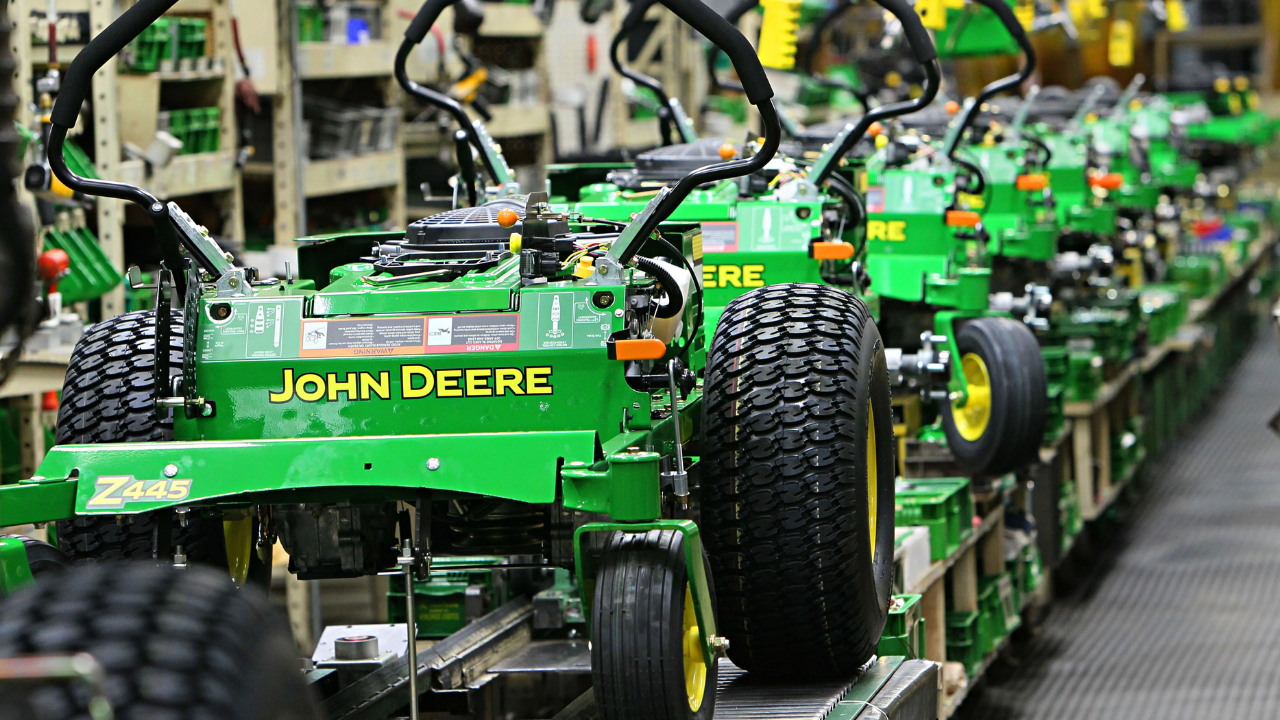
When John Deere announced plans to relocate product testing operations from Ottumwa and Des Moines to facilities in Iowa and Illinois, it marked another tremor in Iowa’s manufacturing heartland. Combined with recent layoffs affecting 141 workers in Waterloo and Ankeny, and a separate $55 million investment expanding construction equipment production in Mexico, the moves have crystallized anxieties rippling through communities where factory work has anchored families for generations.
The consolidation, affecting verification and validation testing currently performed at Ottumwa Works and Des Moines Works, aims to “reduce overhead costs and enhance operational efficiency,” according to company statements. The transition is scheduled for fiscal year 2026, though Deere has not disclosed exactly how many positions will be impacted. Some employees will have relocation opportunities, but for workers and their families, the uncertainty cuts deep.
Workers Confront Difficult Choices

The human dimension of corporate restructuring rarely appears in earnings reports. For technicians and operators at affected facilities, these decisions force wrenching calculations about uprooting children, selling homes, or facing unemployment in communities where manufacturing jobs remain scarce.
The latest cuts compound a brutal stretch for Iowa’s agricultural equipment sector. Since April 2024, Deere has eliminated roughly 2,200 jobs across Iowa through more than 26 separate workforce reductions. The company attributes the contractions to decreased demand and lower order volumes as farmers, squeezed by depressed commodity prices and high input costs, defer equipment purchases.
“Production schedules at each John Deere factory vary to align with seasonal farming needs,” the company stated. “When fewer orders come in, each factory adjusts accordingly”.
Economic Ripples Extend Beyond Factory Gates
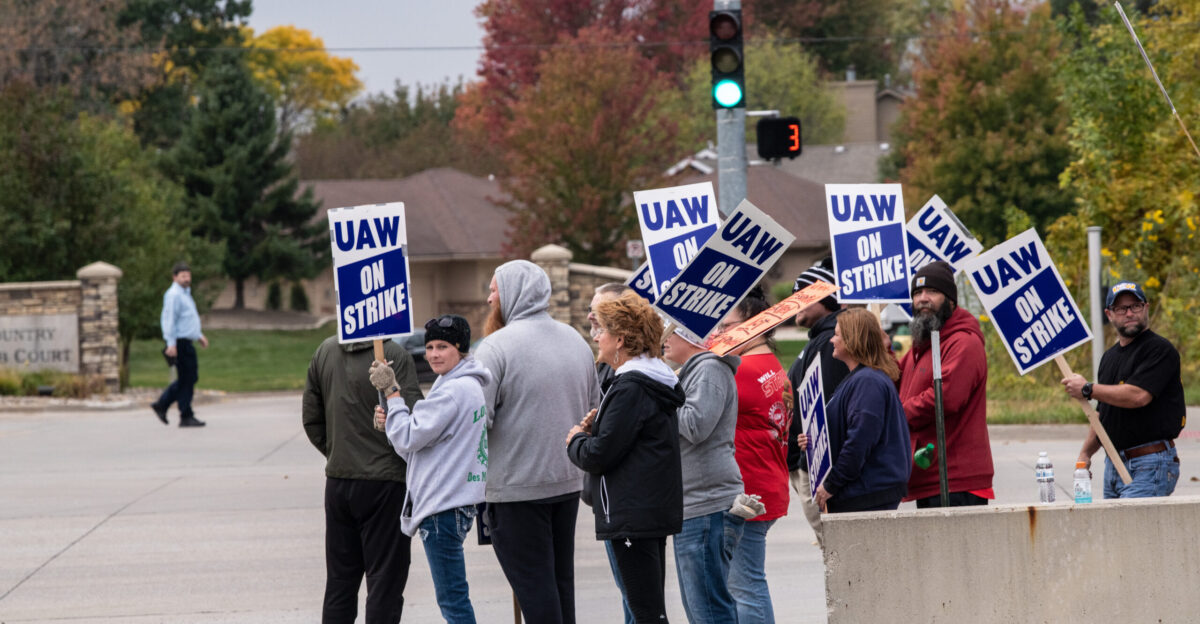
Iowa’s manufacturing sector exported $8.4 billion in goods during the first seven months of 2025, down 9.2% from $9.3 billion during the same period in 2024. The decline reflects broader pressures confronting Midwest manufacturers: elevated wholesale inflation, tariff costs Deere estimates at $600 million annually, and contracting demand both domestically and internationally.
Between January 2024 and September 2025, Iowa manufacturers issued nearly 3,900 layoff notices—50% more than the 1,945 issued between 2019 and 2023. When major employers contract, effects cascade through housing markets, retail sectors, and service industries. Suppliers report slowed orders and reduced freight volumes, while restaurants and hotels in plant towns brace for diminished lunch rushes and hotel bookings.
“Manufacturing has been in a rut the past couple years, both in Iowa and nationally,” noted Ben Ayers, senior economist for Nationwide Mutual Insurance Company.
Mexico Gains While Iowa Adjusts

While testing operations consolidate within existing U.S. facilities, Deere is simultaneously building a $55 million plant in Nuevo León, Mexico, focused on mini track loaders and mini wheel loaders for construction markets. The facility, slated to begin operations in 2026, represents Deere’s first plant in Mexico dedicated exclusively to construction equipment.
Gecimar Morini, Deere’s manager for Mexico, Central America, and the Caribbean, emphasized the company would proceed “regardless” of political developments, citing Mexico’s construction equipment market growth of 76% since 2022.
The parallel tracks—consolidation in Iowa alongside expansion in Mexico—spotlight tensions inherent in global manufacturing strategies. Labor cost advantages and growing markets south of the border offer compelling economics for manufacturers, even as communities built around decades of factory work confront contraction.
Communities Search for Resilience

Iowa policymakers face mounting pressure to respond. State economic data reveals manufacturing employment declined by 7,600 jobs in a single year, with lawmakers now debating incentives to retain manufacturers and support displaced workers.
The challenge extends beyond individual companies or sectors. Between plant closures and layoffs, nearly 7,000 Iowa manufacturing workers have lost jobs over the past 19 months. For towns where a single employer represents the economic foundation, corporate cost-cutting translates directly into local economic shock.
Yet amid the disruption, Iowa communities are exploring alternative economic pillars—renewable energy projects, technology initiatives, and diversified small business development. The path forward requires balancing the competitive realities driving corporate decisions against the human costs borne by workers and families who built their lives around manufacturing careers.
As Deere navigates falling agricultural demand and rising global costs, Iowa’s manufacturing towns face their own reckoning: how to adapt when the economic ground shifts beneath longstanding industrial foundations. The answer will shape not just individual communities, but the future of manufacturing across the rural Midwest.