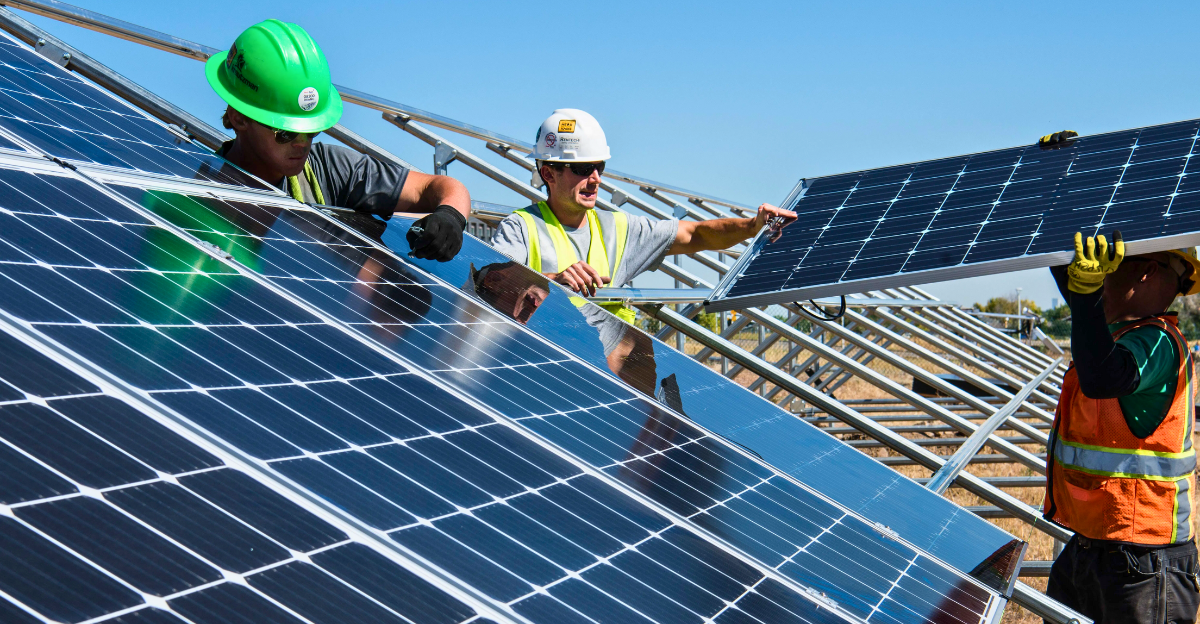
A dark cloud has hit North Carolina’s solar power industry. Blue Ridge Power, once a fast-growing leader in clean energy construction, will lay off 514 employees by mid-November, eliminating almost three-quarters of its staff.
That’s one of the most significant single job cuts in the state’s renewable energy sector this year.
Blue Ridge Power, which was established just four years ago, has built 8 gigawatts of solar projects across 14 states.
However, the market downturn now means hundreds of skilled workers in Fayetteville and Asheville are suddenly out of work.
For many, these were stable jobs with good pay in the booming solar field, but now the future is uncertain.
Federal Fallout
This collapse comes soon after a significant shift in federal policy.
President Trump’s One Big Beautiful Bill Act, passed just three months ago, eliminated renewable energy tax credits that the industry had relied on for nearly 20 years.
Investments in solar energy have dropped sharply, with funding for new projects down 39% in early 2025 compared to the previous year.
The head of Blue Ridge Power stated that it was not possible to continue operations due to the combined effects of policy and investment headwinds, making a business wind-down the only viable option.
Industry experts refer to what’s happening as an “extinction event,” meaning that many companies built on government incentives can’t survive without them.
Corporate Cascade

Blue Ridge Power’s parent company, Pine Gate Renewables, is also facing significant financial difficulties.
They’ve brought in outside financial and legal experts to help sort out their debt and may soon file for bankruptcy.
Pine Gate had raised $288 million from investment giant Blackstone in late 2024, but now faces a cash crunch just like many other clean energy firms.
Unable to help their construction arm survive, Pine Gate decided to wind down Blue Ridge Power, ending all direct support for the company.
These troubles have spread rapidly across the entire company, threatening jobs, unfinished projects, and community partnerships.
Industry Exodus

Blue Ridge Power isn’t the only casualty. Since the Trump administration’s policy change, over $22 billion in clean energy projects have been canceled nationwide.
Eight major solar projects, including several in North Carolina, were never initiated or had to be downsized, representing nearly $3 billion in lost investment.
The residential solar business is also struggling, as the 30% federal tax credit is set to expire at the end of the year, making it significantly more expensive for homeowners to install panels on their roofs.
Many companies are now wondering how they will survive in a world without these incentives.
Careers Cut

The evidence is clear in official government filings: 514 well-paid, stable jobs are being erased in a single announcement.
These layoffs were confirmed in documents sent to North Carolina’s unemployment office and affect electricians, engineers, project managers, and construction workers who helped build the nation’s solar power supply.
These are not minimum-wage jobs but careers many relocated to North Carolina for, only to discover the “green jobs revolution” is suddenly on pause.
The timing aligns precisely with federal policy changes, directly linking these individual stories to national decisions.
Human Impact

For the 517 workers who lose their jobs (the number varies slightly by state record), the next step is grim.
North Carolina’s unemployment benefits are among the lowest in America, just $350 a week.
Many families had moved for these jobs, establishing roots and building a life around a stable, renewable energy company.
Even local community colleges, such as Fayetteville Tech, that have established a pipeline for solar careers, are reeling, unsure if their graduates can now find jobs at all.
There are concerns about mortgage payments, healthcare, and sending kids to school when the next paycheck is uncertain.
Regional Devastation

The most severe impact is in Cumberland County, where 348 of the Blue Ridge Power layoffs are concentrated.
The company had worked closely with local colleges to train and hire workers, offering a clear path from education to well-paid jobs.
Mark Sorrells, president of Fayetteville Technical Community College, called the news “a bit of a surprise,” noting the shutdown will affect the college’s PowerUp program and the local economy.
Local stores, service companies, and other small businesses that relied on solar worker customers are also now facing uncertainty as people have less disposable income to spend.
Supply Chain Collapse

Blue Ridge Power’s shutdown isn’t just about jobs; it also leaves unfinished business throughout the solar supply chain.
The company was in the middle of building 1.2 gigawatts of new solar projects, serving utilities and customers in 14 states.
Now, equipment suppliers face canceled contracts, and utility companies must scramble to find new contractors to finish these jobs.
The company’s rapid growth in providing solar in nearly every region of the country in just four years makes the collapse especially disruptive.
Expert Analysis

Top energy analysts say this is a warning sign for the whole clean energy sector.
Rystad Energy, which follows global trends, explains that industry rules and government incentives can make or break companies overnight, even if they perform well and have skilled teams.
Blue Ridge Power had top engineers and a track record of quality, but policy changes proved more potent than technical expertise.
The company’s collapse demonstrates that without stable rules, even strong players can suddenly go under.
Leadership Falls

Pine Gate Renewables, Blue Ridge Power’s parent company, made it clear that the whole management team, including the company president, will lose their jobs in the shutdown.
Executives stated that they had invested “significant resources” in an attempt to save the company, but the unfavorable industry conditions made closing the only realistic outcome.
By listing themselves among the fired, the leadership made clear their view: this is an industry-wide crisis, not just a business mistake.
Management Response
From the start of the crisis, Pine Gate Renewables brought in banks and law firms to explore every possible option, including downsizing, selling part of the business, or restructuring its debt.
In the end, they decided these weren’t enough and informed customers that they would assist in transitioning ongoing solar projects to other companies.
Publicly, they say the problem isn’t unique to them, but affects every company in the sector facing similar crunches.
Financial Restructuring
The financial maze is giant. Pine Gate owes money to major lenders like Brookfield and Carlyle, with loans secured by various asset pools, and new owners may take over some projects.
Despite raising hundreds of millions in investments just months ago, the cash has dried up due to policy changes, and bankruptcy is now likely unless deals can be struck.
This is the new reality for clean energy firms after the federal subsidy cliff.
Industry Consolidation

The sudden loss of such a large solar contractor will quickly reshape the rest of the industry.
Some companies may grab available projects and talent, but everyone faces the same market headwinds.
With less support and greater risk, small companies are particularly vulnerable to closure.
What was once a rapidly growing field and a hot spot for hiring is now shrinking rapidly, as government policy shifts ripple through payrolls across the U.S.
Project Transitions

When a solar construction company closes, someone else must step in quickly to complete significant projects on time.
Blue Ridge Power’s team says they’ll help pass on all documentation, permits, and work in progress so customers and partners can continue where they left off.
However, switching contractors takes time and can result in additional delays and higher costs, which could impact electricity delivery and increase prices for everyone who relies on new clean energy coming online.
Market Implications

This closure serves as a warning that U.S. clean energy growth could stall, just as other countries continue to race ahead.
If remaining contractors can’t cover the workload, delays in new solar power plants could lead to higher energy prices, more pollution, and lost contracts in the global competition for green tech.
Some foreign competitors, facing stronger domestic support, may ultimately take the lead in solar and wind energy.
Legal Challenges

Legal fights could soon follow. At least one law firm is investigating whether workers were given sufficient warning before layoffs because the WARN Act requires at least 60 days’ notice for significant cuts.
If not, Blue Ridge Power might have to pay out extra severance or benefits.
Meanwhile, some environmental groups are planning lawsuits against the federal government, arguing that sudden subsidy cuts have broken the social contract that initially convinced firms and workers to enter the solar industry.
Educational Impact

Schools and colleges are feeling the crash. Fayetteville Tech had bet on a rising solar job market, building up training programs and partnerships with companies like Blue Ridge Power.
Now, with fewer jobs available, educators may need to send graduates into fields such as electrical work, construction, or other areas, putting the brakes on dreams of a continued “green jobs” boom.
Many students and teachers had pinned their hopes on stable careers that are now disappearing.
Voices and Debates Erupt Online

The shutdown has triggered a huge online discussion, with workers posting their stories and the hashtag #BlueRidgePower spreading widely.
Opinions range from sadness for the laid-off workers to anger at government decisions to debates about whether the industry was ever sustainable without subsidies.
Local news reports have highlighted the significant blow to families and businesses that are already struggling after years of economic ups and downs.
Legislative Whiplash

This isn’t the first time sudden political changes have upended a whole sector like the coal industry, oil, and now renewables have all faced it.
Blue Ridge Power’s rise and fall, from a fast-growing startup to mass layoffs in just four years, shows that government policy can build an industry almost overnight.
Unlike earlier clean energy failures driven by technology or competition, this collapse was triggered by new laws, not company mistakes.
The Human Cost of Policy Shifts

Blue Ridge Power’s story is a poignant reminder of how national decisions profoundly impact local lives.
When politicians change direction, real people lose jobs, families worry, and communities are left wondering what to do next.
Skilled solar workers are now scrambling for new opportunities in a shrinking job market.
As the industry winds down, not just payrolls, but the hopes and plans of an entire generation of workers and organizations are put on hold.
The future of clean energy in America suddenly appears less certain, highlighting the powerful ripple effect that policy can have on every part of the economy.