
Logistics giants report sweeping cuts as technology reshapes work. UPS just announced plans to slash 20,000 jobs this year. Amazon itself has heavily automated: it recently deployed its 1,000,000th warehouse robot, a major milestone.
FedEx also trimmed headcount, reflecting a decline from roughly 570,000 employees in 2021 to about 500,000 today (latest company filings). Retail tariffs (e.g. on China imports) have slowed package volumes, pressuring costs.
Customer shifts and cost pressures are forcing all carriers to rethink labor vs. machines.
Domino Effect

These job cuts ripple through the broader economy. Supply chains and local businesses feel the hit: when a sorting hub closes, small merchants and trucking partners lose 20–30% of sales in weeks, studies show.
Rural areas especially suffer as routes and facilities consolidate – creating delivery “deserts” where services vanish. The industry now realizes that a network is only as strong as its communities.
As one shipping analyst put it, every cut “doesn’t happen in isolation – it reverberates through neighborhoods, suppliers and families.” (Local reports confirm steep income drops near shuttered hubs.)
Sector’s Boom-and-Bust History
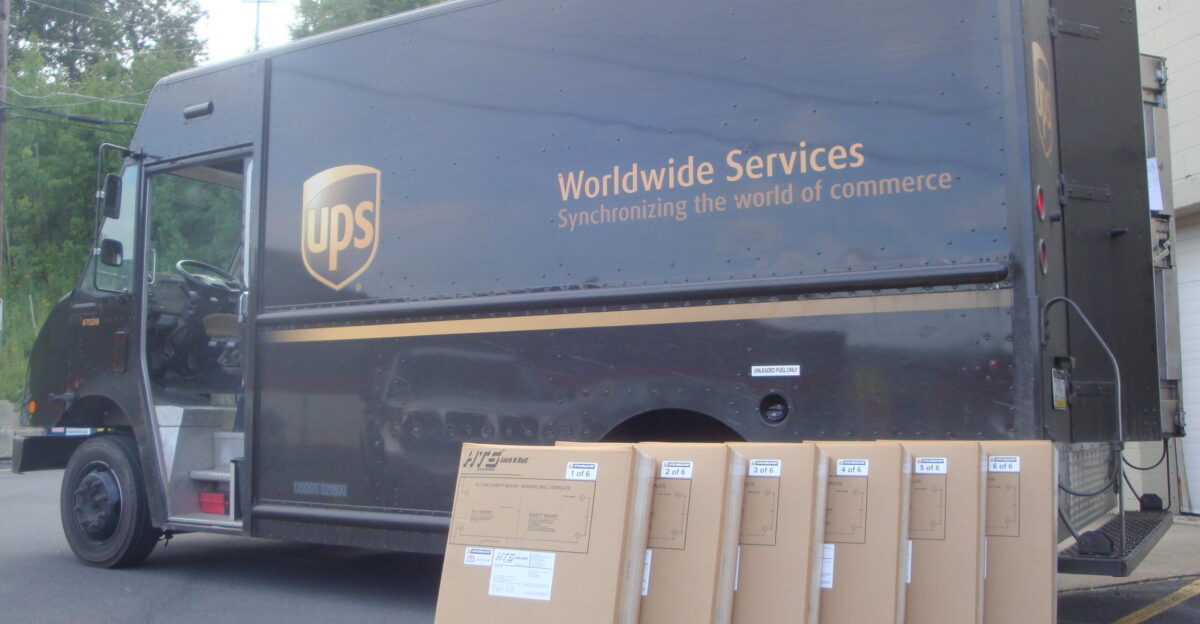
After years of growth, the logistics workforce had ballooned. During the pandemic, carriers raced to hire – Amazon peaked at ~1.6 million employees, and UPS and FedEx expanded networks worldwide to meet sky-high e‑commerce demand. But now consumer behavior has normalized.
Online sales growth has slowed, and warehouse volumes have flattened. Many companies admit their operations were overstaffed for today’s demand, and inefficient manual processes are no longer tenable.
A post‑pandemic retrenchment has exposed excess labor; automation and restructuring are seen as necessary corrections.
Mounting Pressures
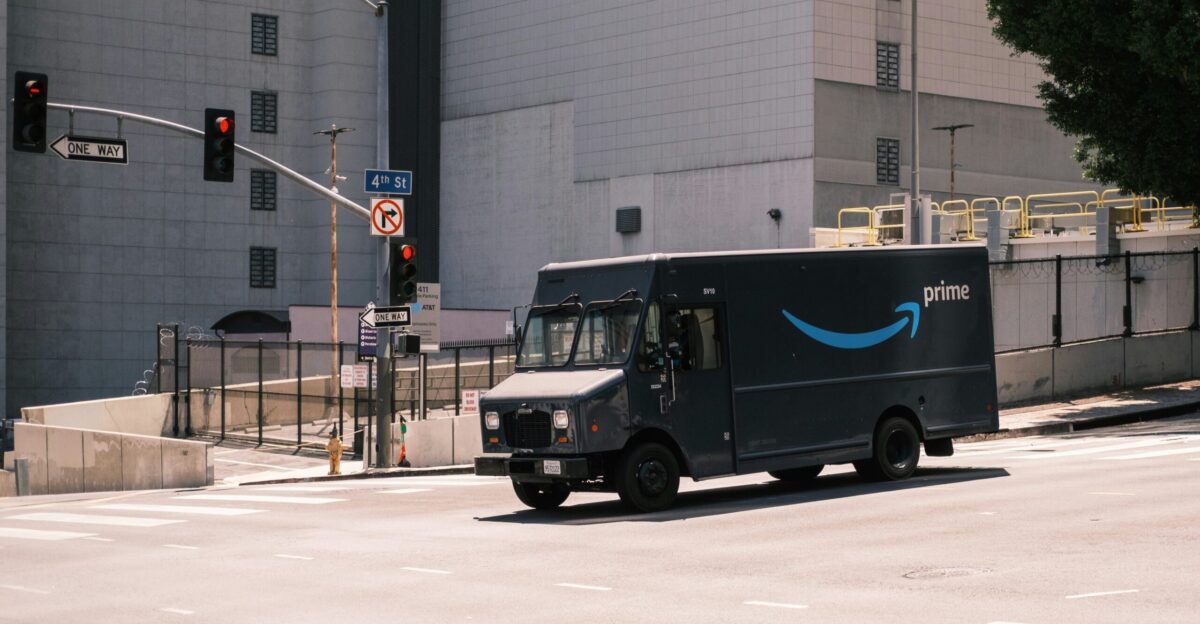
Three big factors are squeezing costs. First, trade barriers have dented volume: for example, tariffs on Chinese imports have triggered double‑digit declines in some freight lanes.
Second, Amazon’s recent cuts to UPS’s package volume (diverting half of its shipments) have chopped millions of parcels per month from UPS’s books.
Third, rising labor costs (new contracts, overtime pay) have inflated expenses. Faced with these pressures, carriers say they must drive efficiency. In UPS CEO Carol Tomé’s words, “We’re looking around corners… the question is how to stay ahead” – hinting that technology and AI are part of that answer.
Robot Revolution

A tidal wave of automation is underway. Amazon now operates over 1 million robots in its fulfillment network. These machines handle heavy lifting, sorting, and even delivery tasks alongside human workers.
FedEx’s new automated hub in Memphis can sort ~56,000 packages per hour with minimal manual input.
UPS has similarly upgraded hundreds of facilities (industry observers note roughly 64% of its volume now touches a sorter robot). Investment is massive – tens of billions companywide – to replace repetitive tasks. Even so, critics urge caution: Boxed CEO Chieh Huang warns, “If you’re in the boardroom talking about automation, you also need to talk about the human impact”, reminding executives to consider workers, not just machines.
Regional Impact

The pain is visible in local economies. When major contracts moved, entire communities lost jobs. For example, a FedEx hub closing in Greensboro, NC, eliminated about 164 positions, and smaller closures in Nebraska and Iowa cut dozens more.
Each such loss drains local sales and wages. Public records show FedEx offered affected employees transfers or severance, but many declined far-flung moves.
In places like Des Moines and Omaha, small businesses have reported revenue plunges as delivery traffic drops. In sum, as one Midwest chamber president noted, “Shutting a hub is like pulling a rug out from under Main Street.”
Human Stories
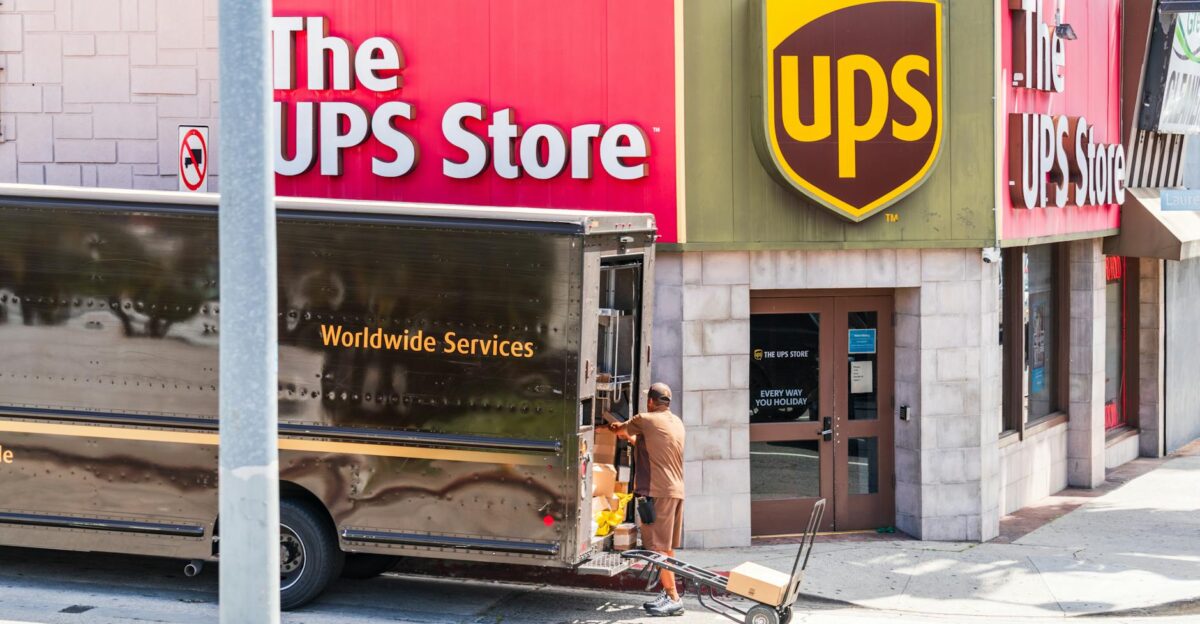
Behind the numbers are real people. One former UPS driver told a community forum, “I’ve worked a lot of jobs, and UPS was supposed to be better… but there was no training and it felt disposable.” Another ex-FedEx packager from Texas lamented to a local reporter: “They say we’ll get retrained, but these companies do not care about us.
Being let go for no reason feels like a slap in the face.” Even generous-seeming severance is limited: current UPS packages offer only about two weeks’ pay per year of service – hardly a cushion for decades of work.
Such testimonials highlight a growing distrust: workers feel caught in a system where even “loyalty” and hard work may not guarantee a job in the robot era.
Competitor Moves

Even rival delivery firms are retrenching. In Europe, DHL announced plans to cut 8,000 jobs in Germany this year – its largest downsizing in decades – citing slumping mail volumes and costs. The U.S. Postal Service, wrestling with its own budget woes, is experimenting with drones and AI-driven vans to speed last-mile delivery.
Smaller trucking and courier companies across California and Texas have also let crews go, unable to invest in efficiency amid competition.
Meanwhile, Amazon is building its own logistics fleet: it hired ~15,000 drivers in Q2 2025 alone, further reducing packages sent through traditional carriers. In short, almost every corner of the industry is either automating or shrinking labor costs to survive.
Macro Trends
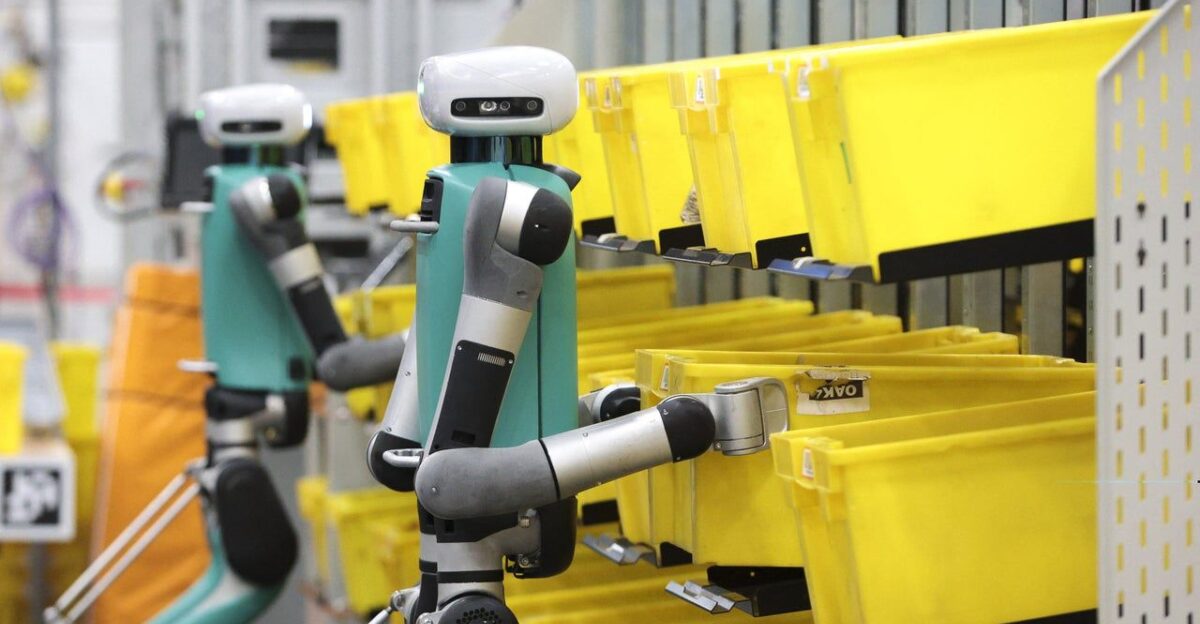
The logistics sector mirrors global workforce shifts. Major studies predict massive automation ahead: one analysis estimates up to 25 million warehouse jobs worldwide could be automated by 2025. The World Economic Forum warned back in 2020 that 85 million jobs could be displaced by new tech in the next five years – though 97 million new roles may emerge.
Already, companies are pouring money into tech: global warehouse automation spending jumped about 77% year-over-year last year, driving steep productivity gains. Economists caution, however, that productivity gains don’t guarantee jobs.
Many say businesses are treating machines as “workers without wages,” trimming headcount even as revenue grows.
Hidden Costs
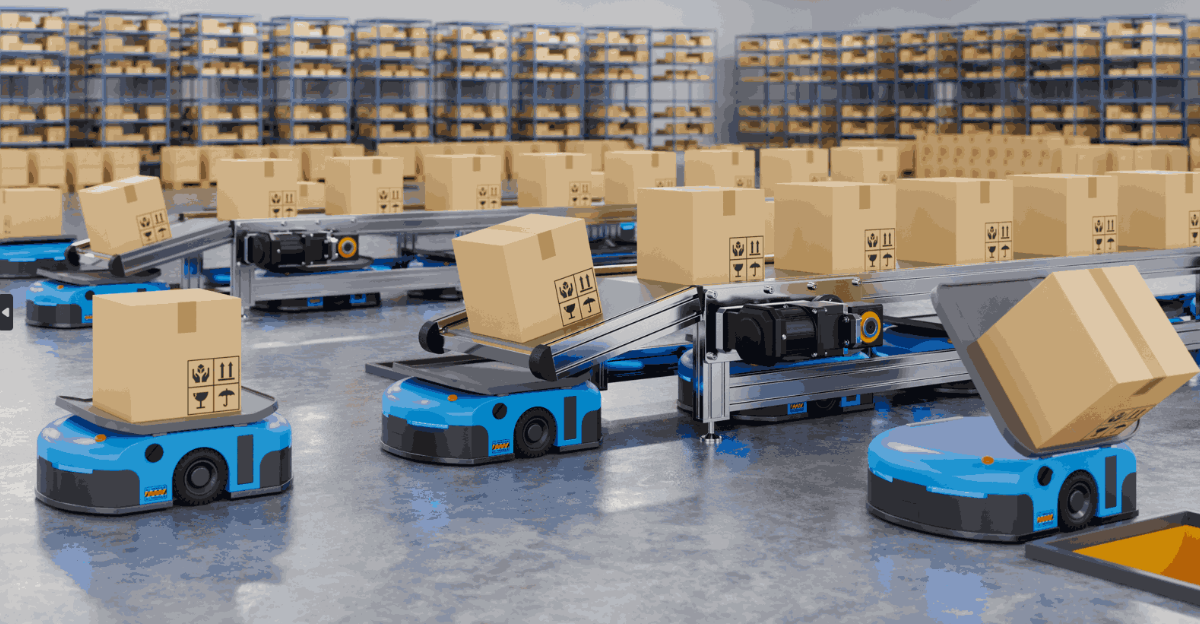
Automation does create some new tech positions – but it often displaces more traditional jobs. Amazon reports upskilling over 700,000 workers since 2019 through training programs for robotics and operations. Yet over the same period, its total staff has shrunk from pandemic highs.
Even at high-tech sites, robots need support: Amazon’s next-generation fulfillment center (opened late 2024) uses 30% more engineers and maintenance staff to manage advanced robotics.
Critics note the gap: for every new tech role, there may be several lost human roles. Displaced truck drivers and packers often struggle to enter these new tech jobs – retraining programs sometimes see only a third of participants finish.
Union Resistance

Unions are already pushing back on the cuts. Teamsters President Sean O’Brien warned that UPS will face “a hell of a fight” if it breaches its contract requiringthe creation of 30,000 new jobs.
The union argues that planned layoffs violate that agreement, and is urging workers to reject buyouts. At FedEx, employees have quietly organized over safety and job-loss concerns; local Teamster chapters report growing interest in representation.
Even at Amazon, the warehouse in Staten Island (JFK8) has applied to form a union local – a historic move, driven in part by fear that relentless automation could hollow out jobs.
Leadership Shifts

Even CEOs are blunt. In a June 2025 memo, Amazon’s Andy Jassy told staff, “We will need fewer people doing some of the jobs that are being done today” as AI rolls out. UPS CEO Carol Tomé, speaking on the company’s earnings call, emphasized squeezing more efficiency from existing infrastructure – implying fewer roles.
FedEx CEO Raj Subramaniam has laid out “Network 2.0,” a plan to merge and close U.S. hubs: the goal is $2 billion in annual savings by 2027.
These leaders all underline a shift: the business imperative has become digitize-or-die, even at the cost of jobs.
Recovery Attempts
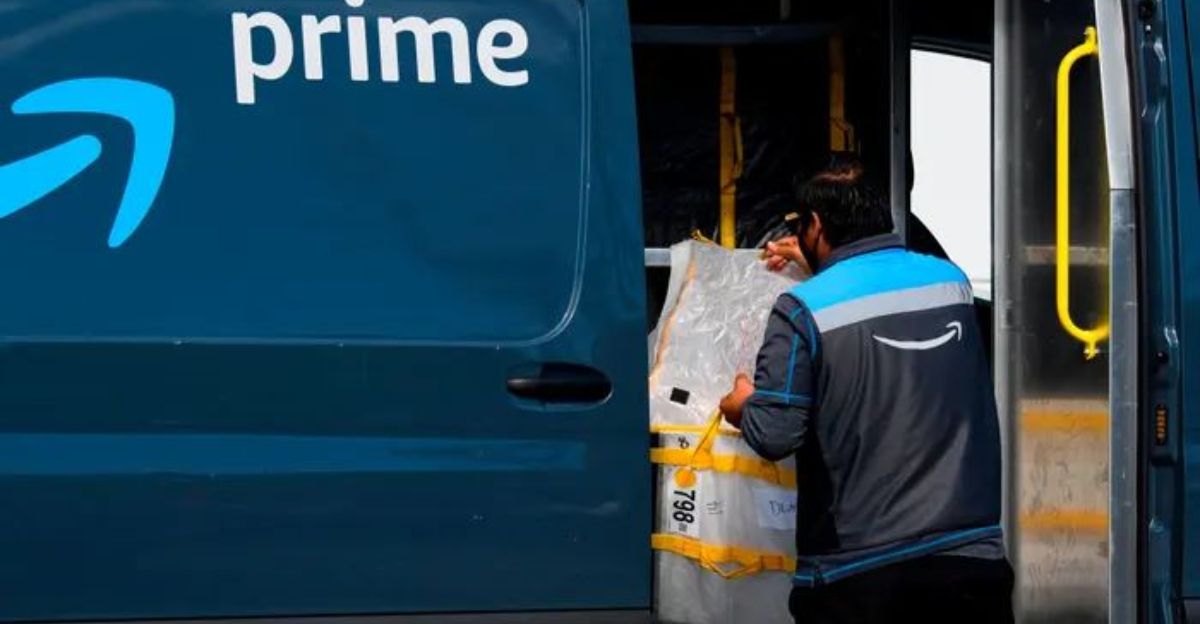
In response, carriers pitch reskilling initiatives. Amazon’s Career Choice program – which pre-pays tuition for hourly employees – has grown rapidly: over 250,000 workers have participated so far, with 100,000 enrolling in 2024 alone.
UPS offered generous voluntary exit packages: recent buyouts pay $1,800 per year of service (min $10K) to any full-time driver who opts out.
FedEx says it’s trying to place displaced staff elsewhere in the company or offer relocation assistance. For example, FedEx spokeswoman Gail Gatien notes that affected North Texas employees were “notified months in advance” and offered other roles, transfers, or severance.
Expert Skepticism
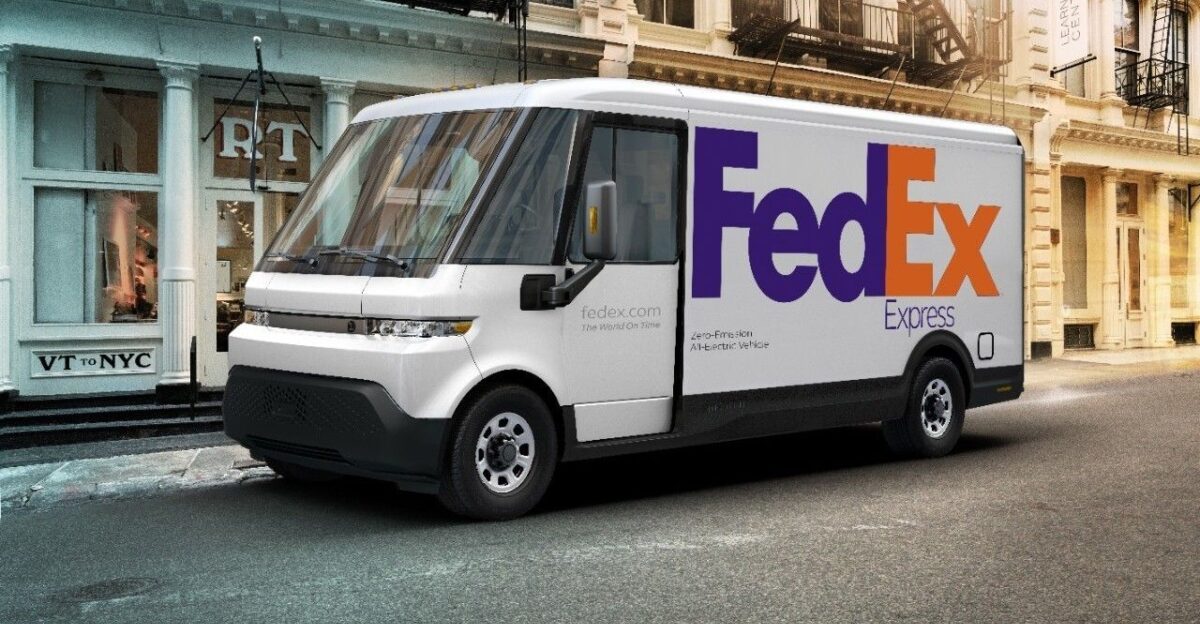
Not everyone buys the upskilling narrative. Experts warn that “upskilling” can be a smokescreen. Bryan Driscoll, an HR consultant, tells Newsweek that automation is often about “substituting human labor with machines – workers without wages, benefits, and compliance complications.”
Others liken it to a “talent treadmill”: unless companies share the costs of training, workers get the burden of continuous re-skilling.
Boxed CEO Chieh Huang captured this tension: “What is automation going to do [to] employment? … real humans are at risk,” he said. “If you’re in the boardroom talking about automation,” Huang urged, “you also need to talk about the human impact and put your employees on top of the list”.
Future Questions
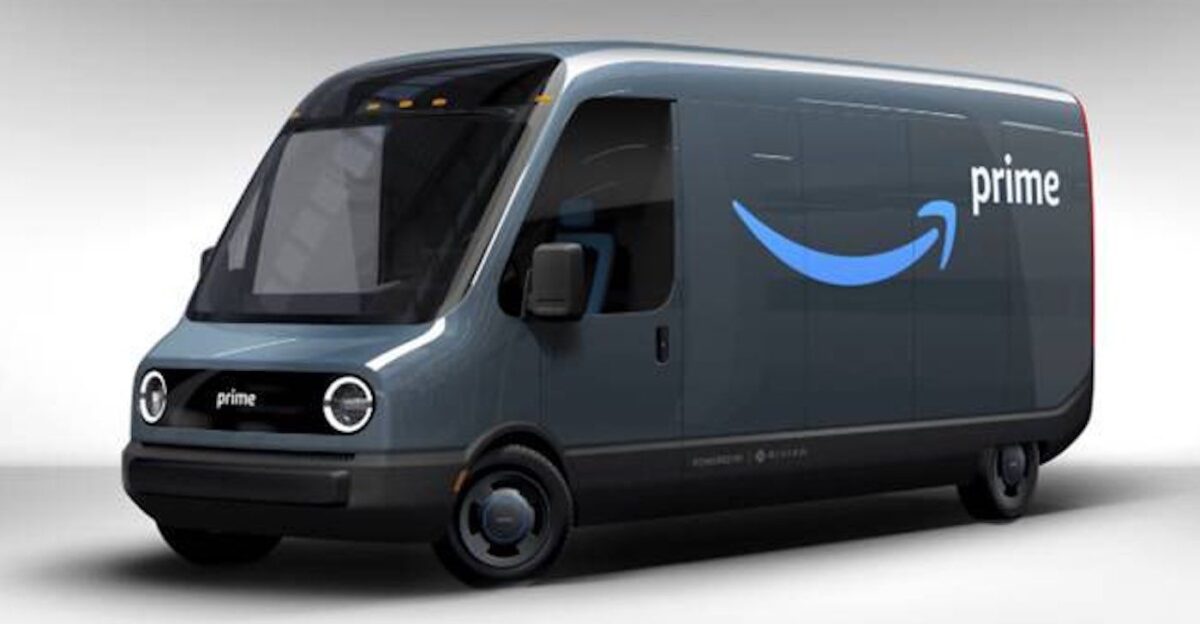
The big questions loom: Can companies balance efficiency with promised new roles? Will lawmakers step in to protect workers as automation spreads? Industry leaders are pondering workforce transition strategies; some local communities have even proposed tax credits to lure firms that hire locally.
Yet as one logistics analyst notes, “No policy easily replaces a closed distribution hub.” Surveys underline the dilemma: for instance, a Tech.co poll found 63% of U.S. logistics firms saying driver recruiting has “stagnated or worsened” in the past year.
That gap is real – and it raises a question not yet answered: will machines fill it, or will new regulations and community efforts be needed to keep packages moving and families fed?
Policy Implications
Policymakers are scrambling. Proposals include federal grants to subsidize delivery driver wages in underserved areas (a bid to prevent new “delivery deserts”), but budget approvals are still pending. On the other side of the Atlantic, the EU’s new platform work rules are tightening protections for gig courier workers.
Trade policy also matters: tariffs on Chinese goods have already slowed logistics volumes (impacting U.S. carriers’ revenue). However, regulations often lag the technology: trucking rules and labor laws weren’t designed for on‑demand drivers or AI operations.
Observers warn that, absent new labor standards, companies will choose the path of least resistance – typically, cheaper automation – unless incentivized otherwise.
Global Ripples

These trends aren’t limited to the U.S. In Europe, DHL’s massive job cuts show the continent isn’t immune. FedEx is axing up to 2,000 back-office jobs in Europe amid soft freight demand.
Worldwide trade uncertainties are hurting profits: FedEx recently disclosed a roughly $170 million revenue headwind from lost export volume.
Across Asia and Latin America, logistics firms are likewise ramping up robotics and AI in warehouses to stay competitive. Global carriers recognize that reducing labor costs can offer a market edge – making automation a competitive imperative worldwide.
Legal Challenges

Some workers are turning to courts. Labor lawyers point out that companies have used staggered layoffs to skirt U.S. WARN Act requirements (which mandate a 60-day notice for mass cuts).
Class-action suits have already arisen: for example, ex-employees argue that repeated small-round layoffs should be treated as mass layoffs, entitling them to warnings and severance.
Amazon faces potential claims over unpaid exit packages, as attorneys scrutinize whether hourly staff received promised benefits. Legal experts warn that current laws are poorly suited to multiple, tech-driven cuts; more litigation may follow as displaced workers seek retroactive protections.
Cultural Shift

Demographics play a role: younger workers are increasingly embracing gig and contract work, while older mid-career employees often struggle with rapid job changes.
A World Bank study notes that up to 12% of the global workforce now does online gig work – over half of them youth. For young adults, app-based delivery or freelance logistics gigs can offer flexibility and higher pay.
In contrast, older workers cite skills mismatch and uncertainty. Meanwhile, social media amplifies this shift: viral posts of abruptly furloughed drivers or warehouse vacuums spark public empathy and scrutiny. The traditional lifelong employee model is fading.
Transformation Signal

The upheaval in logistics is a bellwether for the broader economy. As MIT Sloan notes, automation offers huge efficiency – but companies investing heavily in robots are effectively prioritizing shareholder returns over headcount.
The key will be how society adapts: will schools, governments and industry forge new paths for displaced workers? Can new industries or local enterprises absorb the lost jobs? The next chapter remains unwritten.
One thing is certain: logistics companies are racing toward a future where machines handle more of the workload, and the winners will be those who balance cutting-edge tech with a real plan for the people left behind.